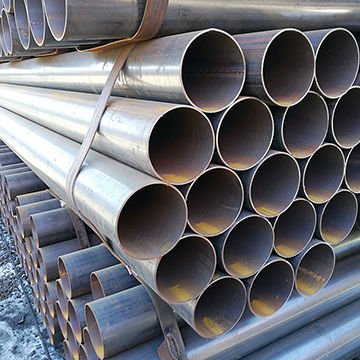
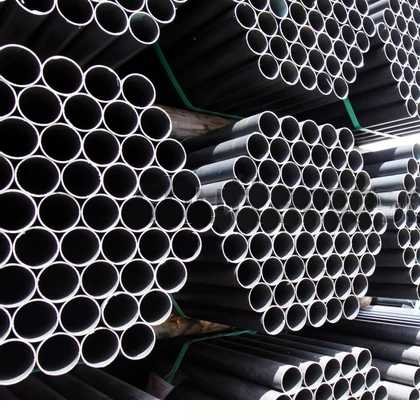
For industrial projects in the oil, gas, and maritime sectors, the integrity of steel pipes is non-negotiable. As a leading manufacturer of ERW (Electric Resistance Welded) steel pipes, we understand that even the most microscopic discontinuity can compromise the performance of an entire pipeline system.
At JS FITTINGS, quality control is not just a final step—it is integrated into every stage of our production line.
In this article, we break down the industry-standard crack detection methods that ensure our ERW pipes meet the highest international safety and performance benchmarks.
Why Crack Detection Matters in ERW Pipes?
ERW pipe manufacturing involves forming steel coils into a cylindrical shape and welding the edges using high-frequency electric currents. While this process is highly efficient, the weld seam is a critical area that requires rigorous monitoring.
Proper crack detection in ERW Pipes to prevent:
- Leaks and Pressure Loss: Vital for hazardous fluid transportation.
- Structural Failures: Especially under high-pressure or corrosive environments.
- Project Delays: Costly replacements are avoided through proactive NDT (Non-Destructive Testing).
Industry-Standard Crack Detection Methods in ERW steel pipe We Utilize
To guarantee the reliability of our products, we employ a multi-layered testing approach:
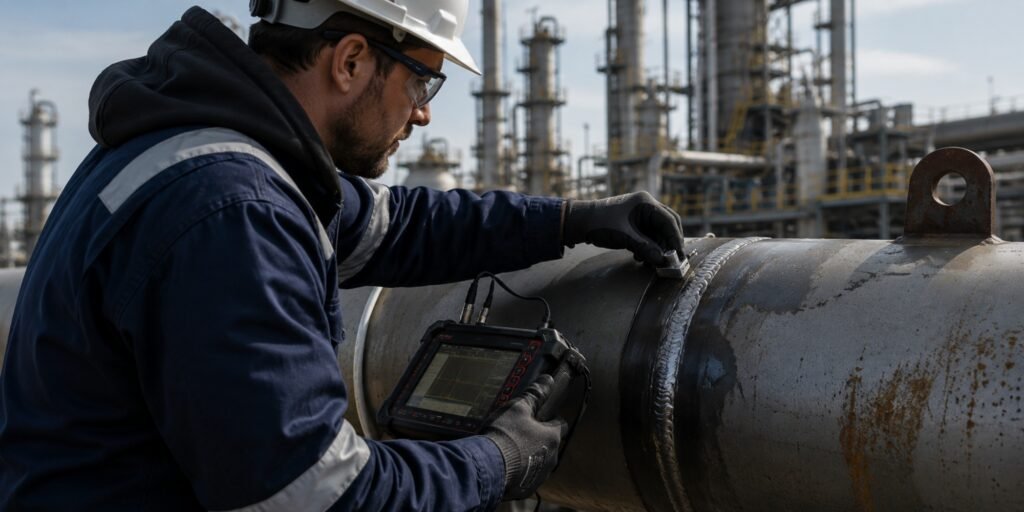
Ultrasonic testing is the backbone of our weld seam integrity program. By sending high-frequency sound waves through the material, we can detect internal flaws that are invisible to the naked eye.
- How it works: Sensors detect the “echo” of sound waves as they bounce off defects like cracks, inclusions, or lack of fusion.
- Why it’s vital: It allows for the detection of subsurface defects that surface-level inspections might miss, ensuring the weld seam is as strong as the base metal.
Eddy Current Testing is our primary tool for surface-breaking crack detection in high-speed, automated production environments.
- How it works: An electromagnetic coil induces an alternating current in the pipe surface. Any crack or discontinuity disrupts the flow of these “eddy currents,” triggering an immediate alarm.
- Why it’s vital: It is incredibly sensitive to small surface cracks and longitudinal defects along the weld line, providing real-time feedback during the welding process.
Hydrostatic testing acts as the ultimate “stress test” for the entire pipe. While UT and ET are non-destructive.
- How it works: Each pipe is filled with water and pressurized to a specific level (often exceeding the pipe’s rated working pressure) for a set duration.
- Why it’s vital: It confirms the pipe’s ability to withstand high pressure without bursting or leaking. It is the final “seal of approval” before any shipment leaves our facility.
MPI is a highly reliable method for identifying surface and near-surface cracks For localized spot checks or secondary inspections.
- How it works: The pipe is magnetized, and iron particles are applied to the surface. These particles cluster at the site of any cracks, making them clearly visible to our quality control team.
Quality Commitment: Your Project, Our Priority
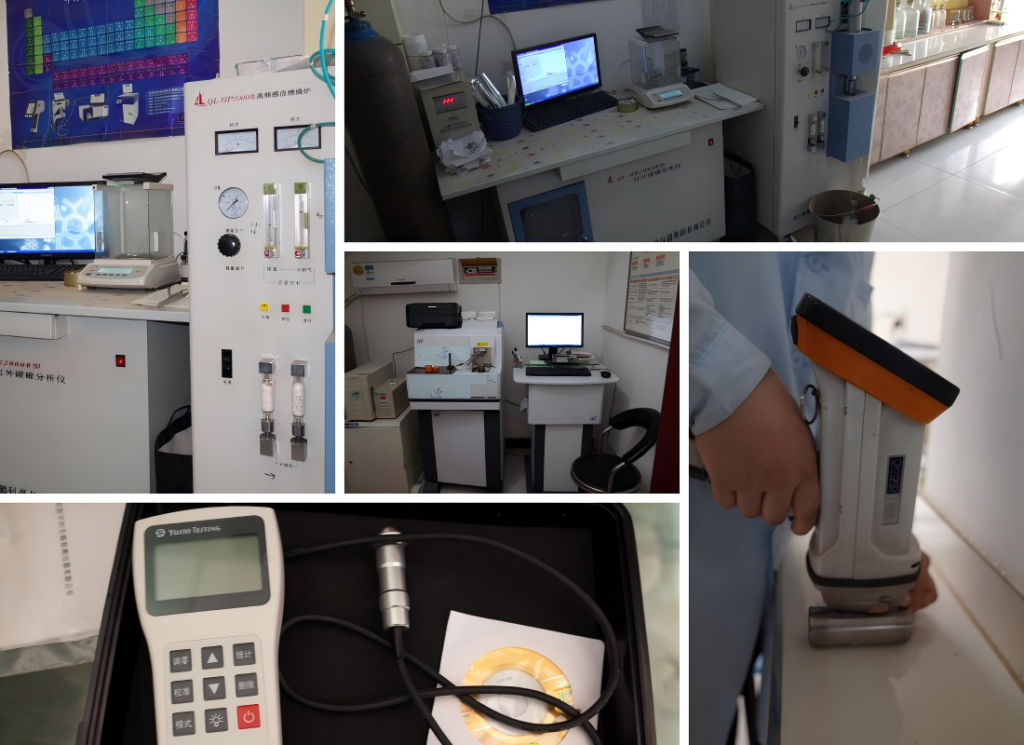
At JS FITTINGS, we don’t just sell pipes; we provide peace of mind. By combining advanced NDT technology with a rigorous quality management system, we ensure that every batch of ERW pipes we produce is ready to perform in the world’s most demanding industrial environments.
Whether you are a project manager looking for reliable material sourcing or a distributor needing consistent quality for your inventory, our technical team is here to support your requirements.
Looking for high-quality ERW pipes with certified integrity?
Visit our ERW Pipe Catalog or Contact our engineering team today to discuss your project specifications.
Email: info@jssteelpipes.com
WhatsApp: +8618003119682