In the global industrial sector, carbon steel pipes remain the backbone of oil, gas, water transport, and infrastructure projects. However, bare carbon steel is inherently susceptible to corrosion when exposed to harsh environmental conditions. To ensure longevity and structural integrity, coated carbon steel pipes have become the industry standard for major engineering projects and international trade.
In this guide, we provide an in-depth look at pipe coating technologies, selection criteria, and the differences between common protective layers.
1. What are Steel Pipes Coated With?
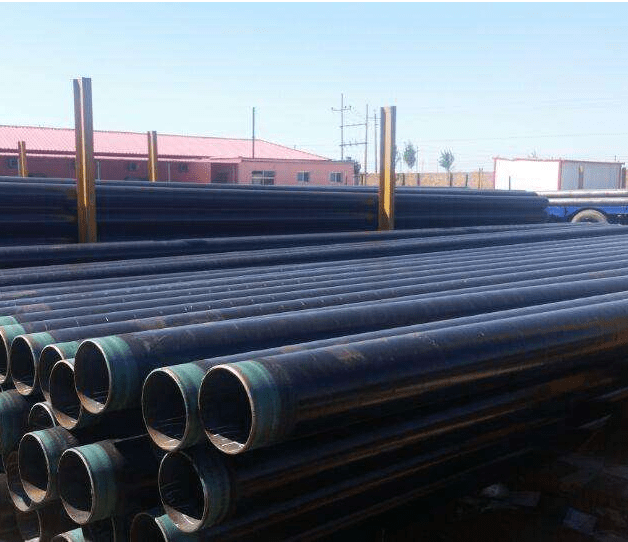
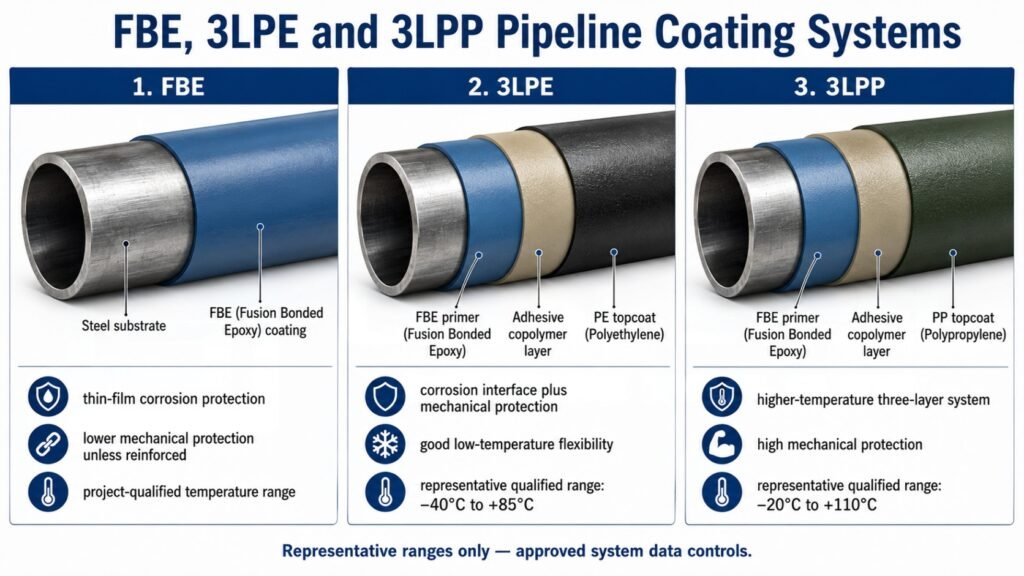
Steel pipe coatings are protective layers applied to prevent oxidation, chemical attack, and mechanical damage. Common coatings include:
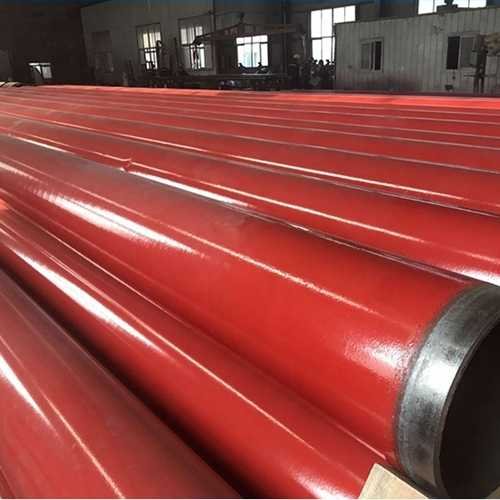
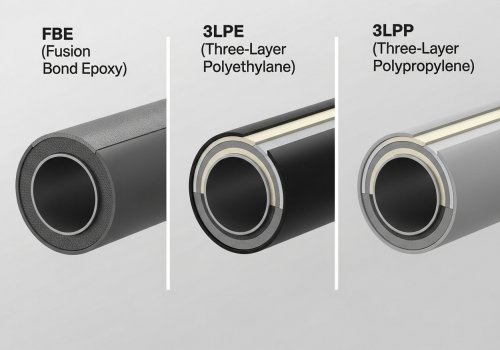
- Fusion Bonded Epoxy (FBE): A thermoset powder coating.
- 3LPE (Three-Layer Polyethylene): A multi-layer system providing superior mechanical protection.
- 3LPP (Three-Layer Polypropylene): Similar to 3LPE but offers higher temperature resistance.
- Galvanizing: A zinc coating applied via hot-dipping.
- Coal Tar Epoxy: A traditional heavy-duty coating for submerged environments.
2. Industrial Carbon Steel Pipes Types
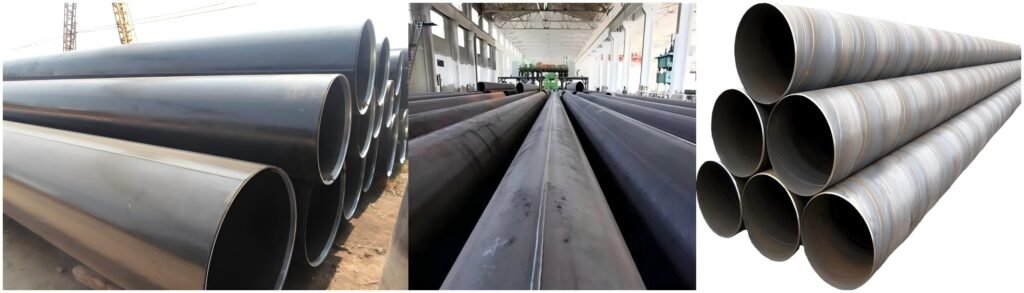
Carbon steel pipes are generally categorized based on manufacturing processes:
- Seamless Steel Pipe (SMLS): High-pressure resistance, ideal for critical oil and gas transport.
- ERW (Electric Resistance Welded): Cost-effective, commonly used for water and gas distribution.
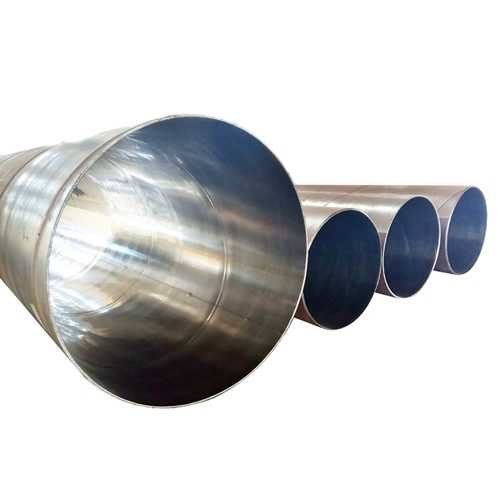
- LSAW/SSAW (Submerged Arc Welded): Used for large-diameter, high-pressure pipeline projects.
3. FBE vs. 3LPE Coatings pipes
What is the difference between 3LPE and FBE?
- FBE (Fusion Bonded Epoxy): This is a single-layer coating that provides excellent adhesion and corrosion resistance. It is often used as a primer. FBE is ideal for temperatures up to 85°C–110°C (depending on the specific resin).
- 3LPE: This is a three-layer system consisting of an FBE primer, a copolymer adhesive, and an outer polyethylene layer. It offers significantly higher mechanical resistance against impact and abrasion during transportation and installation.
4. FAQ: Coating Standards and Thickness
- How thick is the FBE coating?
Typically, the standard thickness for FBE ranges from 300 to 500 microns (0.3mm to 0.5mm), ensuring a balance between flexibility and protection.
- What is the standard for 3LPE coating?
The industry standard is governed by DIN 30670, ISO 21809-1, or CSA Z245.21, which dictates the mechanical and thermal requirements.
- Is coal tar epoxy better than FBE?
While coal tar epoxy has been a long-standing tradition for buried or submerged pipes due to its chemical resistance, FBE is generally preferred today due to its superior bonding strength, environmental friendliness, and application efficiency.
5. Addressing Common Carbon Steel Pipe Challenges
What are the common problems with carbon steel pipe?
The primary challenge is corrosion.
Over time, bare carbon steel reacts with moisture and oxygen (oxidation), leading to leaks or structural failure. This is why investing in high-quality coated carbon steel pipes is essential for any long-term infrastructure project.
6. Application-Specific Questions
- What is green coated steel pipe used for?
Green epoxy-coated steel pipe (often referred to as “Green Rebar” or epoxy-coated piping) is primarily used in corrosive environments, including marine infrastructure and sewage systems, to prevent chemical degradation.
- What is galvanized steel pipe used for?
Galvanization provides a sacrificial zinc layer. It is widely used in construction, handrails, and water supply lines where atmospheric corrosion is the main concern.
- How long does pipe coating last?
When applied according to international standards and handled correctly, a high-quality 3LPE or FBE coating can protect a pipe for 20 to 50 years in underground or subsea conditions.
7. Understanding Steel Pipe Grades
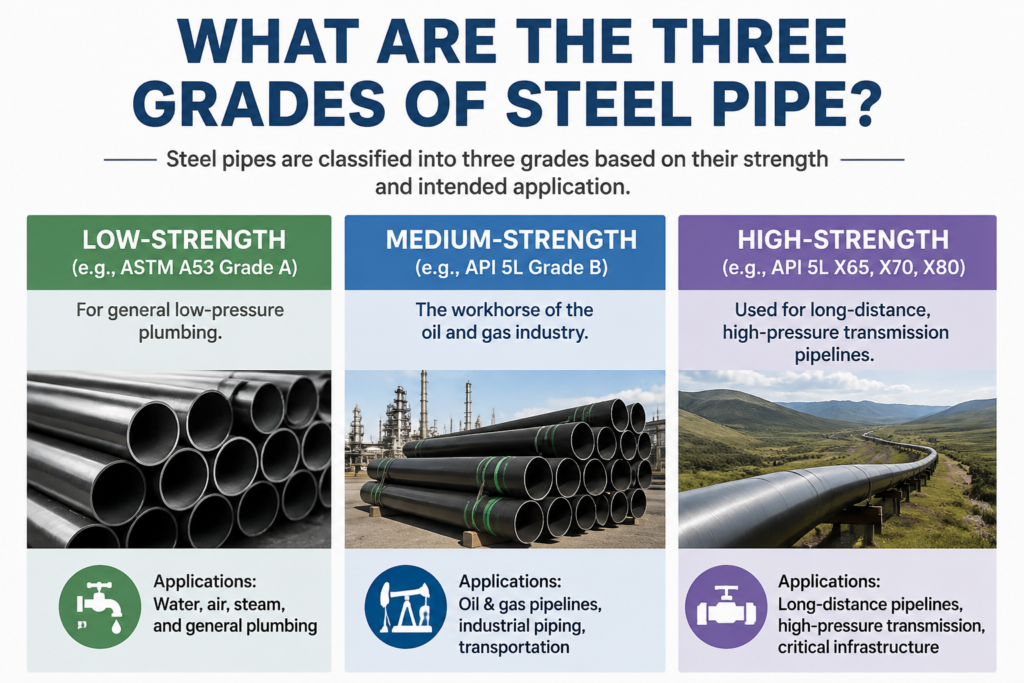
What are the three grades of steel pipe? While there are many sub-grades, the industry typically classifies them by yield strength:
- Low-Strength (e.g., ASTM A53 Grade A carbon steel pipes): For general low-pressure plumbing.
- Medium-Strength (e.g., API 5L Grade B carbon steel pipes): The workhorse of the oil and gas industry.
- High-Strength (e.g., API 5L X65, X70, X80 carbon steel pipes): Used for long-distance, high-pressure transmission pipelines.
Why Choose JS FITTINGS for Your Projects?
At JS FITTINGS, we understand that for distributors and project contractors, quality is non-negotiable. We specialize in providing API-certified carbon steel pipes with advanced coating solutions that meet the most stringent global standards.
Whether you require FBE-coated seamless pipes for a refinery project or 3LPE-coated LSAW pipes for a water transport network, our team ensures precision, durability, and on-time delivery.
Visit our product catalog here or contact our export team today for a customized quote tailored to your project specifications.
Email: info@jssteelpipes.com
WhatsApp: +8618003119682