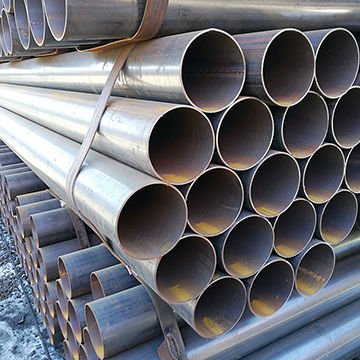
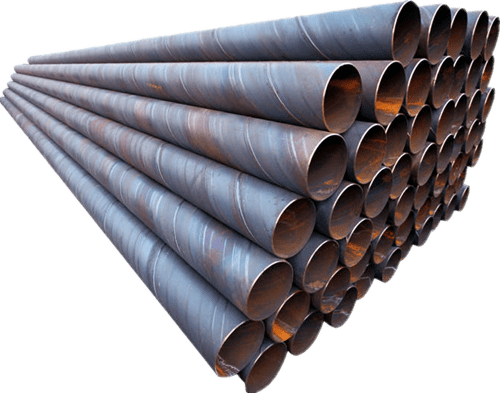
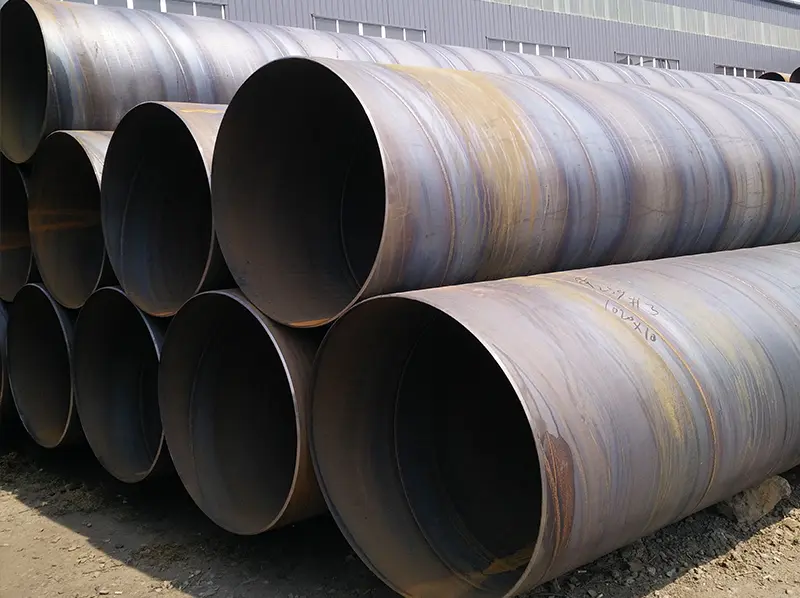
At first glance, the two may appear similar. Both cover steel pipe, both include seamless and welded products, and both can be supplied in commonly used carbon steel grades.
However, ASTM A53 pipe and API 5L line pipe are not interchangeable by default.
The critical difference is not simply strength or price. The two specifications were developed for different engineering purposes and impose different requirements for manufacturing, testing, material control, traceability and pipeline service.
For buyers comparing A53 vs API 5L, especially A53 Grade B vs API 5L Grade B, understanding these differences is essential before approving a material substitution or placing a purchase order.
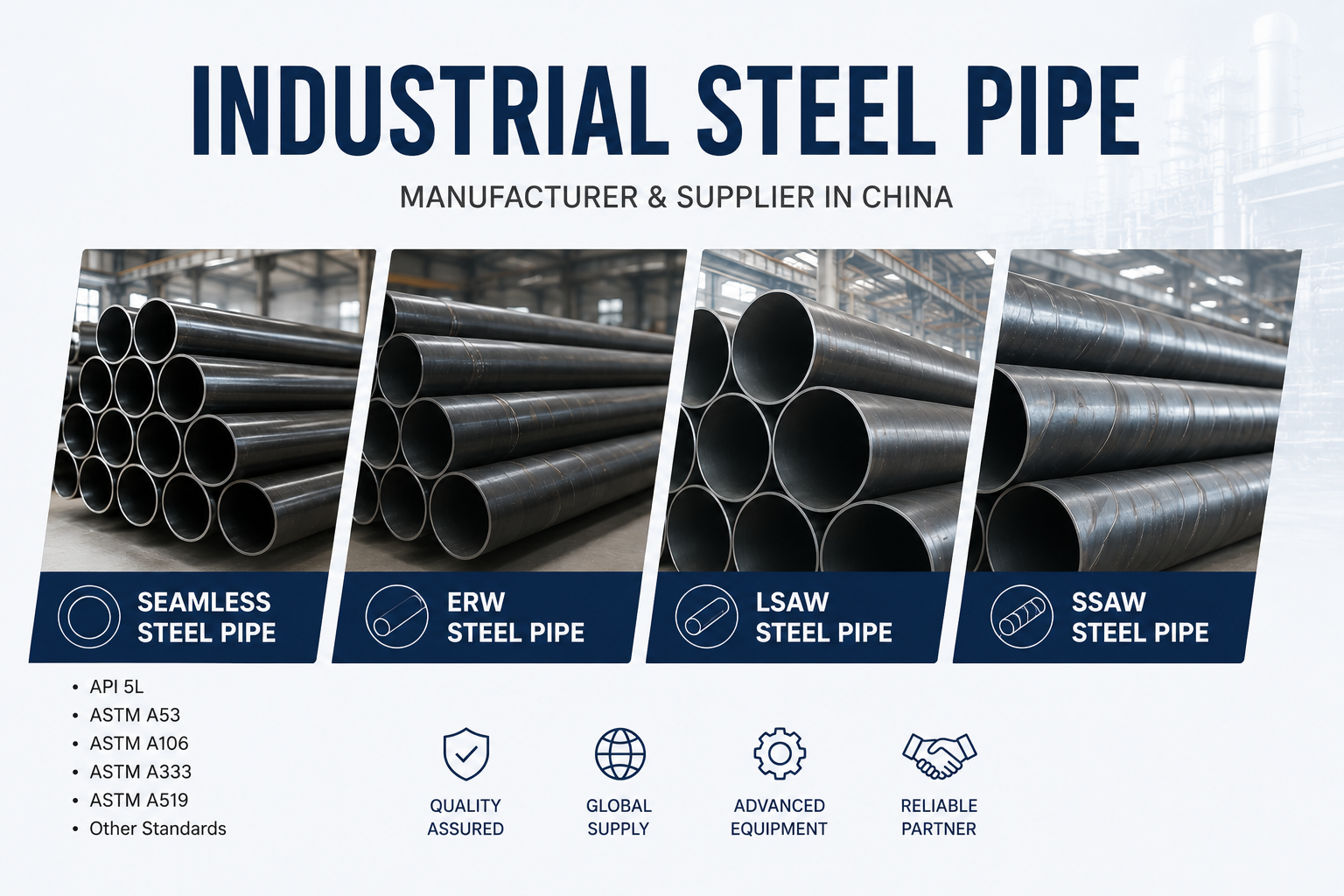
At JS FITTINGS, we supply industrial seamless steel pipe, ERW steel pipe, LSAW steel pipe and SSAW steel pipe for international industrial projects. This guide explains how ASTM A53 and API 5L should be evaluated from both an engineering and procurement perspective.
ASTM A53 vs API 5L: Quick Comparison
| Item | ASTM A53 | API 5L |
|---|---|---|
| Primary purpose | General-purpose pressure, mechanical and utility piping | Pipeline transportation systems |
| Typical applications | Water, air, steam, gas and general utility systems | Oil, natural gas and other pipeline transportation |
| Pipe types | Seamless, ERW, furnace-butt welded | Seamless and qualified welded manufacturing routes |
| Common grades | Grade A, Grade B | Grade B, X42, X52, X60, X65, X70 and others |
| PSL classification | No PSL system | PSL 1 and PSL 2 |
| Traceability requirements | Specification-dependent | More extensive, especially for PSL 2 |
| Impact testing | Depends on applicable requirements | More detailed requirements depending on grade, PSL and application |
| Pipeline-specific requirements | No | Yes |
| Typical project environment | Utility and general industrial piping | Oil & gas gathering, transmission and distribution pipelines |
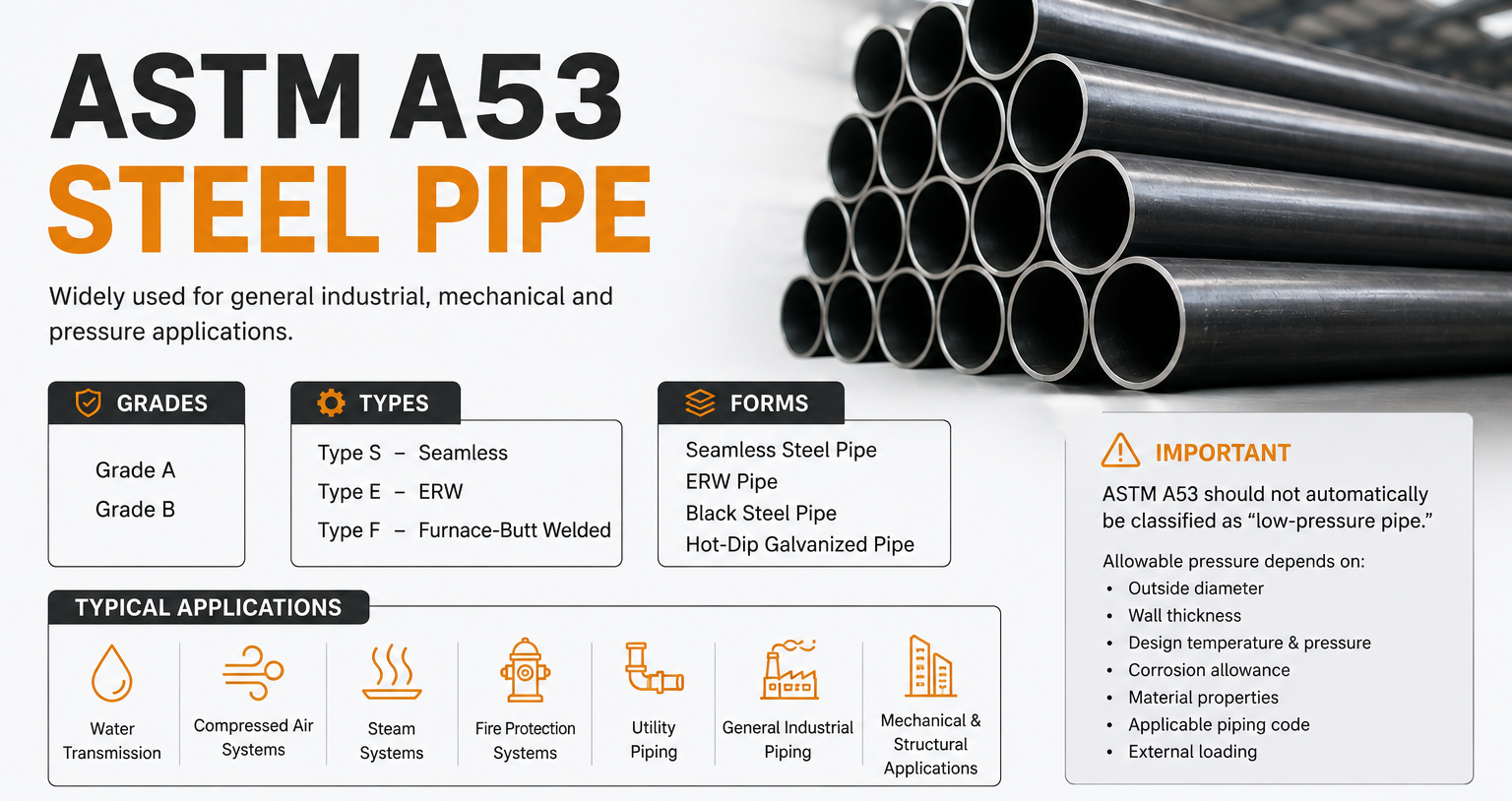
ASTM A53/A53M covers seamless and welded black steel pipe and hot-dipped galvanized steel pipe. The current ASTM listing identifies coverage from NPS 1/8 through NPS 26 and includes Type E, Type S and Type F products.
API Specification 5L, by contrast, is specifically focused on the manufacture of seamless and welded steel line pipe for pipeline transportation systems, particularly in the petroleum and natural gas industries.
1. What Is ASTM A53 Steel Pipe?
ASTM A53/A53M is a widely used specification for carbon steel pipe intended for general industrial, mechanical and pressure applications.
It covers:
- Seamless steel pipe
- Electric-resistance-welded pipe
- Furnace-butt-welded pipe
- Black steel pipe
- Hot-dip galvanized steel pipe
ASTM A53 includes Grade A and Grade B.
The specification identifies three manufacturing types:
- Type S – Seamless
- Type E – Electric Resistance Welded (ERW)
- Type F – Furnace-Butt Welded
ASTM specifically states that A53 pipe is suitable for applications involving steam, water, gas and air, as well as mechanical and pressure applications. It also addresses forming operations such as bending, coiling and flanging, subject to the applicable limitations.
Typical ASTM A53 Applications
ASTM A53 pipe is commonly considered for:
- Water transmission
- Compressed air systems
- Steam systems
- Fire protection systems
- Utility piping
- General industrial piping
- Mechanical applications
- Structural applications where permitted by the project specification
One important point for procurement teams:
ASTM A53 should not automatically be classified as “low-pressure pipe.”
The allowable pressure of a piping system depends on factors including:
- Outside diameter
- Wall thickness
- Design temperature
- Design pressure
- Corrosion allowance
- Material properties
- Applicable piping code
- External loading
Therefore, simply choosing a thicker or thinner A53 pipe based on the material name is not sufficient for engineering approval.
2. What Is API 5L Pipe?
API Specification 5L is designed for steel line pipe used in pipeline transportation systems.
Typical applications include:
- Crude oil pipelines
- Natural gas pipelines
- Gathering pipelines
- Transmission pipelines
- Pipeline distribution systems
- Water pipelines in specific pipeline projects
- Energy transportation infrastructure
API 5L covers both seamless and welded steel pipe and establishes requirements related to manufacturing, inspection, testing, marking and traceability.
Unlike ASTM A53, API 5L uses Product Specification Levels (PSL):
API 5L PSL1
PSL1 provides the standard level of technical requirements for line pipe.
API 5L PSL2
PSL2 introduces additional controls and requirements covering areas such as:
- Chemical composition
- Mechanical properties
- Testing
- Traceability
- Toughness
- Manufacturing controls
- Non-destructive examination
The exact requirements depend on the API 5L edition, pipe grade, size, manufacturing method and purchase specification.
This is why simply writing “API 5L PSL2” on an RFQ is not enough to completely define the product.
3. A Major 2026 Update: API 5L 47th Edition
There is an important development that buyers should be aware of when preparing new API 5L procurement specifications.
In June 2026, the American Petroleum Institute published the 47th Edition of API Specification 5L.
The new edition introduces updated requirements across more than 15 technical areas, including:
- High-frequency welded pipe quality
- CO₂ transportation pipelines
- Hydrostatic test pressure gauge calibration
- NDE personnel certification
- Magnetic particle testing
- Tensile testing
- Impact toughness
- Lamination control
- Sour-service requirements
- Sulfide stress cracking testing
- Chemical composition
- Record retention
This update is particularly important for international procurement.
What should buyers do?
Instead of specifying only:
API 5L
a new RFQ should preferably identify the required API 5L edition, PSL, grade, manufacturing process and other project-specific requirements.
This avoids uncertainty when a project is being executed during a transition between standard editions.
4. ASTM A53 Grade B vs API 5L Grade B
This is one of the most common questions in steel pipe procurement:
Is A53 Grade B the same as API 5L Grade B?
No.
Although both specifications use the designation Grade B, this does not mean that the pipes are technically equivalent.
The grade name alone cannot establish equivalence.
An engineering comparison should consider at least:
- Chemical composition
- Carbon equivalent
- Yield strength
- Tensile strength
- Elongation
- OD tolerance
- Wall-thickness tolerance
- Hydrostatic testing
- NDE requirements
- Impact requirements
- Pipe marking
- Heat-number traceability
- MTC requirements
- Project-specific inspection requirements
This is particularly important when someone proposes replacing an API 5L pipe with ASTM A53 simply because the outside diameter, wall thickness and nominal grade appear similar.
5. Is API 5L Stronger Than ASTM A53?
The answer is:
Not necessarily.
It is inaccurate to say that every API 5L pipe is automatically stronger than every ASTM A53 pipe.
The comparison must be made between specific grades.
ASTM A53 primarily includes Grade A and Grade B, while API 5L provides a broader range of grades, including higher-strength X grades such as:
- X42
- X52
- X60
- X65
- X70
API 5L therefore provides more options for high-strength pipeline applications.
However:
Higher yield strength does not automatically mean that a pipe can be designed with a thinner wall.
Pipeline wall thickness must also consider:
- Internal pressure
- External pressure
- Temperature
- Corrosion allowance
- Bending
- Axial loading
- Soil loading
- Installation conditions
- Fatigue
- Fracture toughness
- Applicable design code
Material strength is only one part of pipeline design.
6. Manufacturing Differences: A53 vs API 5L
Another important distinction is the manufacturing route.
ASTM A53
ASTM A53 recognizes:
Type S — Seamless
Manufactured without a longitudinal weld seam.
Type E — Electric Resistance Welded
Manufactured using an electric-resistance welding process.
Type F — Furnace Butt Welded
A furnace-butt-welded process covered by the specification.
ASTM’s current description confirms these product categories.
API 5L
API 5L covers seamless and welded line pipe manufactured through specified and controlled manufacturing routes.
Depending on the product, this can include:
- Seamless pipe
- ERW/HFW pipe
- Longitudinal welded pipe
- Submerged arc welded pipe
For large-diameter pipeline projects, LSAW and SSAW line pipe are frequently considered because of their ability to accommodate large diameters and heavier wall thicknesses.
At JS FITTINGS, our industrial steel pipe supply includes:
- Seamless steel pipe
- ERW steel pipe
- LSAW steel pipe
- SSAW steel pipe
Our website currently lists API 5L and ASTM specifications across these product categories.
7. API 5L PSL1 vs PSL2: What Is the Real Difference?
For procurement engineers, PSL is one of the most important differences between ASTM A53 and API 5L.
ASTM A53 does not use the PSL1/PSL2 classification.
API 5L does.
PSL1
PSL1 establishes the standard technical requirements for line pipe.
PSL2
PSL2 introduces additional mandatory controls.
Depending on the ordered product, these can include tighter controls over:
- Chemical composition
- Mechanical properties
- Toughness
- Testing
- NDE
- Manufacturing procedures
- Traceability
The 46th edition documentation describes PSL2 as having additional requirements for chemistry, notch toughness, strength properties and NDT compared with PSL1.
8. Can ASTM A53 and API 5L Replace Each Other?
| Substitution | Is It Automatically Acceptable? | What Must Be Checked? |
|---|---|---|
| ASTM A53 → API 5L | ❌ No | Material requirements, dimensions, testing, documentation, and project specifications |
| API 5L → ASTM A53 | ❌ No | Material requirements, dimensions, testing, applicable codes, and client requirements |
Key Requirements Before Substitution
| Category | Key Items to Verify |
|---|---|
| Material | Chemical composition, carbon equivalent, yield strength, tensile strength |
| Dimensions | OD, wall thickness, ovality, length, end preparation |
| Testing | Hydrostatic test, NDE, UT/MT, impact testing where required |
| Documentation | MTC, heat number, traceability, inspection reports, TPI |
| Project Requirements | Engineering specification, piping code, client approval, local regulations |
Key Takeaway:
ASTM A53 and API 5L are not automatically interchangeable. A proposed substitute must meet all mandatory requirements of the original specification and receive engineering/client approval where required.
9. A53 vs API 5L for Different Applications
| Application | More Typical Specification |
|---|---|
| Water utility piping | ASTM A53 |
| Compressed air | ASTM A53 |
| General industrial utility piping | ASTM A53 |
| Steam systems | ASTM A53 / project-specific |
| General mechanical applications | ASTM A53 |
| Oil & gas gathering pipeline | API 5L |
| Natural gas transmission | API 5L |
| Crude oil transmission | API 5L |
| Long-distance pipeline | API 5L |
| High-strength pipeline applications | API 5L X grades |
| Sour-service pipeline | API 5L with applicable additional requirements |
| CO₂ transportation pipeline | API 5L with applicable project requirements |
The table should be treated as a procurement starting point, not a design approval matrix.
The actual specification must always follow the project’s engineering documents.
10. What About ASTM A106?
Another common source of confusion is ASTM A106.
ASTM A106 is a different specification from both A53 and API 5L.
It is commonly associated with seamless carbon steel pipe for high-temperature service.
A simplified comparison is:
| Specification | Primary Focus |
|---|---|
| ASTM A53 | General-purpose welded/seamless steel pipe |
| ASTM A106 | Seamless carbon steel pipe for high-temperature service |
| API 5L | Line pipe for pipeline transportation |
For example, a refinery process line operating at elevated temperature may have very different material requirements from a long-distance natural gas transmission pipeline.
Therefore, choosing pipe based only on “carbon steel” is insufficient.
11. ASTM A53 vs API 5L: What Should Be Included in an RFQ?
A professional steel pipe RFQ should contain more information than:
“Please quote 6-inch API 5L pipe.”
For accurate technical and commercial quotation, we recommend specifying:
1. Standard
For example:
- API 5L
- ASTM A53
- ASTM A106
- ASTM A333
2. Edition
For API 5L projects, specify the required edition where applicable.
3. Grade
Examples:
- API 5L Grade B
- X42
- X52
- X60
- X65
- X70
- ASTM A53 Grade B
- ASTM A106 Grade B
4. PSL
For API 5L:
- PSL1
- PSL2
5. Manufacturing Process
Specify whether you require:
- Seamless
- ERW/HFW
- LSAW
- SSAW
6. Dimensions
Provide:
- NPS or OD
- Wall thickness
- Schedule
- Length
- Quantity
7. End Finish
For example:
- Plain end
- Beveled end
- Threaded end
- Coupled end where applicable
8. Testing
Clearly state whether the project requires:
- Hydrostatic testing
- Ultrasonic testing
- Radiographic testing
- Magnetic particle inspection
- Impact testing
- Additional NDE
9. Documentation
Depending on the project:
- MTC
- Heat-number traceability
- Inspection report
- Dimensional report
- Hydrotest report
- NDE report
- EN 10204 3.1 / 3.2 where specified
- Third-party inspection
10. Coating
If required:
- 3LPE / 3PE
- 2PE
- FBE
- Epoxy
- Galvanized
- External anti-corrosion coating
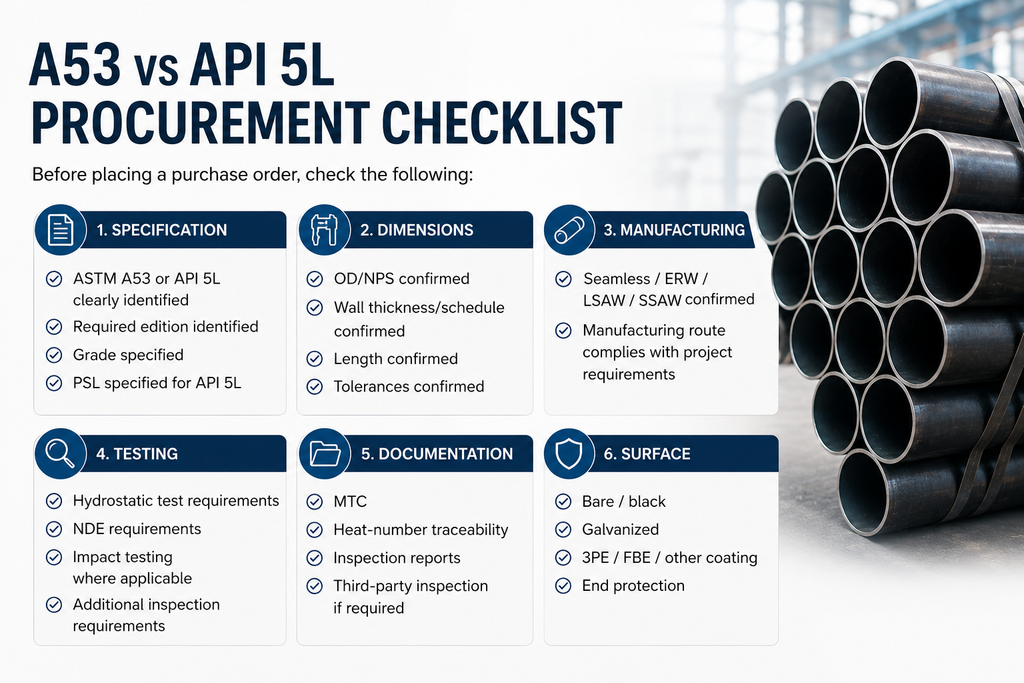
12. A53 vs API 5L Procurement Checklist
Before placing a purchase order, check the following:
| Item | What Buyers Should Specify |
|---|---|
| Steel Pipe Standard | ASTM A53, API 5L, ASTM A106, or other applicable specification |
| Edition & Grade | Required standard edition, steel grade, and PSL1 / PSL2 for API 5L |
| Pipe Dimensions | OD / NPS, wall thickness, Schedule, length, and dimensional tolerances |
| Manufacturing Process | Seamless, ERW, LSAW, or SSAW, according to project requirements |
| Testing & Inspection | Hydrostatic testing, NDE, impact testing, and additional inspection requirements |
| Material Documentation | MTC, heat-number traceability, inspection reports, and third-party inspection when required |
| Surface Treatment | Bare / black, galvanized, 3LPE, FBE, or other specified coating |
| Pipe End Protection | Plain end, beveled end, threaded end, end caps, or other required protection |
This checklist can significantly reduce the risk of receiving pipe that is dimensionally correct but technically or documentarily non-compliant.
13. Why the Difference Matters in Real Projects
The biggest procurement mistake is to treat steel pipe specifications as simple material labels.
For example:
“6-inch Grade B carbon steel pipe”
does not tell a supplier enough information.
The pipe could potentially be:
- ASTM A53 Grade B
- ASTM A106 Grade B
- API 5L Grade B
- Another project-specific specification
These products may have similar dimensions but different requirements.
Likewise:
“API 5L pipe”
does not completely define the product.
A professional RFQ should identify at least:
API 5L + Edition + Grade + PSL + Manufacturing Route + OD + WT + Length + Testing + Coating + Documentation
This level of detail allows the manufacturer and buyer to establish exactly what is being purchased.
14. How JS FITTINGS Supplies Industrial Steel Pipe
JS FITTINGS is an industrial steel pipe manufacturer and supplier in China, serving international industrial and energy projects.
Our steel pipe product range includes:
Seamless Steel Pipe
Typical standards include:
- API 5L
- ASTM A53
- ASTM A106
- ASTM A333
- ASTM A519
- Other project-specific standards
ERW Steel Pipe
Available for applications requiring electric resistance welded pipe, including industrial piping and line pipe projects subject to the applicable specification.
LSAW Steel Pipe
Large-diameter longitudinal submerged arc welded pipe for demanding industrial and pipeline applications.
SSAW Steel Pipe
Our current product range covers seamless, ERW, LSAW and SSAW steel pipe, with standards including API 5L and ASTM A53 among others.
Spiral submerged arc welded pipe for large-diameter pipeline and infrastructure applications.
15. A53 vs API 5L: Final Verdict
There is no universal winner between ASTM A53 and API 5L.
The correct choice depends on the application.
Choose ASTM A53 when:
- The project specifies A53
- General utility piping is required
- Water, air or steam service is involved
- Standard commercial pipe is appropriate
- The applicable design code accepts the specification
Choose API 5L when:
- The pipe is part of a pipeline transportation system
- Oil or natural gas transportation is involved
- The project requires API line pipe
- Higher-strength X grades are required
- PSL1 or PSL2 requirements are specified
- Detailed pipeline traceability and testing are required
Most importantly:
Do not select steel pipe based only on nominal grade, outside diameter or price.
The specification, grade, PSL, manufacturing route, testing requirements and documentation package must all match the engineering requirement.
Frequently Asked Questions
Is ASTM A53 Grade B equivalent to API 5L Grade B?
No. Although both use the designation Grade B, they are different specifications with different scopes and requirements. Engineering equivalence must be demonstrated rather than assumed.
Is API 5L stronger than A53?
Not automatically. API 5L provides a wider range of line-pipe grades, including higher-strength X grades, but strength must always be compared grade-to-grade.
Can A53 replace API 5L?
Not automatically. Substitution requires confirmation that the A53 pipe meets the project’s technical, testing and documentation requirements and normally requires approval from the responsible engineer or client.
Can API 5L replace A53?
Not automatically either. The proposed API 5L pipe must satisfy the original project specification and applicable code.
What is the difference between API 5L PSL1 and PSL2?
PSL2 introduces additional requirements and controls compared with PSL1, including requirements related to chemistry, mechanical properties, testing and traceability. The exact requirements depend on the ordered grade, size, manufacturing route and applicable edition.
Is API 5L only for oil and gas?
API 5L is specifically intended for line pipe used in pipeline transportation systems, particularly petroleum and natural gas applications. Its use in other services depends on the project specification and engineering requirements.
What is the latest API 5L edition?
As of 2026, API has published the 47th Edition of API Specification 5L. It was announced on June 2, 2026.
Need Help Selecting A53 or API 5L Pipe?
Choosing between ASTM A53, ASTM A106 and API 5L depends on more than nominal size and material grade.
If you are preparing an RFQ, send JS FITTINGS:
- Pipe standard
- Grade
- PSL
- OD / NPS
- Wall thickness
- Length
- Quantity
- Seamless / ERW / LSAW / SSAW
- Testing requirements
- Coating requirements
- MTC / inspection requirements
- Project application
Our technical team can review the specification and recommend a suitable industrial steel pipe solution for your project.
JS FITTINGS — Industrial Steel Pipe Exporter & Supplier
Email: info@jssteelpipes.com
WhatsApp: +8618003119682