Carbon steel pipe is pipe made from carbon steel — an iron-carbon alloy in which carbon is the main alloying element, typically 0.12% to 2.0%. It is used where strength and cost matter more than corrosion resistance: oil and gas lines, water supply, structural piling, power plants and general manufacturing.
It comes in two forms — seamless carbon steel pipe, formed from a solid billet with no weld, and welded carbon steel pipe, formed from plate or coil. Which one a project buys depends on pressure, diameter and budget. This article explains what the material is, where it is used, and what to check before ordering.
What is carbon steel pipe?
Carbon steel gets its name from its composition. Carbon is the main alloying element, with manganese, silicon, phosphorus and sulfur controlled within the limits of the applicable standard. Adding carbon raises strength and hardness, but it also reduces ductility and makes welding more demanding. That trade-off is why different carbon levels suit different jobs.
In pipe form, the material is specified by standard and grade rather than by carbon content alone. Common examples are ASTM A106 Gr.B for high-temperature pressure service, ASTM A53 for general use, ASTM A333 Gr.6 for low temperature, and API 5L grades for oil and gas transmission. The standard sets the chemistry, mechanical properties, testing and dimensional tolerances.
For a buyer’s guide to grades, sizes and how to write a specification, see carbon steel pipe: grades, standards and sizes.
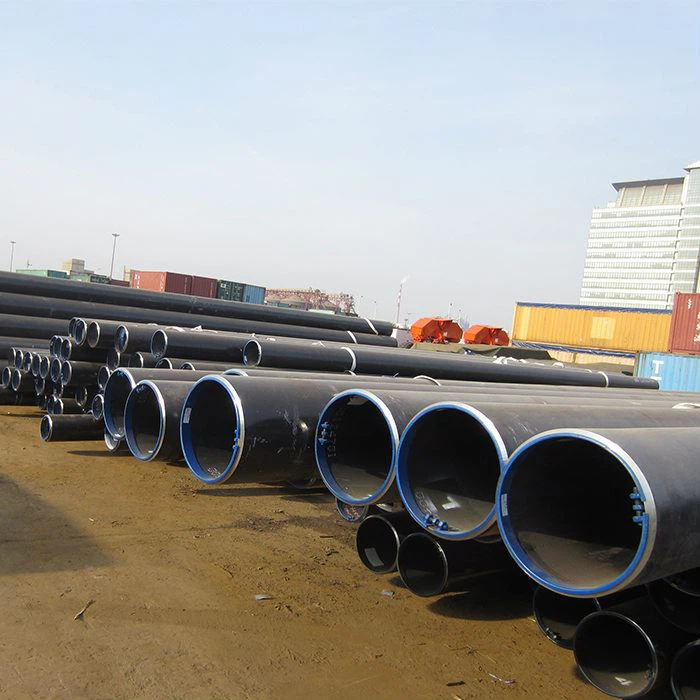
How carbon steel pipe is made
There are two routes, and they produce pipes with different strengths and price points.
Seamless (SMLS). A solid steel billet is heated and pierced, then rolled and sized into a hollow tube. Because seamless pipe has no longitudinal manufacturing weld seam, it is commonly specified for pressure piping, high-temperature service and applications requiring seamless construction.
Welded. Steel plate or coil is formed into a cylinder and the edges are joined. ERW uses high-frequency electric resistance welding and is economical in small and medium diameters. LSAW and SSAW use submerged arc welding for large-diameter pipe, with straight and spiral seams respectively.
Neither route is simply “better”. Seamless costs more and becomes hard to source above roughly 20″ OD. Welded pipe covers the large diameters and high volumes that seamless cannot match economically.
Main uses of carbon steel pipe
Oil and gas
Carbon steel is the standard material for oil and gas transmission. High tensile strength at manageable cost makes it suitable for long-distance lines carrying oil, gas and refined products under pressure. Seamless or ERW pipe is common in gathering systems and smaller lines; LSAW and SSAW take the large-diameter trunk lines. Where the line is offshore, sour or high-pressure, the project specification will usually require PSL2 line pipe and a defined test scope.
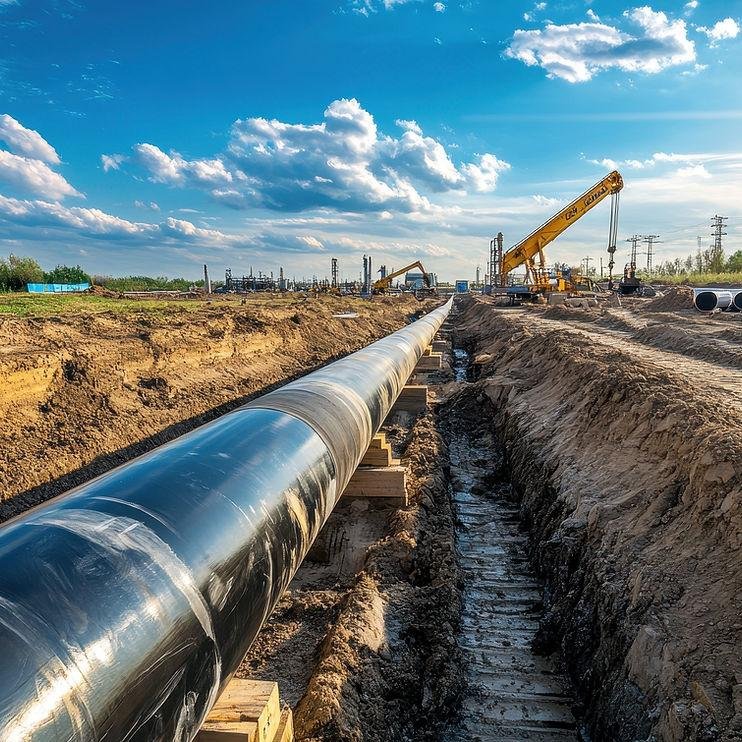
Water and wastewater
Municipal water mains, irrigation networks, drainage and sewage systems rely heavily on carbon steel pipe, usually in large diameters and welded form. Because the pipe is buried, corrosion protection is part of the specification — typical systems are FBE, 3PE/3LPE and cement mortar lining for potable water. Our 3PE vs FBE comparison explains which to choose.
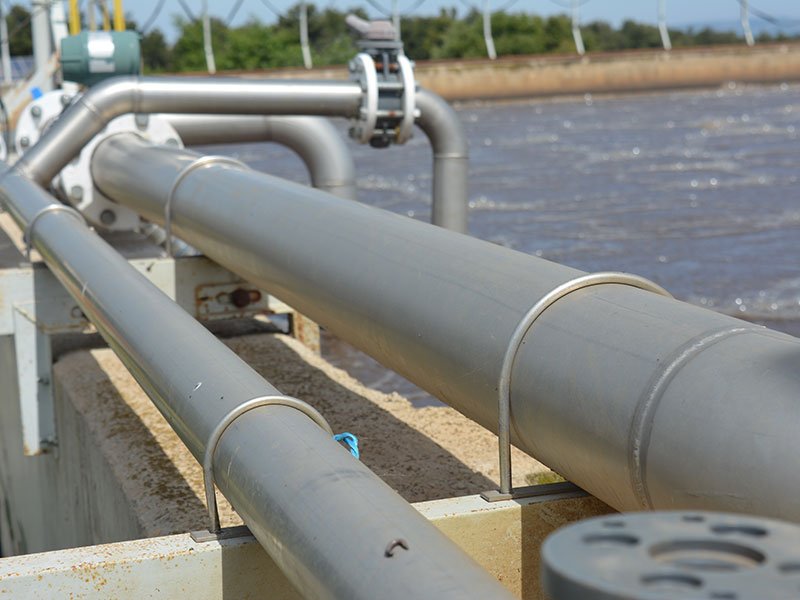
Construction and infrastructure
Carbon steel pipe is also used in foundation piling, marine structures, bridge foundations and infrastructure projects. ASTM A252 is a commonly specified standard for welded and seamless steel pipe piles, with Grade 2 and Grade 3 used according to project design requirements. Large-diameter welded pipes are often selected where foundation loads and structural dimensions require them.
Power generation and process plants
Refineries, petrochemical plants and power stations use carbon steel pipe for steam lines, boilers and high-temperature process piping. ASTM A106 Gr.B is the common specification here because it is written for elevated-temperature pressure service.
General manufacturing and machinery
Beyond pipelines, carbon steel pipe appears in heat exchangers, conveyor systems, hydraulic lines, exhaust systems and machine frames. Its combination of strength, availability and low cost makes it the default choice where corrosion is not the controlling factor.
Which Type of Carbon Steel Pipe Is Used for Different Applications?
The manufacturing method is selected according to pipe diameter, wall thickness, operating conditions and project requirements.
| Pipe Type | Common Applications |
|---|---|
| Seamless Steel Pipe (SMLS) | High-temperature pressure piping, refinery systems and industrial fluid transportation |
| ERW Steel Pipe | General industrial piping, water systems, gas distribution and structural applications |
| LSAW Steel Pipe | Large-diameter oil and gas transmission, water pipelines and infrastructure projects |
| SSAW Steel Pipe | Large-diameter water transmission, oil and gas pipelines, piling and infrastructure |
The choice should always follow the applicable material standard, design requirements and project specifications. No manufacturing method is automatically suitable for every application.
Why carbon steel dominates these applications
Three reasons explain most of the demand:
- Strength. Carbon steel withstands high internal pressure and mechanical load.
- Cost. It is significantly cheaper than stainless steel or alloy pipe for the same diameter and wall.
- Workability. It can be welded, cut, threaded, bent and coated with well-established processes.
The main limitation is corrosion. Untreated carbon steel rusts, so outdoor, buried and submerged installations need a coating system and often cathodic protection. That is a spec decision, not a reason to avoid the material.
Carbon steel vs stainless steel
Stainless steel contains chromium, which forms a passive layer that resists corrosion. It costs more and is specified when the fluid is aggressive, the environment is coastal, or product purity matters. Carbon steel remains the choice for most high-strength, cost-sensitive piping. The two materials are compared in more detail in carbon steel vs stainless steel pipe.
What to check before you buy
Knowing what the pipe is used for is only the start. Before ordering, confirm:
- The applicable standard, grade and edition — for example API 5L PSL2, 47th edition.
- Size, wall thickness and schedule, with the exact OD and wall combination.
- The manufacturing route — seamless, ERW, LSAW or SSAW.
- End finish, coating and length.
- The test scope and documentation — MTC type, NDT coverage and third-party inspection.
Those five items turn a general material question into a purchase order a supplier can quote. The full checklist is in the carbon steel pipe buying guide.
Frequently asked questions
What is carbon steel pipe used for?
Carbon steel pipe is used for oil and gas transmission, water supply and wastewater, structural piling, power generation, process plants and general manufacturing. It is chosen where strength and cost matter more than corrosion resistance.
Why is carbon steel pipe used in oil and gas?
Because it offers high tensile strength at manageable cost and can be made to API 5L with controlled chemistry, testing and traceability. Seamless and ERW pipe serve smaller lines; LSAW and SSAW serve large-diameter trunk lines.
Is carbon steel pipe used for water supply?
Yes. Municipal water mains, irrigation and drainage systems commonly use large-diameter welded carbon steel pipe with internal and external corrosion protection such as FBE, 3PE or cement mortar lining.
Can carbon steel pipe be used for structural applications?
Yes. ASTM A252 carbon steel pipe is widely used for foundation piling, marine structures and bridge supports, where large diameter and wall thickness carry heavy loads.
Does carbon steel pipe rust?
Yes. Untreated carbon steel oxidises. Coatings such as galvanizing, FBE, 3PE and epoxy, together with cathodic protection where needed, control corrosion effectively.
How long does carbon steel pipe last?
Service life depends on the fluid, coating and environment. With a suitable coating and inspection programme, buried and industrial carbon steel pipelines routinely achieve decades of service.
Is carbon steel pipe recyclable?
Yes. Carbon steel is one of the most recycled materials in use. Scrap pipe can be remelted and reformed without losing its structural properties.
What is the difference between carbon steel and stainless steel pipe?
Carbon steel contains mainly iron and carbon and offers high strength at low cost. Stainless steel contains chromium for corrosion resistance and costs more. The choice depends on the fluid, environment and budget.
Need carbon steel pipe for a project?
JS FITTINGS supplies seamless, ERW, LSAW and SSAW carbon steel pipe to ASTM and API 5L, with coating and third-party inspection available. Send your specification to info@jssteelpipes.com or WhatsApp +86 180 0311 9682 for a quote.