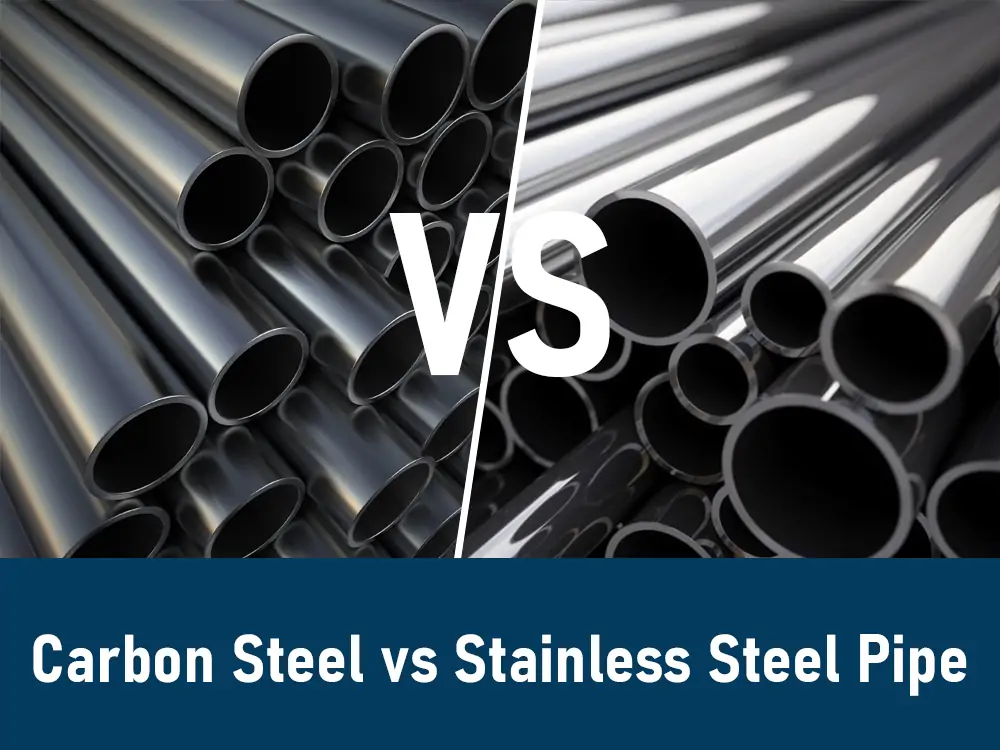
Carbon Steel vs. Stainless Steel Pipe: Which Is Better for Your Project?
The right industrial steel pipe choice depends on the fluid being transported, operating pressure and temperature, corrosion conditions, and the total cost of ownership.
Carbon steel pipe is often the more economical choice for oil and gas pipelines, steam lines, industrial utilities, and general process piping where its corrosion resistance limitations can be managed.
Stainless steel pipe is usually preferred when the process medium, contamination requirements, or operating environment demands greater corrosion resistance.
For engineers, EPC contractors, pipe distributors, and procurement teams, understanding these differences helps avoid unnecessary material costs without compromising project requirements.
1. Carbon Steel vs. Stainless Steel Pipe: Key Differences
| Comparison | Carbon Steel Pipe | Stainless Steel Pipe |
|---|---|---|
| Main alloying elements | Primarily iron and carbon | Iron, chromium, and other alloying elements |
| Corrosion resistance | Limited without protection | Generally better, depending on grade and environment |
| Initial material cost | Generally lower | Generally higher |
| Mechanical performance | Good strength and load-bearing capacity, depending on grade | Varies by grade; some grades offer excellent strength and toughness |
| Fabrication | Widely used in conventional industrial welding and fabrication | Requires grade-appropriate fabrication and contamination control |
| Typical applications | Oil and gas, steam, utilities, industrial pipelines | Chemical processing, corrosive service, marine and high-purity systems |
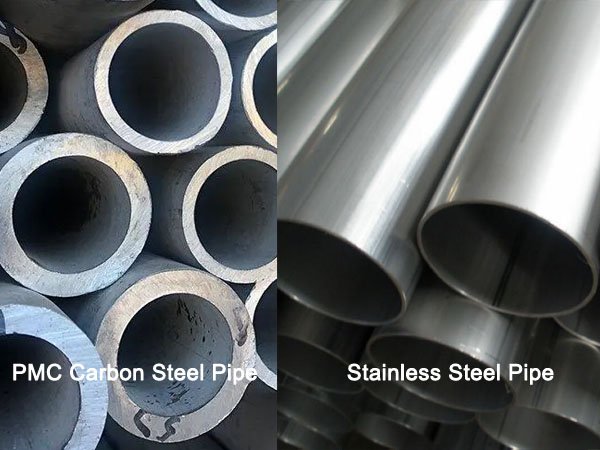
Carbon steel pipes offer a practical balance of strength, availability, and cost, while stainless steel pipes provide corrosion resistance that can be essential in demanding environments.
2. Carbon Steel vs. Stainless Steel Pipe Cost
Carbon steel pipe generally has a lower purchase price because it does not require the same levels of alloying elements, such as chromium and nickel, used in many stainless steel pipes.
However, the purchase price alone does not determine the most economical option.
A proper cost comparison should include:
- Initial material cost: Compare quotations for equivalent sizes, wall thicknesses, grades, and delivery conditions.
- Corrosion protection: Carbon steel may require external coatings, internal linings, or a specified corrosion allowance.
- Installation and fabrication: Consider welding procedures, consumables, labor, and inspection requirements.
- Maintenance and replacement: Evaluate the expected service life under actual operating conditions.
In a non-aggressive service environment, carbon steel can provide substantial cost savings without requiring the additional corrosion resistance of stainless steel.
In corrosive service, however, the cost of coatings, maintenance, and replacement may make stainless steel or another corrosion-resistant material the better long-term investment.
The practical rule: Compare the total installed and lifecycle cost of materials that first meet the project’s engineering requirements. Never select a lower-cost pipe that is unsuitable for the service conditions.
3. When Is Stainless Steel Pipes Necessary?
Corrosion resistance is the most important distinction between carbon steel and stainless steel pipe.
Carbon steel can corrode when exposed to moisture, oxygen, corrosive chemicals, or unsuitable water chemistry. Depending on the application, protection may involve external coatings, internal linings, cathodic protection, or an appropriate corrosion allowance.
Stainless steel contains sufficient chromium to form a passive surface film that helps resist corrosion. Its actual performance depends on the grade and the environment.
For example:
- Carbon steel pipe: Often suitable for oil, gas, steam, and general industrial services when the specified grade and corrosion-control measures meet the design requirements.
- 304/304L stainless steel pipe: Commonly used for general corrosion-resistant applications where the process environment is compatible with the grade.
- 316/316L stainless steel pipe: Often considered for more demanding chemical or chloride-containing environments, although it is not immune to chloride-induced corrosion.
One important point: stainless steel does not automatically eliminate corrosion risks. Chloride concentration, temperature, crevices, deposits, and fabrication quality can all affect performance.
For water transportation, material selection should account for water chemistry, pressure, temperature, and the required lining or coating system. Carbon steel can be an economical option for many water pipelines, but suitable corrosion protection must be specified where necessary.
4. Strength, Pressure, and Temperature: Which Pipe Performs Better?
Carbon steel is widely used in industrial pressure piping because suitable grades offer reliable mechanical properties at competitive cost.
For example, ASTM A106 Grade B seamless carbon steel pipe is commonly specified for high-temperature service. ASTM A53 covers black and hot-dipped zinc-coated steel pipe, including designated welded and seamless products.
For stainless steel, ASTM A312 covers seamless, welded, and heavily cold-worked austenitic stainless steel pipe intended for high-temperature and general corrosive service.
These specifications are not interchangeable. A pipe’s suitability depends on the exact grade, wall thickness, manufacturing route, design code, and operating conditions.
When comparing carbon steel vs. stainless steel pipe for pressure service, engineers should verify:
- Design pressure and temperature.
- Required material grade and allowable stress.
- Nominal pipe size and schedule.
- Minimum design wall thickness and corrosion allowance.
- Impact testing, heat treatment, and other supplementary requirements where applicable.
Carbon steel should not automatically be considered stronger, and stainless steel should not automatically be considered suitable for every high-temperature application. The approved material and thickness must satisfy the applicable design requirements.
5. Which Pipe Should You Choose for Different Applications?
| Application | Common material consideration | Key selection factor |
|---|---|---|
| Oil and gas transmission | Carbon steel, including specified API 5L grades | Pipeline design, fluid composition, corrosion control |
| Steam and industrial process piping | ASTM A106 carbon steel for suitable service | Design temperature, pressure, and grade |
| General industrial water pipelines | Carbon steel with appropriate protection, or stainless steel | Water chemistry and corrosion requirements |
| Chemical processing | Stainless steel or other corrosion-resistant materials where required | Chemical compatibility and concentration |
| Marine or chloride-rich service | Appropriate stainless, duplex, or other corrosion-resistant alloys | Chloride exposure and temperature |
| High-purity process systems | Specified stainless steel grades and finishes | Contamination control and surface requirements |
For many conventional industrial pipelines, carbon steel remains a sensible choice when its mechanical properties, corrosion-control system, and service limits meet the project specification.
Where the process medium is highly corrosive, the correct stainless steel grade—or another suitable alloy—may be necessary.
6. Why Is Carbon Steel Pipe More Popular for Industrial Buyers?
For pipe stockists, distributors, and project procurement teams, carbon steel offers several commercial and technical advantages.
Competitive procurement cost
Carbon steel generally provides a lower material cost than comparable stainless steel pipe, making it attractive for projects involving substantial pipe quantities.
Broad industrial applications
Depending on the specification, carbon steel pipe can serve oil and gas, industrial utilities, power generation, construction, and general process piping.
Flexible product selection
Buyers can select among different manufacturing methods, grades, diameters, wall thicknesses, and end preparations to match their project requirements.
Established fabrication practices
Carbon steel is widely used in industrial fabrication, with familiar welding, cutting, and installation practices when the correct procedures are followed.
Practical inventory management
For distributors, commonly specified carbon steel grades and dimensions can support a broad range of customer requirements. Standardizing inventory around actual market demand may also help control stockholding costs.
At JS FITTINGS, we supply industrial steel pipe solutions for overseas distributors, stockists, and project buyers. Our focus is on helping customers match pipe specifications to their intended applications, including material grade, dimensions, wall thickness, manufacturing method, and required documentation.
The objective is not to recommend carbon steel for every project, but to identify where it delivers the right combination of performance, availability, and procurement value.
7. What Should Buyers Confirm Before Ordering Steel Pipe?
Before requesting a quotation, prepare the following information:
- Material standard and grade: For example, ASTM A106 Grade B, ASTM A53 Grade B, or the required API 5L grade.
- Pipe dimensions: Nominal pipe size, schedule or specified wall thickness, and length.
- Manufacturing method: Seamless, ERW, LSAW, or SSAW, as required by the specification.
- Operating conditions: Fluid medium, design pressure, temperature, and corrosion exposure.
- Surface protection: Required coating, lining, or other corrosion-control measures.
- Inspection and documentation: Applicable tests, inspection requirements, marking, and material test certificates.
Clear specifications help suppliers prepare comparable quotations and reduce the risk of ordering material that does not meet the project’s requirements.
Email: info@jssteelpipes.com
WhatsApp: +8618003119682
Frequently Asked Questions
Carbon steel pipe VS. stainless steel pipe
Neither is universally better. Carbon steel is often more economical for suitable industrial services, while stainless steel is preferred when the operating environment requires greater corrosion resistance.
Why is carbon steel pipe cheaper than stainless steel pipe?
Carbon steel generally contains fewer expensive alloying elements than stainless steel. Its lower initial material cost can make a significant difference in large-volume industrial projects.
Can carbon steel pipe be used for water?
Yes, in suitable applications. However, water chemistry, oxygen content, temperature, and operating conditions affect corrosion. The appropriate coating, lining, or other protection should be determined by the project requirements.
Is stainless steel pipe always more corrosion-resistant?
No. Corrosion resistance depends on the stainless steel grade and the environment. Even 316 stainless steel can suffer localized corrosion under certain chloride conditions.
Which standard should I specify for carbon steel pipe?
It depends on the intended service. ASTM A106 is commonly used for seamless carbon steel pipe in high-temperature service, ASTM A53 covers designated general-service pipe products, and API 5L is used for line pipe applications. The project specification and applicable design code determine the appropriate choice.
Final Recommendation
When comparing carbon steel vs. stainless steel pipe, start with service conditions and engineering requirements, then evaluate purchase price, corrosion protection, fabrication, and expected service life.
For many non-aggressive industrial applications, carbon steel pipe offers an effective balance of mechanical performance and cost. Stainless steel is worth the additional investment when its corrosion resistance or other specified properties are genuinely required.
Looking for carbon steel pipe for an industrial project or distribution inventory? Contact JS FITTINGS with your required standard, grade, size, wall thickness, quantity, and application. Our team can help review the requirements and provide a quotation based on your specifications.