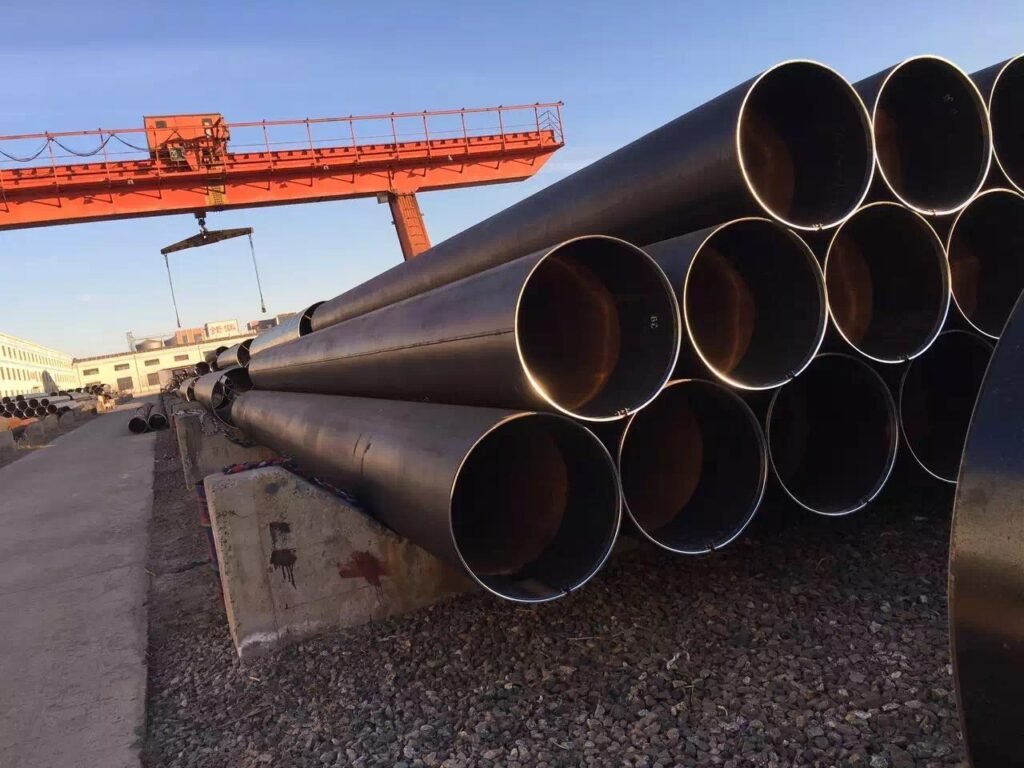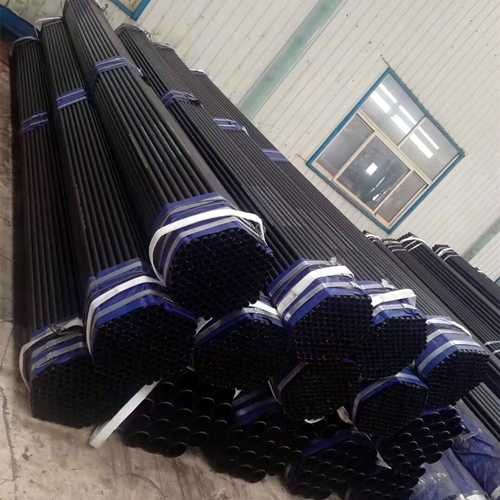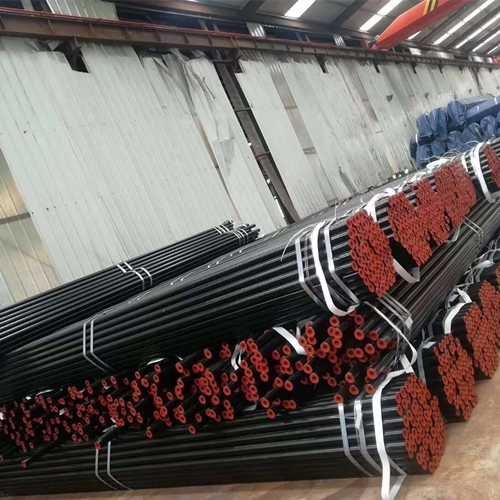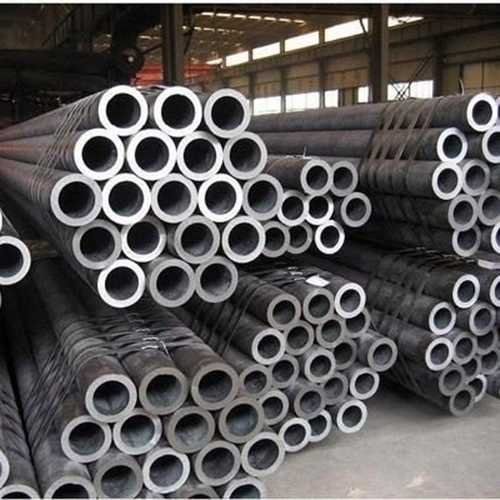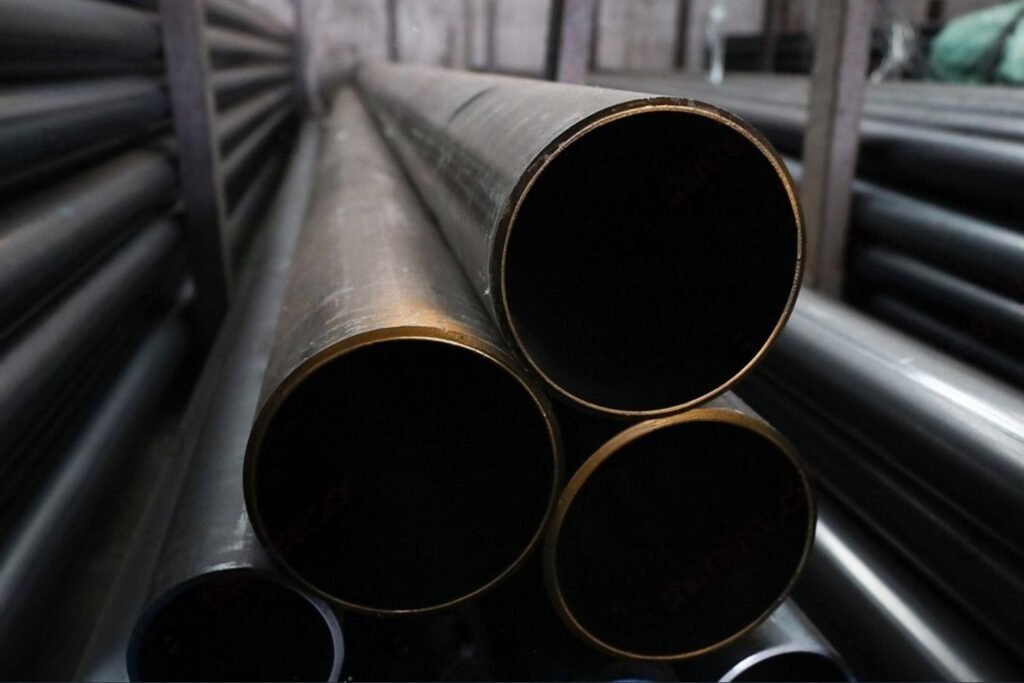
When it comes to high-pressure environments, structural integrity, and cost-effective fluid transport, carbon steel pipe remains the backbone of modern industry. Whether you are a stock distributor managing large inventories, a trading agent sourcing for a client, or an engineering contractor designing a pipeline for oil and gas, understanding the nuances of carbon steel is critical.
In this guide, we will break down everything from carbon steel pipe dimensions to the specific differences between seamless and welded pipes, helping you make an informed procurement decision.
1. What is Carbon Steel Pipe?
A carbon steel pipe is a durable tube made from a steel alloy primarily consisting of iron and carbon. Unlike stainless steel, which contains high levels of chromium, carbon steel focuses on strength and weldability.
Commonly referred to as black carbon steel pipe due to the dark iron oxide coating formed during manufacturing, these pipes are essential for transporting oil, gas, water, and steam in industrial settings.
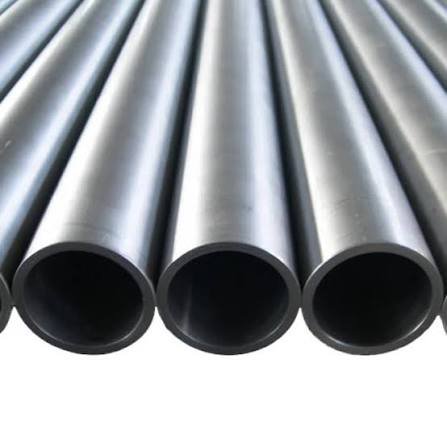
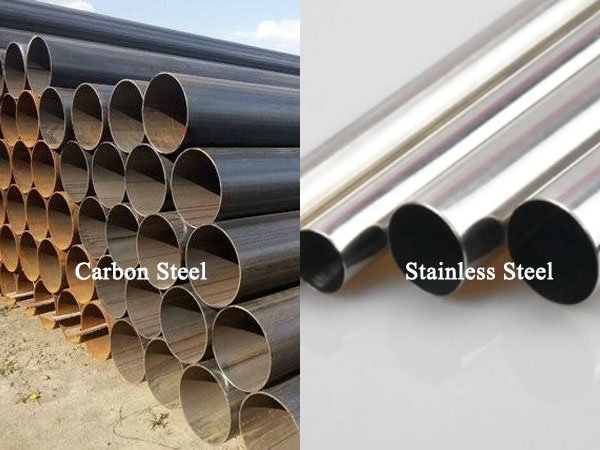
Carbon Steel vs. Stainless Steel Pipe: Which One Do You Need?
The carbon steel vs stainless steel pipe debate usually comes down to two factors: Cost and Corrosion Resistance.
- Carbon Steel: Higher strength, easier to weld, and significantly more affordable. Ideal for high-pressure, high-temperature industrial projects where extreme corrosion resistance isn’t the primary concern.
- Stainless Steel: Expensive, used primarily for food-grade applications or highly corrosive environments (acid/saltwater).
- Note: Our facility specializes exclusively in industrial-grade carbon steel solutions.
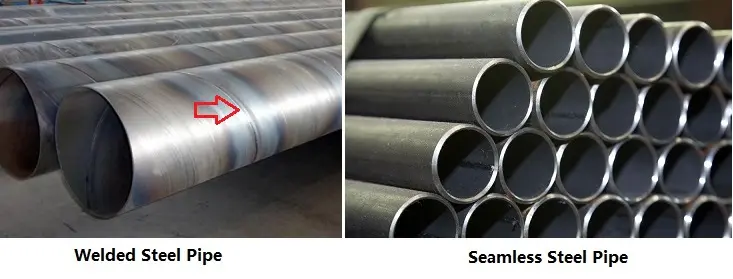
2. Seamless vs. Welded steel pipes
Understanding the manufacturing process is vital for ensuring your project meets safety standards.
Seamless Carbon Steel Pipe (SMLS)
Seamless carbon steel pipe is manufactured by piercing a solid steel billet. Because it has no longitudinal weld seam, it offers superior pressure ratings.
- Best for: High-pressure boilers, oil and gas transmission, and seamless carbon steel pipe for high temperature service.
- SMLS carbon steel pipe is the preferred choice when safety and integrity cannot be compromised.
Weld Carbon Steel Pipe (ERW/LSAW)
Weld carbon steel pipe is made by rolling steel plate and welding the seam. It is more cost-effective for large-diameter applications and offers more consistent wall thickness.
How to Choose Between Seamless and Welded carbon steel pipes?
| Factor | Choose Seamless | Choose Welded |
|---|---|---|
| Working Pressure | Above 20 MPa | Below 15 MPa |
| Temperature | Above 400°C | Below 350°C |
| Diameter Required | Under 16 inches | Over 16 inches |
| Budget Constraints | Premium acceptable | Cost optimization priority |
| Corrosion Environment | Severe or cyclic stress | Mild to moderate |
| Application Criticality | Safety-critical systems | General industrial use |
More details blog, please click here: Seamless vs. Welded Steel Pipe: Which Is Right for Your Project?
3. Key Standards and Grades: ASTM A106 vs. ASTM A53
To ensure global compatibility, we manufacture according to international carbon steel pipe standards.
- ASTM A53 Carbon Steel Pipe: Often referred to as ASTM A53 B carbon steel pipes, this is the standard for general-purpose applications like steam, water, and air lines. It is available in both seamless and welded forms.
ASTM A53 Carbon Steel Pipe Three types: Type F (furnace welded), Type E (electric resistance welded), Type S (seamless). Grades A and B differ in tensile strength. Most common specification for building services and general industrial use.
- ASTM A106 Seamless Carbon Steel Pipe: Specifically designed for high-temperature service, A106 is always seamless. It is the industry standard for power plants, refineries, and industrial piping where heat is a major factor. Grades A, B, and C offer increasing tensile strength.
- API 5L carbon steel pipe– Line pipe specification for petroleum and natural gas industries. Covers both seamless and welded pipe with PSL1 (basic quality) and PSL2 (enhanced quality with additional testing). Grades range from X42 to X80 indicating minimum yield strength.
- EN 10208-2 carbon steel pipe – European standard for steel pipes for combustible fluids. Requirements L1 and L2 specify different testing levels. Commonly specified in European projects and by European engineering firms globally.
- GB/T 8163 carbon steel pipe – Chinese national standard for fluid transportation. Widely used in Asian markets and Chinese-invested projects worldwide. Grade 20# corresponds roughly to ASTM A106 Grade B.
4. Understanding Carbon Steel Pipe Dimensions and Sizes
Navigating carbon steel pipe size charts can be complex. Sizes are typically defined by Nominal Pipe Size (NPS) and “Schedule” (which dictates wall thickness).
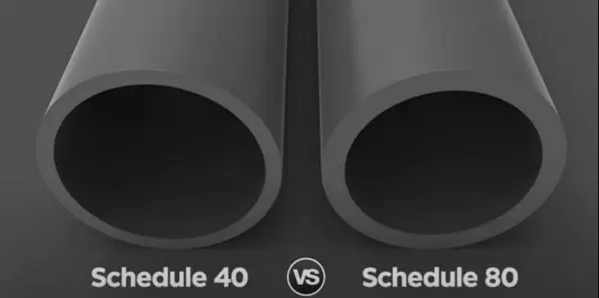
Where higher schedule numbers represent thicker walls and higher pressure ratings for the same nominal pipe size. Common schedules include SCH 10, 20, 40, 80, 120, and 160, with Schedule 40 serving as the industry standard for general applications and Schedule 80 used for higher-pressure systems. The schedule number approximates the formula: Schedule = (Pressure / Allowable Stress) × 1000, though actual wall thickness is standardized in dimensional tables.
- Schedule 40 Carbon Steel Pipe: The most common “standard” wall thickness used in low-to-medium pressure applications.
- Schedule 80 Carbon Steel Pipe: Featuring a thicker wall, Sch 80 is used for high-pressure industrial environments.
- Schedule 10 Carbon Steel Pipe– Thinnest wall, lowest pressure rating. Used in low-pressure drainage, non-critical applications where weight reduction matters. Not commonly stocked by distributors.
- Schedule 160 Carbon Steel Pipe– Very heavy wall for extreme pressure applications. Typically used in high-pressure steam systems, hydraulic lines, and critical process applications where failure consequences are severe.
Pipe Schedule 40 vs. 80: The Ultimate Guide to SCH 40 Seamless Pipe and 40S
By providing precise carbon steel pipe dimensions, we ensure that our pipes integrate perfectly with carbon steel pipe and fittings during site installation, reducing on-site welding errors.
Let me show you actual numbers for NPS 4″ pipe to illustrate how schedule affects pressure capability:
| Schedule | Wall Thickness | Inside Diameter | Max Pressure (Water, 70°F) |
|---|---|---|---|
| SCH 40 | 0.237″ (6.02mm) | 4.026″ (102.3mm) | 1230 PSI (8.5 MPa) |
| SCH 80 | 0.337″ (8.56mm) | 3.826″ (97.2mm) | 1790 PSI (12.3 MPa) |
| SCH 160 | 0.531″ (13.5mm) | 3.438″ (87.3mm) | 2850 PSI (19.6 MPa) |
Understanding Pipe Size Designation Systems
The NPS system dominates North American and international projects. Here’s what confuses people: NPS represents an approximate internal diameter for small pipes, but becomes arbitrary for larger sizes. A 12-inch NPS pipe doesn’t have a 12-inch inside diameter — it has a 12.75-inch outside diameter, with varying inside diameters depending on wall thickness (schedule).
Common Size Ranges by Application:
- Small bore pipes (NPS 1/2″ to 2″): HVAC connections, instrument tubing, small-scale plumbing
- Medium bore pipes (NPS 2-1/2″ to 12″): Industrial process piping, municipal water systems, building services
- Large bore pipes (NPS 14″ to 36″): Main transmission lines, power plant systems, major water infrastructure
- Extra-large pipes (Above NPS 36″): Long-distance oil/gas pipelines, large-scale water conveyance projects
Our factory maintains production capabilities from NPS 1/2″ through NPS 60″ depending on manufacturing method (seamless limited to NPS 24″, welded extends to NPS 60″+).
How Distributors Should Stock Sizes
I work with distributors across five continents, and the successful ones stock based on their market’s 80/20 rule — identifying which sizes represent 80% of demand. For general industrial distributors in North America, this typically means:
High-turnover inventory:
- NPS 1″ to 6″ in Schedule 40 (most common wall thickness)
- NPS 2″ to 4″ in Schedule 80 (heavier wall for higher pressure)
- Standard 20-foot lengths (6 meters)
- ASTM A53 Grade B welded for cost efficiency
Medium-turnover inventory:
- NPS 8″ to 12″ Schedule 40
- NPS 1/2″ to 2″ Schedule 40 and 80
- Both seamless (ASTM A106) and welded (ASTM A53) options
Make-to-order items:
- Sizes above NPS 12″
- Non-standard wall thicknesses
- Special materials (alloy steel, high-temperature grades)
- Cut-to-length or threaded/beveled ends
Trading companies typically don’t stock inventory — they source per order. The key advantage they offer is access to manufacturer capacity and faster lead times than distributors can provide by ordering direct from factory.
5. Why Hebei Jinsheng(JS FITTINGS) is the Trusted Carbon Steel Pipe Manufacturer for Global Projects?
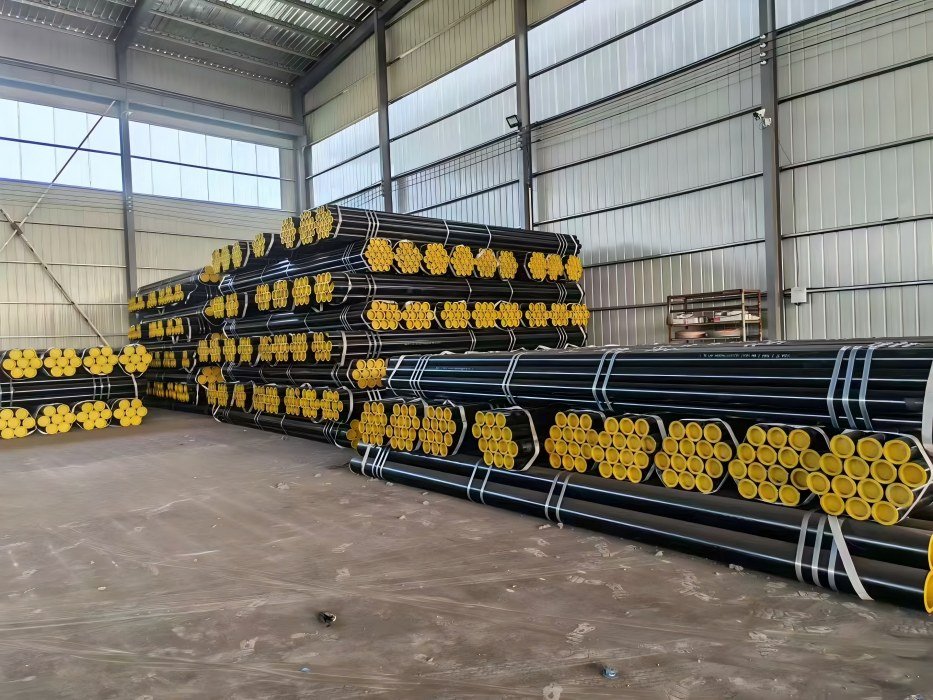
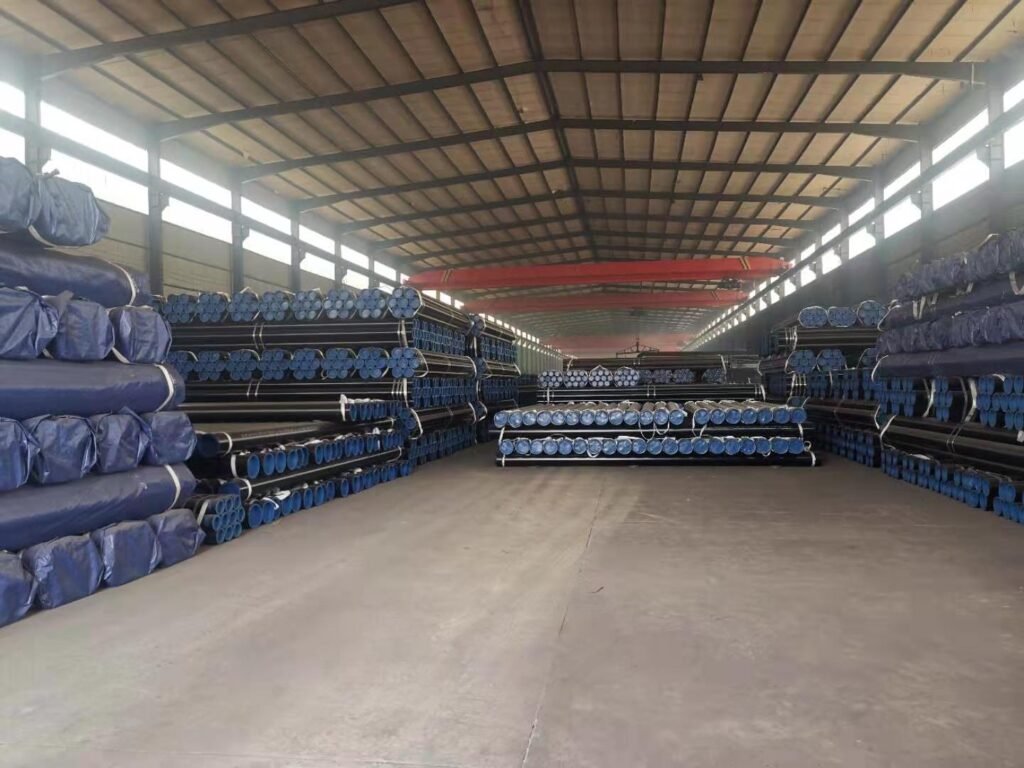
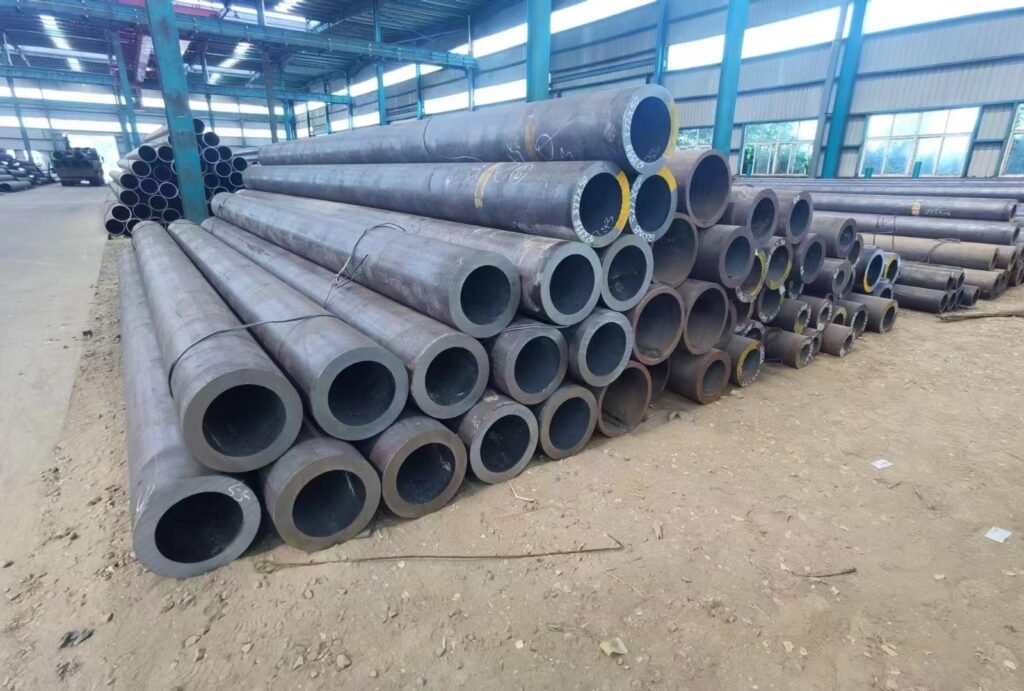
Finding a reliable carbon steel pipe factory is about more than just price; it’s about supply chain stability and quality assurance. At Hebei Jinsheng Pipe Fitting Manufacturing Co., Ltd., we have spent years perfecting our role as a leading carbon steel pipe manufacturer and exporter.
Our Production Power
Based in Cangzhou, Hebei—the heart of China’s steel industry—our 35,000+ sqm production base and 100+ professional team members generate an annual output of $30M. We are not just carbon steel pipe wholesalers; we are a dedicated manufacturing partner for:
- Stock Distributors: We support high-volume inventory stability.
- Trading Companies: Fast-track procurement with 24-hour proposal turnarounds.
- Engineering Contractors: Project-specific solutions for mining, water treatment, and oil & gas.
Reliability You Can Measure
- Global Certifications: We are fully certified by ISO, CE, GOST-R, and hold prestigious approvals from PETROBRAS, ADNOC, NIOC, and SNC-LAVALIN.
- Capacity & Speed: With a capacity of 90+ containers per month, we guarantee a 95% on-time delivery rate. Most single-container orders are ready in just 15-30 days.
- Quality Guarantee: Our complaint rate is less than 0.5%, contributing to our 98% customer repurchase rate.
Service Excellence
We understand that in the industrial sector, time is money. Our team provides:
- 2-hour response times to all inquiries.
- 7×24 technical support.
- A comprehensive range of carbon steel pipes and fittings, ensuring you have a single-source solution for your entire pipeline system.
Get a Professional Proposal Within 24 Hours
Are you looking for a reliable carbon steel pipe manufacturer for your next project? Whether you need ASTM A106 seamless pipes, Sch 40 black steel pipes, or bulk SMLS pipe inventory, Hebei Jinsheng is ready to deliver.
Contact us today to receive a customized quote and technical data sheet.
Emails: info@jssteelpipes.com
WhatsApp: +8618003119682