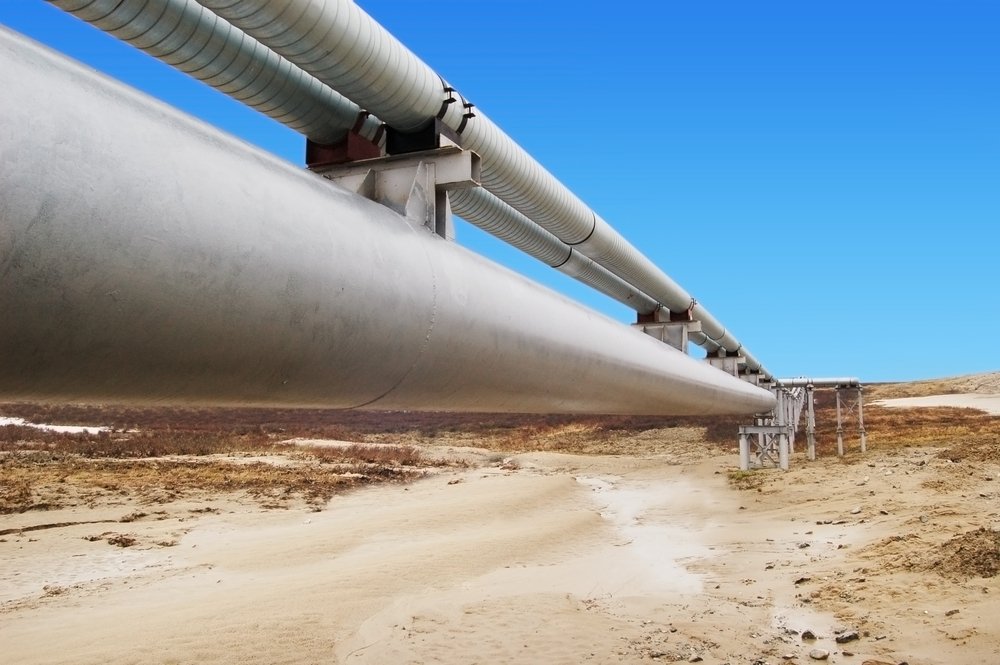
Transporting high-temperature steam over long distances presents one of the most significant challenges in piping engineering. Unlike water or oil, steam carries immense thermal energy. It operates under high pressure, meaning any compromise in material quality or design logic can lead to catastrophic heat loss or pipeline failure.
For project managers and engineers, selecting the right piping system is the foundation of operational safety and thermal efficiency.
Here is a technical breakdown of the requirements and guidelines for modern steam transmission.
Material Selection: Why Seamless and LSAW Pipes?
The primary requirement for steam pipelines is the ability to withstand high temperatures and internal pressures without creeping or deforming.
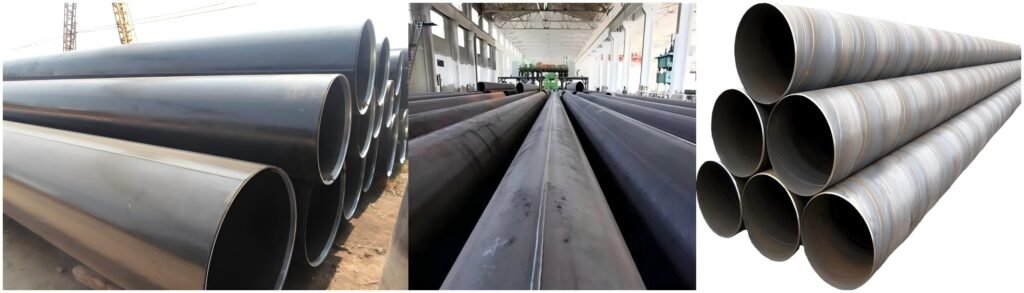
Seamless Steel Pipes (ASTM A106 / A335): For high-pressure steam headers and critical segments, seamless pipes are the preferred choice. Their lack of a longitudinal weld ensures uniform circumferential strength, making them capable of handling the cyclic thermal stress common in steam systems.
LSAW Steel Pipes: In large-diameter long-distance transmission, LSAW (Longitudinal Submerged Arc Welded) pipes are frequently utilized for their thick-walled capabilities and superior dimensional accuracy.
Grade Considerations: Common specifications include ASTM A106 Grade B or higher alloy grades for superheated steam, ensuring the steel maintains its mechanical integrity at temperatures exceeding 350°C.
Managing Thermal Expansion and Compensation
Steam pipes expand significantly when heated. A 100-meter carbon steel pipe can expand by more than 200mm when transitioning from ambient temperature to 300°C steam service.
Expansion Loops and Joints: To prevent the pipeline from buckling, design guidelines mandate the use of “U” shaped expansion loops or bellows-type expansion joints.
Fixed and Sliding Supports: The layout must strategically place fixed brackets to direct expansion toward compensators, while sliding supports must ensure low friction to prevent stress build-up on the pipe wall.
Insulation and Anti-Corrosion
For long-distance efficiency, minimizing “heat drop” is vital. Modern steam systems often employ a pre-insulated pipe (jacket pipe) system.
Internal Insulation: High-density calcium silicate or rock wool is applied directly to the carrier pipe.
Outer Protection: To protect the insulation from groundwater and external corrosion, an outer steel jacket or HDPE casing is used.
Advanced Coatings: At JS FITTINGS, we recommend external anti-corrosion coatings like 3PE or Fusion Bonded Epoxy (FBE) for the outer casing to ensure the system’s lifespan exceeds 25-30 years in buried applications.
Addressing Water Hammer and Drainage Management
One of the most common causes of steam pipe rupture is “Water Hammer”—the impact of high-velocity slugs of condensate hitting pipe fittings.
Slope Design: Steam lines must be installed with a specific downward slope (typically 0.002 to 0.003) toward drainage points.
Steam Traps: High-efficiency steam traps must be installed at regular intervals (every 100-150 meters) and at all low points to remove condensate, ensuring “dry” steam delivery continuously.
Operational Safety
A professional steam pipeline design is only as good as its operation. Guidelines emphasize the “slow heating” protocol. Introducing high-temperature steam into a cold pipe too quickly can cause uneven expansion and weld cracking. Pre-heating bypasses and controlled valve opening procedures are essential to bring the system to equilibrium safely.
The JS FITTINGS Advantage
At JS FITTINGS, we provide more than just raw materials. We supply high-performance Seamless, LSAW, and ERW pipes specifically manufactured to meet the rigorous tolerances of steam engineering. With full API 5L and ASTM certification, our products ensure that your long-distance steam project operates with maximum thermal retention and uncompromising safety.
Welcome to contact us :
Email: info@jssteelpipes.com
WhatsApp: +8618003119682