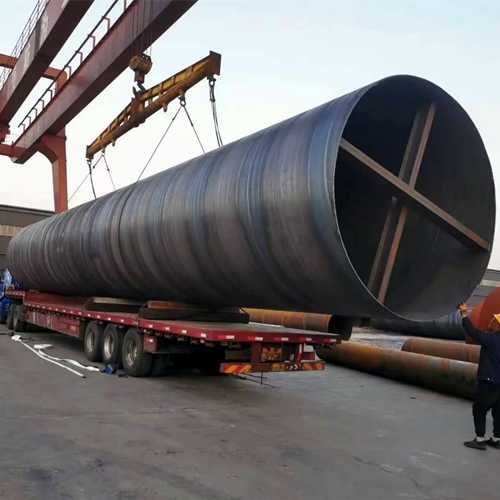
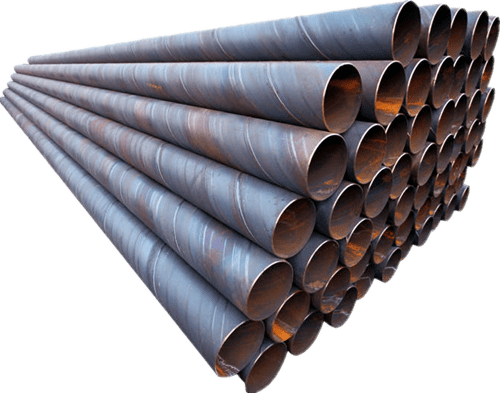
In the global energy and infrastructure sectors, the demand for large-diameter pipelines that balance cost-efficiency with structural integrity is ever-increasing. SSAW (Spiral Submerged Arc Welded) steel pipe has emerged as the preferred solution for water transmission, oil and gas logistics, and structural piling projects.
At JS FITTINGS, we understand that for engineers and procurement specialists, selecting the right pipe isn’t just about price—it’s about compliance, weld reliability, and long-term performance. This guide breaks down the technical core of SSAW pipes to help you make informed decisions.
1. SSAW Steel Pipe Standards: Ensuring Global Compliance
To ensure safety and compatibility in international projects, SSAW pipes must adhere to rigorous manufacturing standards. Depending on the application, JS FITTINGS produces and supplies material following these primary frameworks:
- API 5L (PSL1 & PSL2)-Specification for Line Pipe: The gold standard for oil and gas conveyance. It covers grades from Grade B up to X80. PSL2 involves more stringent testing requirements for toughness and chemical composition.
- ASTM A252-Standard Specification for Welded and Seamless Steel Pipe Piles: The primary standard for steel pipe piles. If you are working on foundation projects or bridge construction, ASTM A252 Grade 2 or 3 is the industry benchmark.
- ASTM A53: Suitable for mechanical and pressure applications, as well as ordinary uses in steam, water, gas, and air lines.
- EN 10219 / EN 10217: European standards for cold-formed welded structural hollow sections and pressure purposes.
- AWWA C200: Specific to water steel pipelines, ensuring the pipe can withstand internal pressure and external loads in municipal water systems.
- ISO 3183: Petroleum and natural gas industries – Steel pipe for pipeline transportation systems: International Organization for Standardization (ISO) standard for pipeline transportation systems in the petroleum and natural gas industries.
2. Types of Welds in SSAW Pipe Manufacturing
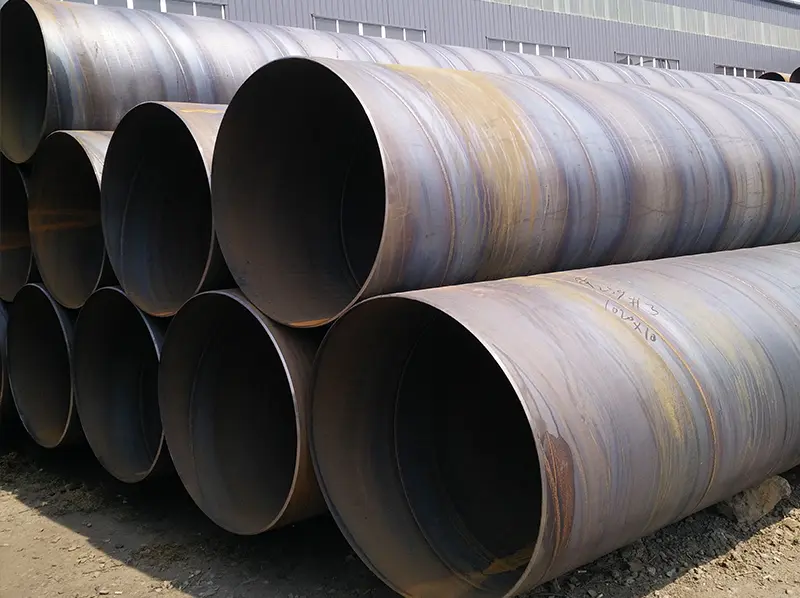
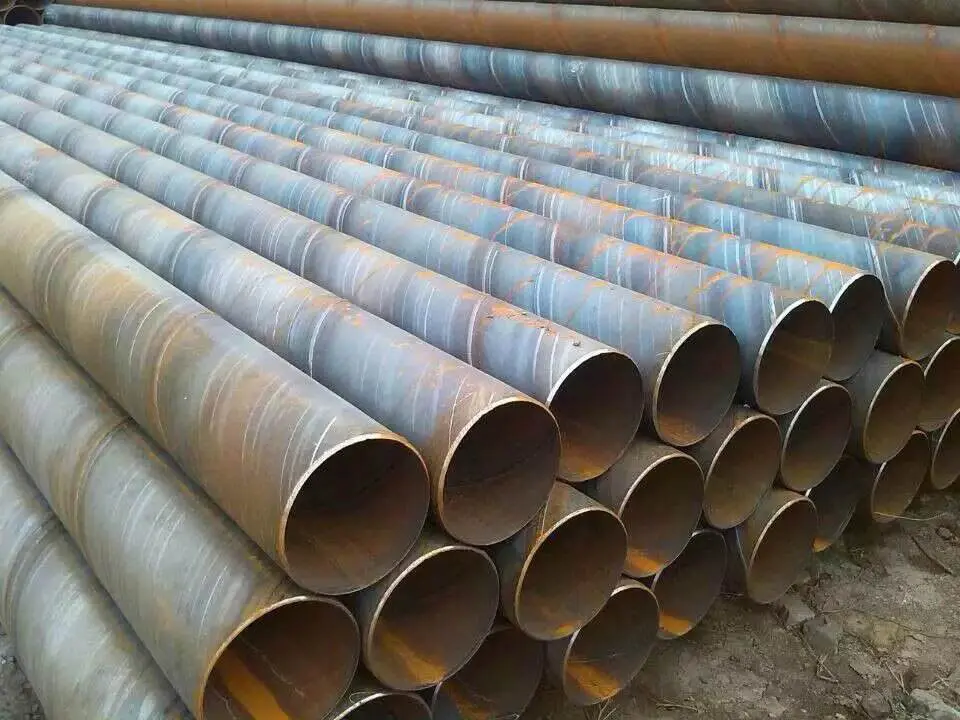
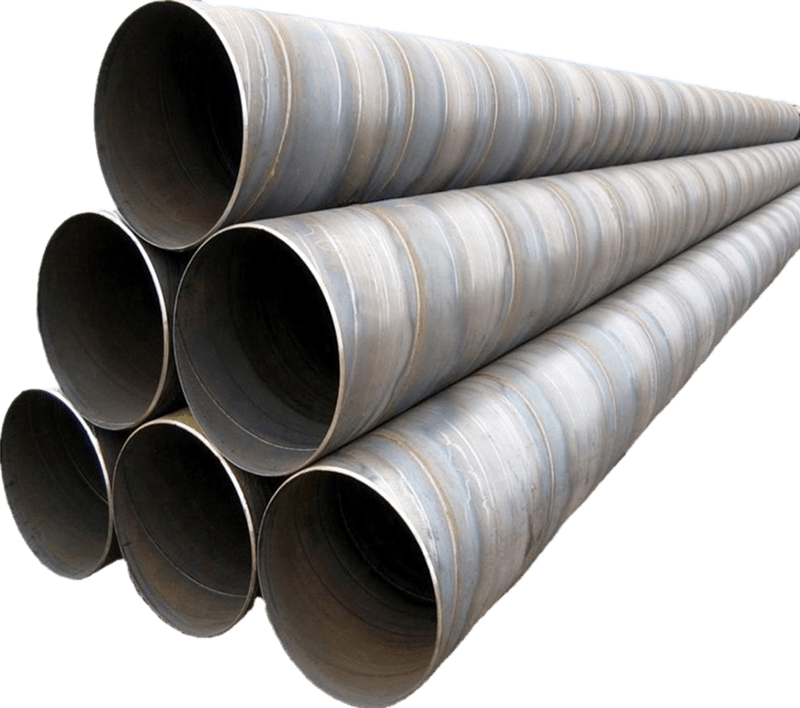
The “Spiral” nature of SSAW pipe involves a continuous welding process where the steel strip is bent at an angle (forming angle) and then welded. Understanding the weld types is critical for assessing the pipe’s pressure-bearing capacity:
- Internal Weld (Inside Seam): The first stage of the submerged arc process occurs on the inside of the formed spiral. This ensures deep penetration and a smooth internal surface for better flow dynamics.
- External Weld (Outside Seam): The outer weld is applied to complete the full-penetration joint. The overlap between internal and external welds is strictly monitored to ensure zero defects.
- Butt Weld (Strip Joint): This is the transverse weld where the end of one steel coil is joined to the beginning of the next. In high-spec projects, these joints are subjected to 100% X-ray inspection.
- T-Welds: The point where the strip butt weld meets the spiral seam. These intersections are critical stress points and require meticulous Non-Destructive Testing (NDT).
3. Technical Advantages of SSAW Pipe
Why choose SSAW over LSAW (Longitudinal) or ERW pipes? The technical advantages are significant for large-scale projects:
- Diameter Versatility: One of the greatest strengths of SSAW is the ability to produce large-diameter pipes (up to 3000mm and beyond) from a relatively narrow width of hot-rolled coil.
- Stress Distribution: Due to the spiral weld angle, the residual stress is distributed more evenly. Under internal pressure, the principal stress on a spiral weld is lower than that on a longitudinal weld.
- Dimensional Accuracy: Modern SSAW production lines allow for precise control over diameter and wall thickness, with excellent “out-of-roundness” tolerances, making on-site welding and fit-up much easier for contractors.
- Extended Lengths: Unlike LSAW pipes which are limited by the length of the steel plate, SSAW pipes can be produced in extremely long continuous sections (up to 30-50 meters for piling), reducing the number of field joints.
Click here to know the difference of SSAW,LSAW AND ERW steel pipes
4. SSAW Pipe Specifications
For stockists and engineers, the following table represents the typical manufacturing range available at JS FITTINGS:
| Feature | Range / Specification |
| Outside Diameter (OD) | 219mm – 3220mm (8″ to 126″) |
| Wall Thickness (WT) | 5.0mm – 25.4mm |
| Length | 6m – 12m (up to 18m or customized for piling) |
| Material Grades | Q235B, Q355B, API 5L Gr.B to X70, ASTM A252 Gr.2/3 |
| Surface Treatment | Bare, Black Vanish, 3PE, FBE, Epoxy Coal Tar, Galvanized |
| End Finish | Beveled Ends (for welding), Plain Ends |
5. Quality Control
For an intermediary or an end-user, the pipe is only as good as its testing report. Our SSAW pipes undergo a comprehensive quality assurance protocol:
- Hydrostatic Testing: Every pipe is tested to ensure it can handle the rated internal pressure without leakage.
- Ultrasonic & X-Ray Inspection: 100% monitoring of the weld seam to detect any porosity, cracks, or inclusions.
- Tensile & Impact Testing: Verifying that the mechanical properties of both the base metal and the weld meet the project requirements.
Conclusion
SSAW steel pipes offer an unrivaled combination of large-diameter capability and cost-effectiveness. Whether you are stocking for a regional distribution hub or engineering a cross-country water pipeline, understanding these technical nuances ensures project success.
Looking for a reliable SSAW pipe partner?
Contact JS FITTINGS today for a technical consultation or a competitive quote on your next project. Our team provides full MTC (Mill Test Certification) and logistics support for global shipping.
Email: info@jssteelpipes.com
WhatsApp: +8618003119682