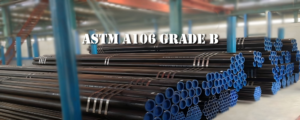
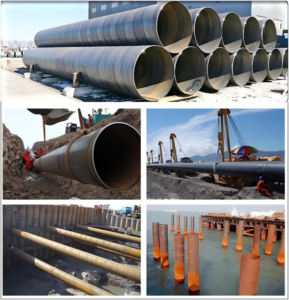
API 5L Grade B LSAW Steel Pipe – High-Pressure Line Pipe for Oil & Gas
API 5L Grade B steel pipe is a common grade of pipe for oil and gas pipeline transmissions.
API 5L B covers PSL1, PSL2, Sour Services, for onshore and offshore pipelines.
At JSFITTINGS, we combine 40 years of manufacturing and trading experience to deliver line pipes that withstand the harshest environments.
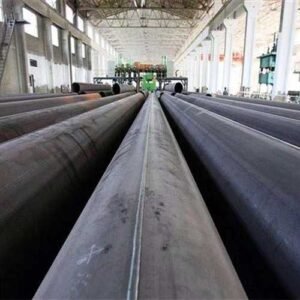
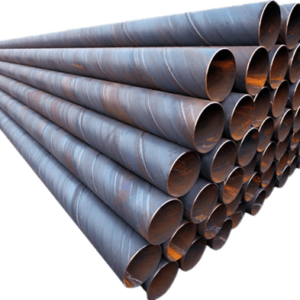
Specializing in Large Diameter LSAW (Longitudinally Submerged Arc Welded) pipes, we bridge the gap between precision manufacturing and global supply chain logistics. Whether you require standard API 5L Gr.B pipes for onshore pipelines or high-spec PSL2 pipes for offshore applications, our four decades of expertise guarantee quality, compliance, and timely delivery.
API 5L Grade B steel pipe is resistant to cracking under sulphide stress, which makes it ideal for sour service.
API 5L Grade. B steel pipe has a long working lifespan, which allows it to be very cost-effective.
Due to easy availability and reasonable pricing, API 5L Grade B Seamless Pipe and welded pipe are the first choice for the Oil and gas industries and is used on a large scale in cross-country pipelines.


GENERAL
Standard: API 5L PSL1/ PSL2, API 2B, EN10219, ASTM A671 CL13, ASTM A672 CL13, ASTM A252 etc.
Steel Grade:
API 5L:Gr.B,X42,X52,X60,X65,X70,X80,
EN10219: S275JRH,S275J0H,S275J2H,S355JRH,S355J0H,S355J2H
A671/A672 CL10-CL13:CA55,B65,B70,C70
ASTM A252: GR.2,GR.3
Size:LSAW, DSAW:
Outer Diameter: 219mm-1820mm
Wall Thickness: 5.0mm-50mm
Length: 5mtr-12mtr
End: square ends (straight cut, saw cut, and torch cut). or beveled for welding, beveled,
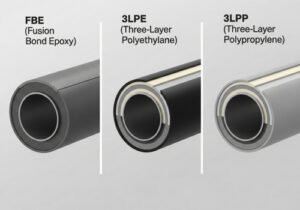
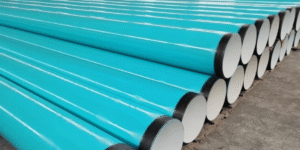
Surface: Lightly oiled, Hot dip galvanized, Electro galvanized, Black, Bare, Varnish coating/Anti rust oil, Protective Coatings (Coal Tar Epoxy, Fusion Bond Epoxy, 3-layer PE)
Test: Chemical Component Analysis, Mechanical Properties (Ultimate tensile strength, Yield strength, Elongation), Technical Properties (Flattening Test, Bending Test, Blow Test, Impact Test), Exterior Size Inspection, Hydrostatic Test, X-ray Test.
Mill Test Certificate: EN 10204/3.1B
Third party inspection : SGS, BV, Lloyds etc.
Application:
- Oil & Gas Pipelines: Onshore and offshore transportation of crude oil, natural gas, and refined products.
- Petrochemical Plants: Process piping networks within refineries.
- Power Plants: High-pressure steam and water pipelines.
- Slurry Transportation: Durable piping for mining and dredging operations.
FAQ – API 5L LSAW Pipe
Q: What is the difference between API 5L PSL1 and PSL2?
A: PSL1 is a standard quality level for general line pipe applications. PSL2 contains additional requirements for chemical composition (carbon equivalent), notch toughness (impact testing), and stricter non-destructive testing (NDT). We supply both based on your project needs.
Q: Can you provide anti-corrosion coating?
A: Yes. Pipeline longevity is key. We offer in-house coating services including 3LPE (3-Layer Polyethylene), FBE (Fusion Bonded Epoxy), and internal flow efficiency coatings to protect against corrosion.