Most SSAW enquiries start the same way: a line list, a diameter, and a question about price per ton. The details that decide whether the pipe actually works — PSL level, weld inspection, coating system, end preparation — often arrive two weeks later, after a mill has already quoted. On a 500-ton order, that gap is expensive.
This guide is written for two readers: distributors who hold stock and need predictable supply, and procurement teams buying for water transmission, oil and gas lines, piling or structural work. It covers what SSAW pipe is, when it beats ERW or seamless, how to specify fusion-bonded epoxy (FBE) coating, and which documents should be in your hands before a deposit leaves the account.
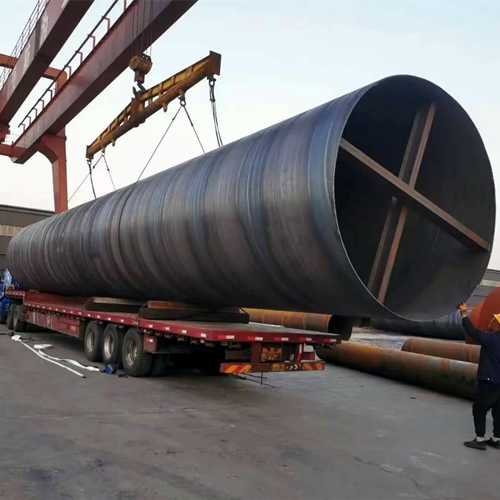
Short answer: SSAW (spiral submerged arc welded) pipe is the practical route for large-diameter line pipe in high volumes — commonly OD 219 mm to 3,020 mm. For an export order, fix five things in writing: API 5L grade and PSL level, OD and wall tolerances, weld NDT plus hydrostatic test, coating system and dry film thickness, and the packing/loading plan. At JS Steel Pipes the export minimum is 500 metric tons, which works out to roughly 35–40 loaded 40-ft containers for 12 m pipe, depending on diameter and wall thickness.
What SSAW pipe is — and the LSAW confusion worth clearing up
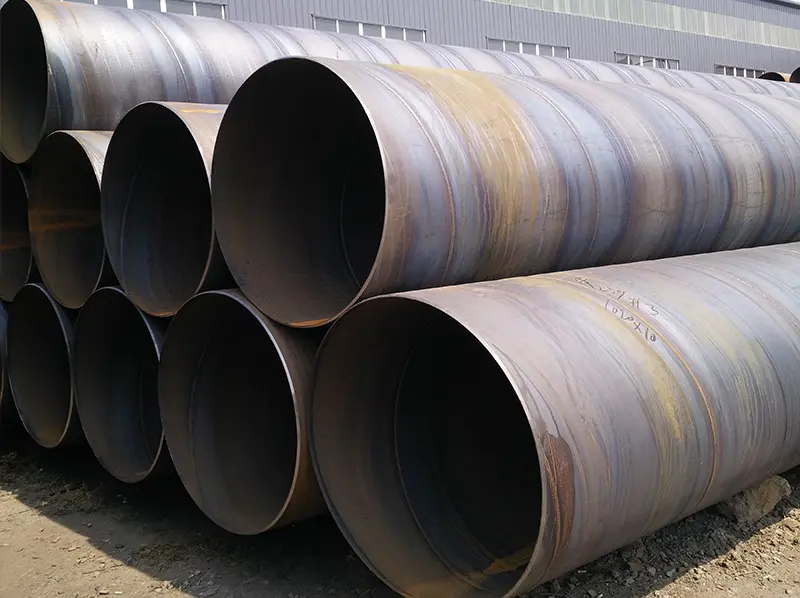
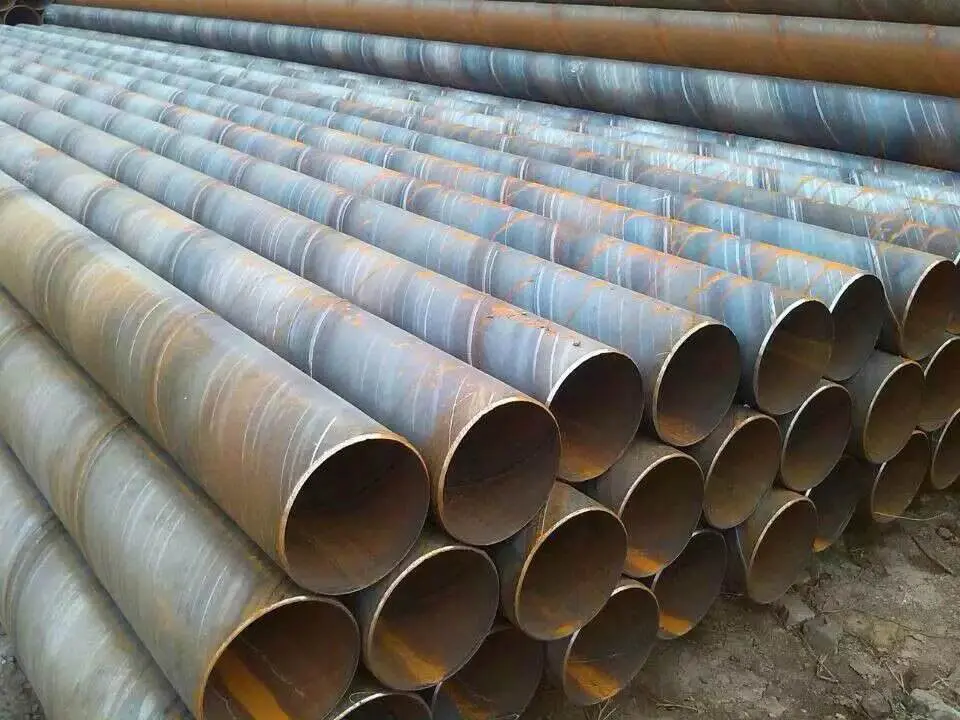
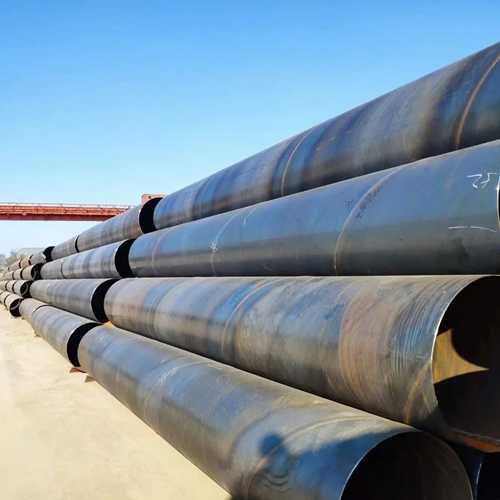
SSAW pipe is made from steel coil that is formed into a helix and welded on both the inside and outside by submerged arc welding. The spiral seam is the giveaway. It is a different route from LSAW, where a plate is formed into a straight longitudinal seam (JCOE or UOE). Both are “submerged arc welded”, which is why buyers often type longitudinal submerged arc welded when they actually mean spiral pipe. If your specification says SAW but not which one, ask before you compare quotes.
In practice: SSAW wins on large diameters and long lengths produced from coil. LSAW is usually chosen for heavier walls and higher-pressure service where a straight seam is preferred. Neither is automatically “better” — the line list decides.
SSAW vs ERW vs seamless: the decision table
Process
Typical OD range
Seam
Where it fits
Watch out for
ERW / HFW
~21–508 mm (1/2″–20″)
Straight, high-frequency weld, no filler metal
Line pipe, tubing, general structural
Confirm weld heat treatment and NDT; do not assume it covers high-pressure service
LSAW (JCOE/UOE)
~406–1,422 mm and above
Straight longitudinal SAW
Heavy-wall, high-pressure trunk lines
Longer lead time, plate cost drives price
SSAW / SAWH
~219–3,020 mm
Spiral double-sided SAW
Water transmission, gas lines, piling, large-diameter low-to-medium pressure work
Check coil chemistry traceability and full-length weld UT
Seamless (SMLS Pipe)
Commonly up to ~762 mm, commercially smaller
No weld
High-temperature / high-pressure process lines, ASTM A106 service
Higher cost per ton; not a default substitute for line pipe
Standards: write the whole designation, not just “API 5L”
“API 5L pipe” on a quotation is not a specification. The current API Spec 5L covers seamless and welded line pipe in two product specification levels:
PSL1 sets minimum chemistry, mechanical properties and a hydrostatic test. Grade B (L245) and X42–X70 are the common grades.
PSL2 adds a maximum yield strength, a yield-to-tensile ratio cap, carbon equivalent control, mandatory Charpy impact testing and tighter sulphur/phosphorus limits. Sour-service (suffix S) and offshore (suffix O) Annexes apply where the project calls for them.
A complete line in your RFQ should read something like:
API 5L X52 PSL2 SAWH, OD 610 mm, WT 9.5 mm, 12 m, beveled ends, FBE 400 µm, ISO 21809-2, EN 10204 3.1 MTC, third-party inspection before coating.
On the frequent question about API 5L Grade B chemical composition: for PSL1 Grade B, typical published maxima are C 0.26%, Mn 1.20%, P 0.030%, S 0.030%. PSL2 tightens those and adds carbon-equivalent control. Treat these as specification limits, not as measured values — the measured heat analysis belongs on the mill test certificate, and the edition of the standard should be stated in the contract.
One more mix-up worth flagging: ASTM A106 Grade B is seamless pipe for high-temperature service, while ASTM A53 covers both welded and seamless pipe for lower-duty applications. Neither is a like-for-like swap for API 5L line pipe without the designer’s approval. We have a separate comparison of ASTM A333 and ASTM A106 steel pipes and a carbon steel pipe grades guide if you need the detail.
FBE coating: specify the film, not just the words “epoxy coated”
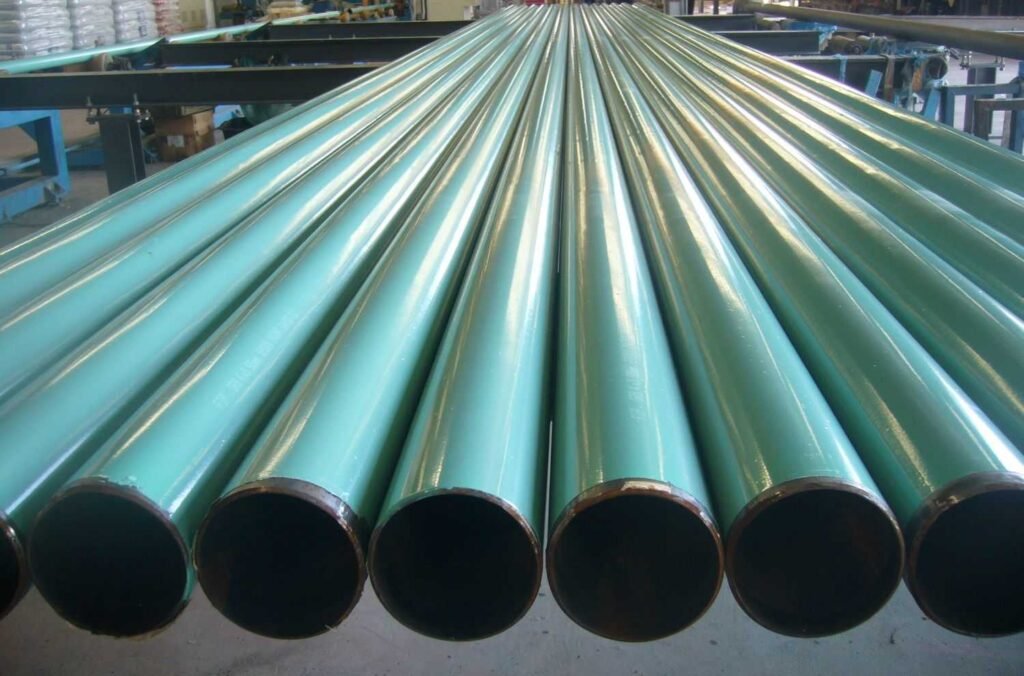
Fusion bonded epoxy is a plant-applied powder coating. The pipe is blast cleaned to near-white metal (Sa 2½, typical anchor profile 50–100 µm), heated to around 230–250 °C, and the epoxy is sprayed electrostatically. It cures into a continuous film.
What to put in writing:
Item
Practical guidance
Standard
ISO 21809-2 or CSA Z245.20 for external single/dual-layer FBE; AWWA C213 for water pipeline work
Dry film thickness
Single layer commonly 350–500 µm (14–20 mil); dual layer higher. State the target and the minimum
Holiday detection
100% of pipe length, voltage calibrated to the actual DFT — too high a setting burns sound epoxy, too low misses pinholes
Adhesion / cathodic disbondment
Ask for the qualification report and the production lot results, not only a coating logo
Handling
Coated pipe needs padded slings and spaced supports; reject stacking that crushes the film
A note buyers sometimes miss: ordering an extra-thick single-layer FBE film in the hope of doubling service life is not free. Beyond the designed DFT the film becomes less tolerant of strain and handling damage. If you need higher mechanical protection, look at dual-layer FBE or 3LPE instead — and see our FBE coated pipe product page for the coating options we supply.
The 500-ton export checklist
For stockists and project buyers, this is the part that separates a quotable order from a problematic one.
Lock the designation. Grade, PSL, process (SAWH), OD, wall, length, end finish, coating, standard edition. Ambiguity here becomes a change order later.
Ask for the document pack up front. EN 10204 3.1 or 3.2 MTC with heat numbers mapped to pipe numbers, welding procedure and qualification records, UT/RT report, hydrostatic test certificate, coating inspection report. Verify the mill’s current API licence rather than accepting a logo on a PDF.
Set inspection hold points. Mill inspection by SGS, BV or the buyer’s own engineer before coating and again before loading. Third-party reports should reference the heat numbers in your MTC.
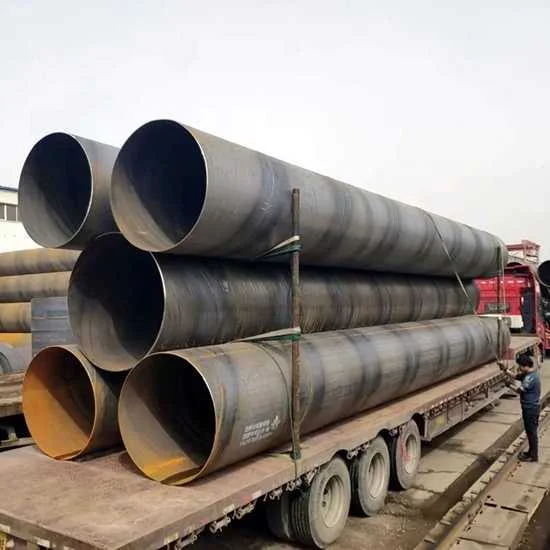
Plan the loading before you fix the price. 12 m lengths generally require 40-ft containers. For 500 MT, budget around 35–40 containers depending on OD and wall; very large diameters go break-bulk. Confirm the weight limit at your discharge port and whether container demurrage is on your side.
Write Incoterms and payment in full. FOB, CFR or CIF to a named port; LC at sight or the agreed terms; currency, validity and inspection clause. “FOB China” is not a named port.
Allow for the field. Add cut-outs, field bends and weld spares to the take-off. Ask whether different sizes can be combined within the 500-ton minimum — mixing is usually a mill-scheduling question, not a hard rule.
Review dimensional tolerance against your fabrication. Bevel angle, end squareness and ovality cause more site delays than chemistry does. Our Sch 40 vs Sch 80 pipe wall thickness reference is a useful starting point for schedule questions.
What actually moves the price per ton
Steel coil or plate cost is the biggest lever, followed by grade and PSL level, wall thickness, diameter, coating system, test scope and freight. A quote that omits PSL, DFT and inspection scope is not comparable with one that includes them — even if the number per ton looks better. When you compare mills, ask each one to quote the same written designation, the same loading port and the same inspection scope.
Five mistakes we see in bulk enquiries
Writing “API 5L” and stopping there. PSL1 and PSL2 are different products with different test matrices.
Treating ASTM A106 or A53 as interchangeable with line pipe.
Forgetting to specify beveled ends, end caps and protection for coated pipe.
Accepting a coating certificate with no DFT or holiday-test record.
Assuming the 500-ton minimum means 500 tons of one single size. Ask about mixed-size lots before you split the order across suppliers.
FAQ
What is SSAW pipe used for? Large-diameter water transmission lines, oil and gas trunk lines, piling and structural applications where coil-based spiral welding gives a practical diameter and length range at high volume.
Is SSAW pipe stronger than ERW pipe? Not automatically. Strength comes from the steel grade and product specification level. SSAW covers larger diameters; ERW is common on smaller diameters. Compare the designated grade and PSL, not the process name.
Can SSAW replace seamless pipe in high-pressure service? Only if the project specification allows welded line pipe. Seamless remains the default for high-temperature process lines and certain high-pressure duties. Get the designer’s approval before substituting.
What does a 500-ton minimum order mean for a distributor? It means the mill commitment starts at 500 metric tons across the order. Depending on size and wall, that is roughly 35–40 loaded 40-ft containers. Ask about mixing sizes and about the delivery schedule before committing.
How do I verify a steel pipe manufacturer in China? Check the current licence scope, ask for a recent MTC sample with traceable heat numbers, request a video or live call at the weld and coating lines, and use an independent third-party inspector at the mill. A lower price without those steps is not a saving.
Working with us
Send your line list with OD, wall thickness, grade, quantity, coating requirement, destination port, and delivery window. You will get back a specification confirmation sheet, a container-loading estimate, and the mill document checklist for the grade you need. Export minimum: 500 metric tons.
Technical content reviewed November 2026. Standards referenced: API Spec 5L, ASTM A106/A106M, ASTM A53/A53M, ISO 21809-2, CSA Z245.20 and AWWA C213 (current editions). Always confirm the edition and any project addenda with the mill before ordering.
Hi, I'm Lisa, the funder of jssteelpipes.com, I’ve been working for a company in China that supplies steel pipes for 8 years, and the purpose of this article is to share with you the knowledge related to steel pipes from a Chinese supplier’s perspective.