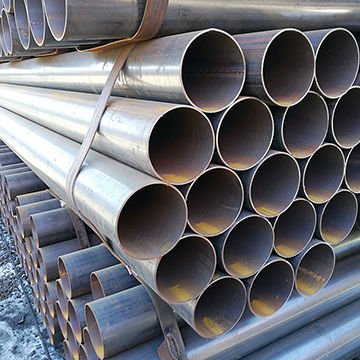
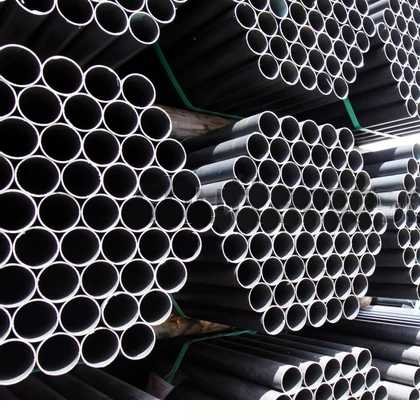
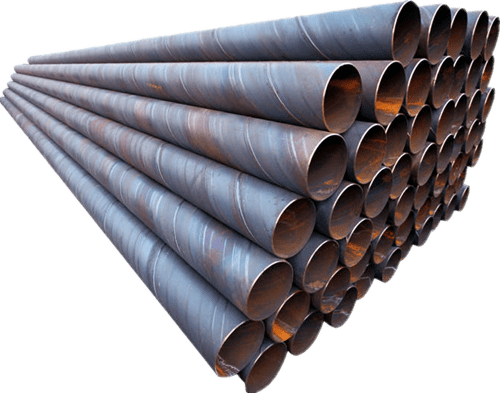
In general, seamless steel pipe is preferred for demanding high-pressure or high-temperature applications, while ERW steel pipe is often a more economical choice for general industrial piping, structural applications, and many line pipe requirements where the applicable standard permits welded pipe.
Seamless and ERW steel pipes are not simply “better” or “worse” versions of the same product. The right choice depends on pipe size, wall thickness, pressure, temperature, service medium, applicable standard, testing requirements, and project specifications.
For distributors, EPC contractors, oil and gas buyers, and industrial procurement teams, the important question is not simply “Seamless or ERW?” It is:
Which manufacturing method and specification best match the actual service conditions and project requirements?
Seamless vs ERW Steel Pipe: Quick Comparison
Item
Seamless Steel Pipe
ERW Steel Pipe
Manufacturing
Made from a solid steel billet and formed without a longitudinal weld
Made from steel strip or coil and welded along the longitudinal seam
Weld seam
No longitudinal weld seam
Longitudinal welded seam
Typical production
Hot finished or cold drawn
Electric resistance welded
Size range
Generally more economical in small and medium diameters
Particularly competitive in small and medium diameters
Pressure applications
Widely used for demanding pressure service
Suitable when the applicable standard and design permit welded pipe
High-temperature service
Common choice for pressure and process piping
Depends on applicable standard and service requirements
Cost
Usually higher
Usually more economical
Dimensional consistency
Good, depending on manufacturing process
Generally good and highly controllable
Typical applications
Refineries, petrochemical plants, power generation, high-pressure piping
Oil & gas lines, water systems, structural and general industrial piping
Key procurement issue
Confirm standard, grade, schedule and testing
Confirm weld quality, standard, grade, testing and application
The key point is that ERW does not automatically mean low quality, and seamless does not automatically mean the correct choice. The applicable specification should determine whether either manufacturing route is acceptable.
What Is a Seamless Steel Pipe?
A seamless steel pipe is manufactured from a solid steel billet. The billet is heated and pierced to create a hollow section, followed by rolling, sizing and other processing steps depending on the required product.
Because there is no longitudinal welded joint, seamless pipe is widely selected for applications where pressure, temperature, wall thickness and service conditions require a high level of material integrity.
Common seamless steel pipe standards include:
ASTM A106
ASTM A53
API 5L
ASTM A333
ASTM A335
Other ASTM, EN and DIN specifications depending on the project
For example, ASTM A106 Grade B seamless pipe is commonly specified for high-temperature pressure service, while API 5L seamless pipe is used for line pipe applications when required by the project specification.
For buyers, the important point is that the standard determines the intended application and technical requirements—not simply the fact that the pipe is seamless.
What Is an ERW Steel Pipe?
ERW stands for Electric Resistance Welded.
ERW pipe is manufactured from steel strip or coil. The material is formed into a cylindrical shape and the longitudinal edges are joined using electric resistance welding. The weld area is then processed and inspected according to the applicable manufacturing standard.
Modern ERW production allows manufacturers to achieve consistent dimensions and efficient production, making ERW steel pipe an attractive option for many industrial and pipeline applications.
Common ERW standards include:
API 5L
ASTM A53
EN 10217
DIN 2458
JIS standards
Other project-specific specifications
Therefore, an important purchasing rule is:
Do not reject ERW pipe simply because it has a weld seam. First check whether the required standard permits ERW pipe for the intended service.
Seamless vs ERW: The Main Technical Difference
The most obvious difference is the manufacturing process.
A longitudinal weld is present, and its quality must be controlled through the applicable manufacturing and inspection requirements.
This difference affects production cost, available dimensions, manufacturing controls and the applications in which each product is normally selected.
Seamless vs ERW for High-Pressure Applications
For high-pressure service, buyers often start by looking for seamless pipe.
That can be appropriate, but pressure rating should never be determined by manufacturing method alone.
A proper evaluation should consider:
Design pressure
Design temperature
Pipe diameter
Wall thickness
Material grade
Corrosion allowance
Applicable design code
Required testing
Service medium
Project specification
For example, a project specifying ASTM A106 Grade B seamless pipe should not automatically be supplied with an ERW pipe simply because the dimensions and basic material properties appear similar.
Likewise, if a pipeline specification allows API 5L welded pipe, replacing it with seamless pipe may increase cost without providing a meaningful project benefit.
Seamless vs ERW for Oil and Gas
Oil and gas projects use both seamless and welded steel pipes.
The correct choice depends heavily on the part of the system and the governing specification.
Seamless pipe is commonly considered for:
High-pressure process piping
Refinery piping
Petrochemical piping
High-temperature service
Boiler and heat-related applications
Selected oil and gas pressure applications
ERW pipe can be used for:
Oil and gas line pipe where permitted
Water transmission
Industrial piping
Utility systems
Structural applications
General process and mechanical applications
One common procurement mistake is assuming:
Oil & gas = seamless pipe
That is not technically correct.
Oil and gas facilities use different piping systems, and each system may have different standards and requirements.
For example, API 5L is associated with line pipe for petroleum and natural gas transportation, while ASTM A106 is commonly used for seamless carbon steel pressure pipe in high-temperature service.
Which Is Cheaper: Seamless or ERW?
In many cases, ERW steel pipe is more economical than seamless pipe, particularly when the required size, wall thickness and specification are well suited to ERW production.
The reason is largely related to the manufacturing process.
Seamless production requires billet piercing and subsequent forming operations, while ERW production uses steel coil and a continuous welding process.
However, the final price depends on much more than manufacturing method.
Factors include:
Pipe diameter
Wall thickness
Steel grade
Standard
Quantity
Mill availability
Testing requirements
Coating
End preparation
Length
Packing
Inspection requirements
Delivery destination
Therefore, comparing only the price per ton can be misleading.
Seamless vs ERW: Which One Has Better Dimensional Accuracy?
Both manufacturing methods can produce pipes with good dimensional accuracy when manufactured under the correct standard and controlled production conditions.
ERW production can provide very consistent:
Outside diameter
Wall thickness
Roundness
Length
Straightness
Seamless pipe dimensions also depend on whether the pipe is hot finished or cold drawn.
For precision applications, buyers should focus on the dimensional tolerances specified by the applicable standard rather than assuming one manufacturing method is automatically more accurate.
How to Choose Between Seamless and ERW Steel Pipe
Use this practical decision process.
Choose Seamless steel pipes When:
The project specification requires seamless pipe.
The application involves demanding pressure or temperature conditions.
ASTM A106 or another seamless-specific specification is required.
The engineering specification does not permit welded pipe.
The project requires seamless construction for a specific technical reason.
Consider ERW steel pipes When:
The applicable standard permits welded pipe.
The required diameter and wall thickness are suitable for ERW production.
Cost efficiency is important.
The application is general industrial, utility, structural or pipeline service where ERW is permitted.
The project specification accepts the required ERW manufacturing standard and testing.
Seamless vs ERW pipes: Buyer Checklist
Before requesting a quotation, provide the supplier with as much of the following information as possible:
Specification
Example
Pipe type
Seamless / ERW
Standard
ASTM A106 / ASTM A53 / API 5L
Grade
Gr. B / X42 / X52
Size
NPS 6 / DN150
OD
168.3 mm
Wall thickness
7.11 mm
Schedule
SCH 40
Length
6 m / 12 m / Random Length
End
Plain / Beveled
Surface
Black / Bare / Coated
Testing
Hydro / UT / ET / Other
Inspection
Mill inspection / Third-party inspection
Quantity
Tons / Pieces / Meters
Documentation
MTC / Inspection certificate
For distributors and stockists, it is also important to confirm whether the supplier can maintain consistent specifications across multiple production lots.
Common Procurement Mistakes
1. Choosing Seamless Simply Because It Is “Stronger”
Seamless is not automatically the best solution for every application.
If the project specification permits ERW and the service conditions are suitable, ERW may provide a more economical solution.
2. Choosing ERW Only Because It Is Cheaper
Lower purchase price is not useful if the pipe fails to meet the project specification.
Always confirm the required standard and manufacturing method before comparing prices.
3. Treating API 5L and ASTM A106 as Interchangeable
They can overlap in some applications, but they serve different specification purposes.
API 5L Grade B is primarily associated with line pipe, while ASTM A106 Grade B is commonly specified for seamless carbon steel pressure pipe for high-temperature service.
They should not be treated as automatically interchangeable.
4. Comparing Pipes Only by Grade
“Grade B” alone does not define a complete pipe specification.
Choose seamless steel pipe when the project requires seamless construction or involves demanding pressure, temperature or process-piping requirements where seamless is specified.
Choose ERW steel pipe when the applicable standard permits welded pipe and the required size, grade, testing and service conditions are suitable for ERW.
For most industrial buyers, the best choice is not determined by the word “seamless” or “welded.”
It is determined by the project specification and actual operating conditions.
If you are comparing seamless and ERW pipe for a specific project, send the supplier the standard, grade, OD, wall thickness, quantity, service and required testing. A qualified steel pipe supplier can then recommend the appropriate manufacturing method instead of simply quoting the cheapest available pipe.
Need a Seamless or ERW Steel Pipe Quote?
JS FITTINGS supplies industrial steel pipe for oil & gas, petrochemical, power generation, water infrastructure and general industrial applications, including seamless, ERW, LSAW, SSAW and coated steel pipe.
Available specifications include API 5L, ASTM A106, ASTM A53 and other international standards, subject to product type and project requirements. Our current product range includes seamless pipe and ERW pipe in multiple sizes, wall thicknesses and grades.
If you already have a pipe specification, send us the standard, grade, size, wall thickness, quantity and required testing. We can check the suitable pipe type and provide a quotation.
Hi, I'm Lisa, the funder of jssteelpipes.com, I’ve been working for a company in China that supplies steel pipes for 8 years, and the purpose of this article is to share with you the knowledge related to steel pipes from a Chinese supplier’s perspective.