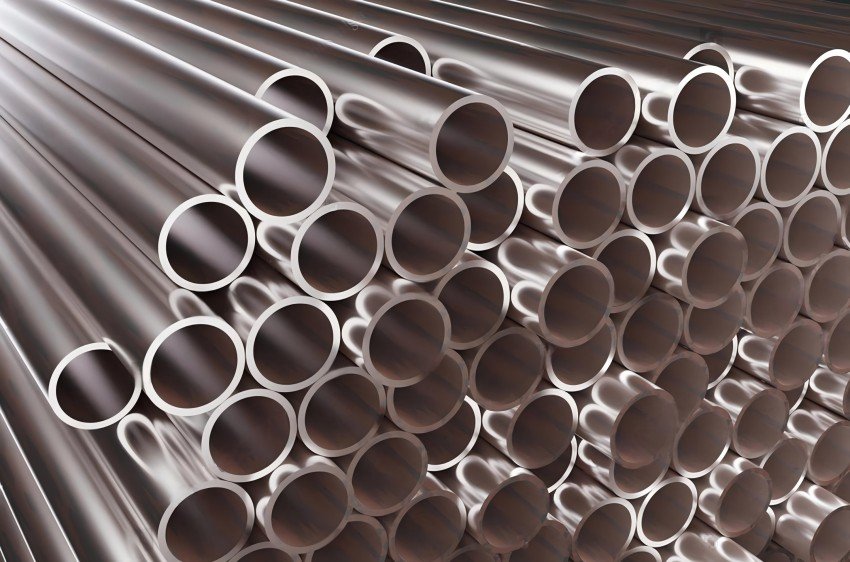
Industrial stainless steel pipe is used in chemical processing, oil and gas facilities, power generation, marine systems, water treatment, and other applications where corrosion resistance and reliable mechanical performance are required. For industrial buyers, selecting the right stainless steel pipe involves more than choosing 304 or 316. Material grade, manufacturing method, pipe dimensions, wall thickness, applicable standards, and inspection requirements must all match the intended service.
JS FITTINGS supplies industrial steel pipe solutions for overseas distributors, stockists, and project procurement teams. For large-volume stainless steel pipe requirements, welcome to contact us to get free quote.
Email: info@jssteelpipes.com
WhatsApp: +8618003119682
1. Types of Industrial Stainless Steel Pipe
Industrial stainless steel pipe is available in different manufacturing forms and material families. The correct choice depends on the application, operating conditions, and applicable specification.
Seamless Stainless Steel Pipe
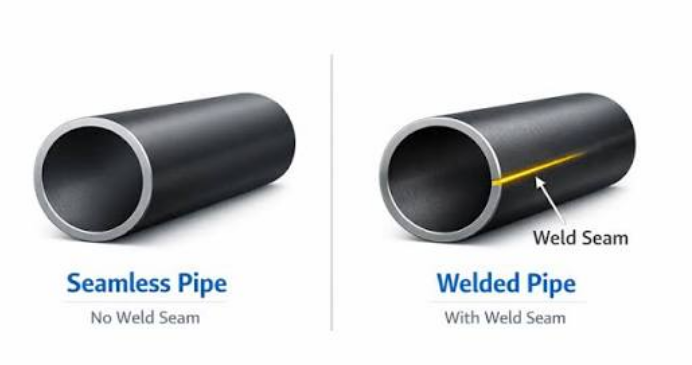
Seamless stainless steel pipe is manufactured without a longitudinal weld seam. It is commonly specified for pressure piping, chemical processing, and applications where the governing standard calls for seamless construction.
Common specifications include ASTM A312 for applicable austenitic stainless steel pipe and ASTM A790 for applicable duplex stainless steel pipe.
Typical grades include TP304/304L, TP316/316L, and specified duplex grades.
Welded Stainless Steel Pipe
Welded stainless steel pipe is manufactured from steel strip or plate formed into a tubular shape and welded along a seam. It can be a practical option for large-diameter pipelines and industrial process systems when the manufacturing method meets the project requirements.
ASTM A312 covers certain straight-seam welded austenitic stainless steel pipes. ASTM A358 covers electric-fusion-welded austenitic chromium-nickel stainless steel pipe for high-temperature and general applications.
The choice between seamless and welded pipe should be based on the applicable standard, diameter, wall thickness, design requirements, inspection provisions, and project acceptance criteria—not simply on the assumption that one manufacturing method is always superior.
2. Common Stainless Steel Pipe Grades and Their Applications
Different stainless steel grades provide different levels of corrosion resistance, mechanical performance, and suitability for specific operating environments.
| Grade | Material family | Typical selection considerations |
|---|---|---|
| 304 / TP304 | Austenitic stainless steel | General industrial service and environments compatible with 304 |
| 304L / TP304L | Low-carbon austenitic stainless steel | Applications requiring the benefits of lower carbon content, including certain welded fabrications |
| 316 / TP316 | Molybdenum-bearing austenitic stainless steel | Applications requiring improved resistance to certain corrosive environments |
| 316L / TP316L | Low-carbon, molybdenum-bearing austenitic stainless steel | Corrosion-sensitive applications where lower carbon content is beneficial |
| 321 / TP321 | Stabilized austenitic stainless steel | Selected elevated-temperature applications |
| 310S / TP310S | High-alloy austenitic stainless steel | Applications involving elevated temperatures, subject to service conditions |
| Duplex 2205 | Ferritic-austenitic stainless steel | Selected chloride-containing and demanding industrial environments |
304 vs. 316 stainless steel pipe: Grade 316 generally offers better resistance to many chloride-related corrosion conditions than 304, but neither grade is suitable for every chemical environment. Temperature, chloride concentration, exposure time, and fabrication details must be evaluated.
304L vs. 304 and 316L vs. 316: The L designation indicates a lower-carbon grade. Lower carbon content can reduce the risk of sensitization during certain welding and thermal exposures, but the correct grade must still meet the design specification.
Duplex stainless steel pipe: Duplex grades combine ferritic and austenitic microstructures and can offer higher strength than common austenitic grades. Their fabrication, heat treatment, and service-temperature limitations require specific consideration.
Grade designations from different standards should not be treated as automatically interchangeable. Confirm the applicable specification and required chemical and mechanical properties before ordering.
3. Stainless Steel Pipe Standards: ASTM, ASME, and EN
Industrial stainless steel pipe is supplied to different standards depending on its intended use and the project’s governing code.
| Standard | Main scope or purpose | Typical application |
|---|---|---|
| ASTM A312/A312M | Applicable seamless, straight-seam welded, and heavily cold-worked austenitic stainless steel pipe | General corrosive and specified high-temperature service |
| ASTM A790/A790M | Applicable seamless and welded ferritic-austenitic stainless steel pipe | Duplex stainless steel piping |
| ASTM A358/A358M | Electric-fusion-welded austenitic chromium-nickel stainless steel pipe | Large-diameter, high-temperature, and general industrial applications |
| ASTM A376/A376M | Applicable seamless austenitic stainless steel pipe | Specified high-temperature service |
| ASTM A213/A213M | Seamless ferritic and austenitic alloy-steel boiler, superheater, and heat-exchanger tubes | Boilers and heat exchangers |
| ASTM A269/A269M | Applicable stainless steel tubing for general service | Instrumentation and other tubing applications |
| ASME B36.19M | Dimensional standardization for welded and seamless wrought stainless steel pipe | Pipe outside diameter and wall-thickness selection |
| EN 10216-5 | Stainless steel seamless steel tubes for pressure purposes | European-standard pressure applications |
| EN 10217-7 | Stainless steel welded steel tubes for pressure purposes | European-standard welded pressure applications |
The latest applicable edition and the precise scope of each standard should be confirmed against the purchase specification.
A critical distinction for buyers is that a product standard and a dimensional standard perform different functions. ASTM A312 specifies material and product requirements for covered stainless steel pipe, while ASME B36.19M standardizes dimensions. Specifying ASME B36.19M alone does not establish the complete material grade, manufacturing method, or inspection requirements.
Also distinguish stainless steel pipe from stainless steel tubing. ASTM A269 and ASTM A213, for example, address tubing applications rather than serving as universal substitutes for industrial piping specifications.
4. Industrial Stainless Steel Pipe Sizes, Dimensions, and Schedule
Correct dimensions are essential for pressure design, connection compatibility, flow requirements, and installation.
Industrial stainless steel pipe is commonly specified by:
- Nominal Pipe Size (NPS) or metric nominal size (DN).
- Outside diameter (OD).
- Nominal wall thickness or Schedule.
- Specified length.
- End preparation and dimensional tolerances.
Common Stainless Steel Pipe Sizes
Typical NPS sizes used in industrial piping include:
| NPS | Nominal DN | Standard outside diameter |
|---|---|---|
| 1/2 in. | DN 15 | 21.3 mm |
| 1 in. | DN 25 | 33.4 mm |
| 2 in. | DN 50 | 60.3 mm |
| 4 in. | DN 100 | 114.3 mm |
| 6 in. | DN 150 | 168.3 mm |
| 8 in. | DN 200 | 219.1 mm |
| 10 in. | DN 250 | 273.0 mm |
| 12 in. | DN 300 | 323.9 mm |
These are representative NPS outside diameters, not actual inside diameters. The nominal DN designation is also not an exact measurement of the pipe’s outside diameter.
Stainless Steel Pipe Schedule
Common wall-thickness designations include Schedule 5S, 10S, 40S, and 80S under the ASME B36.19M dimensional system.
The Schedule number identifies a standardized wall-thickness series; it does not directly state the wall thickness in millimeters.
For example, NPS 2 stainless steel pipe has a standard outside diameter of 60.3 mm. Under ASME B36.19M, Schedule 10S has a nominal wall thickness of 2.77 mm, while Schedule 40S has a nominal wall thickness of 3.91 mm.
The required thickness must be checked against the relevant dimensional table. Not every Schedule is available for every nominal size, and some commercially available stainless steel pipe thicknesses are covered by other dimensional standards.
Important: Do not assume that Schedule 40S or 80S has the same wall thickness as Schedule 40 or 80 under ASME B36.10M. The dimensional series differ for certain sizes.
For large-diameter stainless steel pipe, non-standard outside diameters, special wall thicknesses, or metric dimensions, buyers should state the exact required dimensions rather than relying on a nominal size alone.
5. How Is Industrial Stainless Steel Pipe Manufactured?
The manufacturing route affects dimensions, surface condition, production economics, and the inspection requirements that apply to the finished pipe.
Seamless Manufacturing
A solid billet is heated and pierced to form a hollow shell, which is then rolled or drawn to the required dimensions. Subsequent operations may include heat treatment, sizing, straightening, cutting, and finishing.
Seamless construction eliminates the longitudinal weld seam, but product quality still depends on material integrity, dimensional control, heat treatment, and the required inspection.
Welded Manufacturing
Stainless steel strip or plate is formed into a tubular shape and welded using the process specified by the product standard. Depending on the product and application, welding may be followed by heat treatment, sizing, finishing, and nondestructive examination.
For large-diameter welded stainless steel pipe, ASTM A358 may be relevant where its scope and requirements match the project.
Surface Finish and Heat Treatment
Stainless steel pipe may be supplied with different surface finishes and heat-treatment conditions depending on the grade, manufacturing route, and intended use.
Typical requirements may include a pickled finish, specified surface roughness, solution heat treatment, or other conditions required by the applicable standard.
For corrosive service, surface condition, weld quality, and contamination control can be as important as the nominal grade. A polished surface alone does not guarantee suitability for a particular chemical or sanitary application.
6. Quality Inspection and Documentation
Industrial buyers should confirm which tests and documents are required before production begins. The applicable product standard and purchase order determine the mandatory inspection scope.
Depending on the specification, inspection may include:
- Chemical composition analysis.
- Tensile and other required mechanical tests.
- Dimensional and wall-thickness inspection.
- Heat-treatment verification.
- Hydrostatic testing or specified nondestructive electric testing.
- Radiographic, ultrasonic, or other weld examination where required.
- Positive material identification (PMI), when specified.
- Visual inspection, marking, and traceability verification.
Not every test applies to every stainless steel pipe order. Additional inspection may be specified for critical applications, but it should be agreed upon before manufacture and quotation.
Request the applicable material test certificate, normally EN 10204 Type 3.1 where specified, and confirm that the certificate identifies the correct grade, standard, heat number, and relevant test results. Type 3.2 inspection requires the appropriate additional verification arrangements.
For project procurement, it is also important to clarify whether third-party inspection, witness points, specific NDT acceptance criteria, or additional documentation are required.
7. Applications of Industrial Stainless Steel Pipe
Industrial stainless steel pipe is selected for applications where its properties justify its cost.
- Chemical and petrochemical plants: Process lines handling compatible corrosive media.
- Oil and gas facilities: Selected process, utility, and auxiliary systems according to the project specification.
- Power generation: Applicable high-temperature piping and heat-exchange systems.
- Water treatment and desalination: Systems requiring suitable corrosion resistance based on water chemistry.
- Marine applications: Selected services exposed to seawater, salt spray, or chloride-containing environments.
- Food, pharmaceutical, and sanitary systems: Only where the material, surface finish, cleanliness, and applicable sanitary requirements are specifically met.
Stainless steel is not immune to corrosion. Chloride-induced pitting, crevice corrosion, stress corrosion cracking, and other degradation mechanisms may occur under unsuitable conditions. Material selection should be based on the actual operating environment rather than the general label “stainless.”
8. How to Choose the Right Stainless Steel Pipe Supplier
For stockists, distributors, EPC contractors, and industrial procurement teams, supplier selection should focus on specification compliance and delivery reliability rather than the quoted price alone.
Before placing an order, confirm the following:
1. Material and standard compliance
Provide the exact ASTM, ASME, or EN requirements, grade, and any project-specific supplementary requirements. Ask the supplier to confirm the proposed product’s compliance.
2. Complete dimensional information
Specify NPS or DN, outside diameter where applicable, Schedule or actual wall thickness, length, end preparation, and tolerances.
3. Manufacturing method
Confirm whether the requirement is seamless or welded and whether the proposed manufacturing route is permitted by the governing specification.
4. Inspection and traceability
Agree on the material test certificate, testing scope, heat-number traceability, marking, and any third-party inspection requirements.
5. Order quantity and delivery schedule
For large-volume orders, confirm production capacity, material availability, inspection lead time, packing, and shipment arrangements before committing to a delivery date.
6. Commercial and technical communication
A capable supplier should be able to review the specification, identify missing information, clarify technical questions, and provide a quotation that can be compared on an equivalent basis.
9. Stainless Steel Pipe Supply for Large Industrial Orders
JS FITTINGS focuses on industrial steel pipe and piping products for overseas stockists, distributors, trading companies, and project procurement teams.
Although carbon steel pipe is a core part of our business, we can also review large-volume industrial stainless steel pipe requirements and assess supply options against the customer’s specifications.
For a more accurate quotation, please provide:
- Required grade, such as TP304L, TP316L, or a specified duplex grade.
- Applicable product standard and edition.
- Seamless or welded construction.
- NPS/DN, outside diameter, wall thickness or Schedule, and length.
- Total quantity and delivery destination.
- Required inspection, material certificates, and project documentation.
Our established experience in industrial pipe procurement and export coordination helps us assess specification requirements, organize order details, and coordinate the supply process for international buyers. Availability, manufacturing route, lead time, and inspection arrangements are confirmed for each order rather than assumed.
For distributors building inventory or EPC contractors sourcing stainless steel pipe for a defined project, send us the material list or technical specification for review.
Contact JS FITTINGS for a stainless steel pipe quotation based on your required grade, dimensions, quantity, and delivery schedule.
Email: info@jssteelpipes.com
WhatsApp: +8618003119682
Frequently Asked Questions
What is the most common grade of industrial stainless steel pipe?
TP304/304L and TP316/316L are widely used austenitic grades. The appropriate choice depends on the process medium, temperature, corrosion exposure, and applicable specification.
What is the difference between 304 and 316 stainless steel pipe?
Grade 316 contains molybdenum and generally offers better resistance to many chloride-related corrosion conditions than 304. Actual performance depends on the environment, and neither grade is suitable for every service.
What are the common standards for stainless steel pipe?
ASTM A312, A790, A358, and A376 cover different categories of stainless steel pipe. ASME B36.19M addresses pipe dimensions. ASTM A269 and A213 cover particular tubing applications. The correct standard depends on the product type and intended service.
What is the difference between Schedule 10S and Schedule 40S stainless steel pipe?
They are different wall-thickness series under the applicable dimensional standard. The actual thickness depends on nominal pipe size and should be checked against ASME B36.19M or the specified dimensional standard.
Is seamless stainless steel pipe better than welded pipe?
Not in every application. Seamless pipe has no longitudinal weld seam, while welded pipe can offer practical advantages for certain dimensions and project requirements. Both must comply with the applicable product standard and inspection criteria.
Can JS FITTINGS supply large quantities of stainless steel pipe?
Yes, we can review large-volume industrial stainless steel pipe requirements and assess supply options based on grade, standard, dimensions, quantity, and inspection needs. Availability and delivery schedules are confirmed for the individual order.