In the world of heavy-duty industrial infrastructure, not all steel pipes are created equal. When projects demand high-pressure resistance, thick walls, and large diameters, LSAW (Longitudinal Submerged Arc Welded) steel pipe stands as the primary choice for engineers and procurement specialists globally.
At JS FITTINGS, we have spent decades supplying critical energy and construction projects. In this guide, we break down everything you need to know about LSAW pipes, from manufacturing nuances to choosing the right supplier.
What is LSAW Steel Pipe?
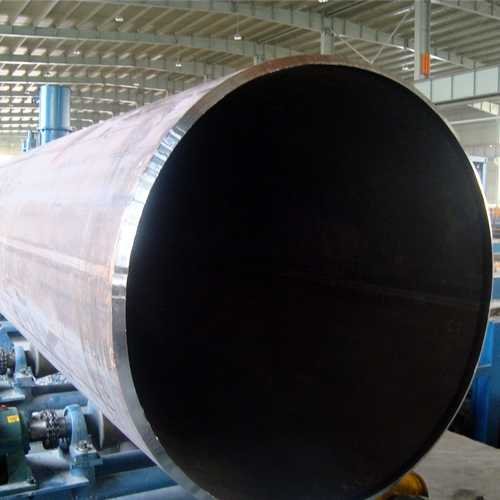
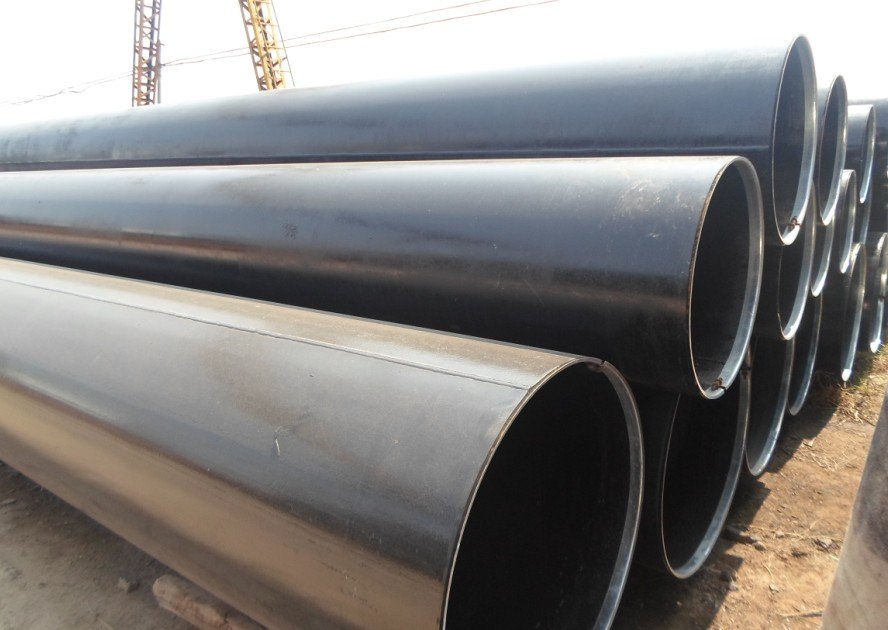
LSAW steel pipe is produced by using a single wide steel plate as the raw material. The plate is molded (usually through the JCOE or UOE process) into a V-shape, then a U-shape, and finally an O-shape, before being welded using double-sided submerged arc welding technology.
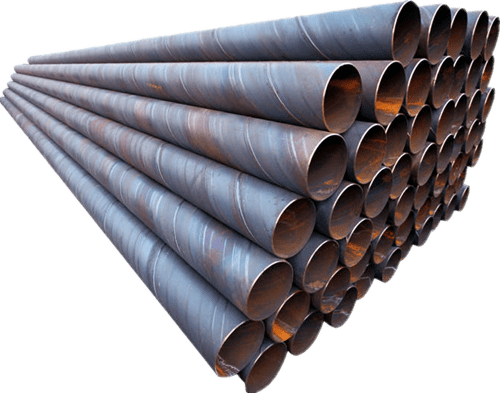
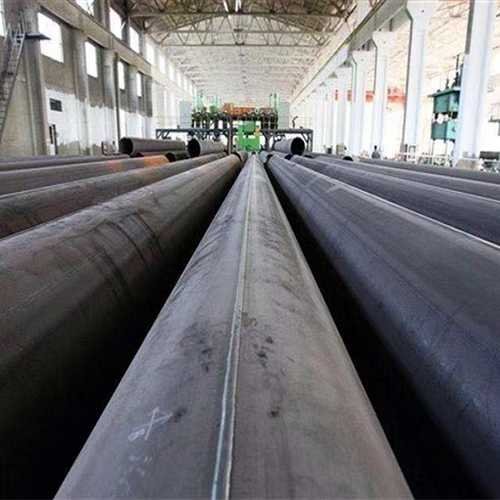
Unlike spiral pipes (SSAW), the weld seam in an LSAW pipe runs in a straight longitudinal line. This process allows for the production of pipes with significantly higher wall thicknesses and larger diameters than standard ERW or seamless pipes can achieve.

Key Specifications and Materials
To ensure project safety, LSAW pipes must adhere to rigorous international standards. At JS FITTINGS, our production lines are calibrated to meet:
- API 5L (PSL1 & PSL2): The industry standard for oil and gas line pipes, ranging from Grade B to high-strength X70 or X80.
- ASTM Standards: Including ASTM A671 and A672 for high-pressure service at atmospheric and lower temperatures.
- Size Range: Typically available in outer diameters (OD) from 16″ (406mm) to 60″ (1524mm), with wall thicknesses up to 50mm or more.
Common Materials include:
- Carbon Steel: Gr.B, X42, X52, X60, X65, X70.
- Alloy Steel: For specialized corrosive or high-heat environments.
The Comparison: LSAW vs. SSAW vs. ERW Steel pipes
Choosing the wrong welding method can lead to catastrophic project failure or unnecessary budget inflation. Here is how LSAW compares to its counterparts:
| Feature | LSAW | SSAW (Spiral) | ERW |
| Weld Seam | Longitudinal (Straight) | Spiral | Longitudinal (High-Freq) |
| Diameter Range | Large (Up to 60″+) | Large | Small to Medium |
| Wall Thickness | Very Thick (Max 50mm+) | Medium | Thin to Medium |
| Internal Stress | Low (due to expansion) | Higher | Medium |
| Main Use | Oil/Gas Mainlines, Piling | Water, Low-Pressure Gas | Construction, Fencing |
Why choose LSAW Pipes?
While SSAW is more cost-effective for water transmission, LSAW is preferred for high-pressure oil and gas pipelines because the longitudinal seam is easier to inspect and less prone to stress-related fatigue.
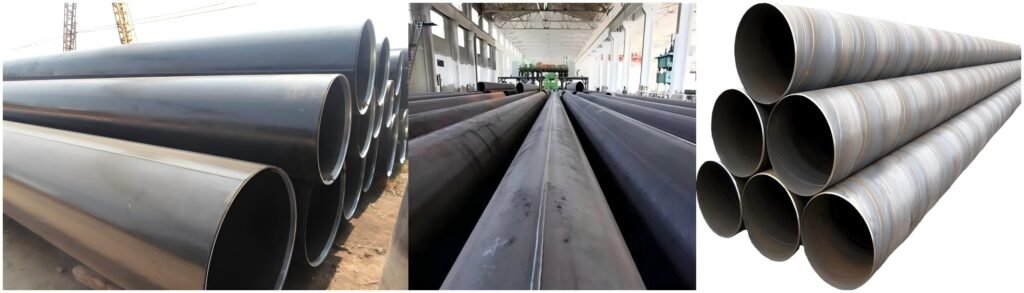
Advantages of LSAW Steel Pipe
- High Strength & Uniformity: The “Expansion” phase in LSAW manufacturing (JCOE) ensures the pipe has excellent dimensional accuracy and reduces internal residual stress.
- Large Diameter/Thick Wall: It is the only viable option for ultra-thick wall requirements (e.g., offshore platforms or deep-sea pipelines).
- Weld Quality: Submerged arc welding protects the weld pool from atmospheric contamination, resulting in a clean, high-strength bond.
Critical Industrial Applications
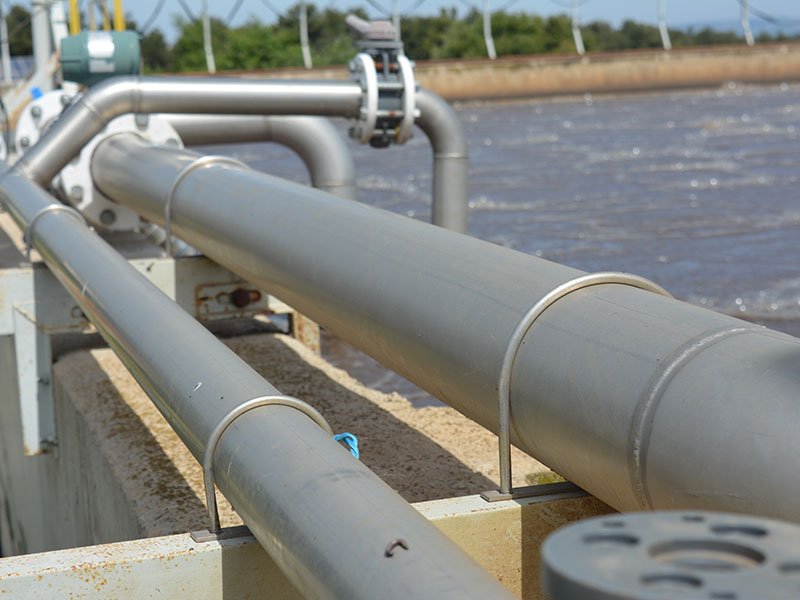
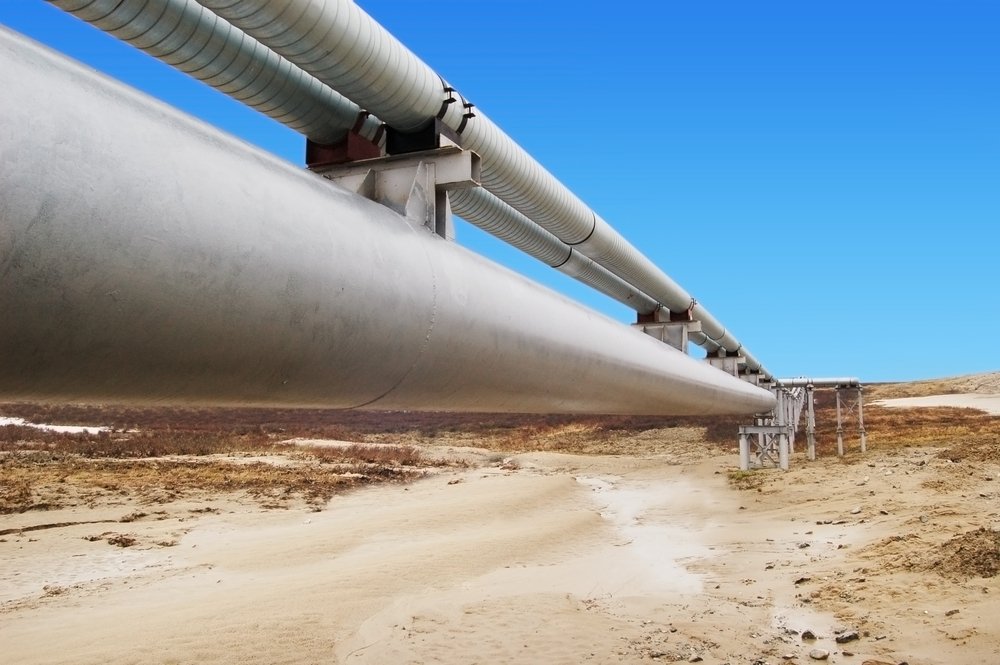
LSAW pipes are the “backbone” of heavy industry:
- Oil & Gas Mainlines: Long-distance transmission of hydrocarbons under high pressure.
- Structural Piling: Serving as foundation piles for bridges, skyscrapers, and offshore wind farms.
- Dredging and Water Systems: Heavy-duty slurry transport where durability is non-negotiable.
- Chemical Plants: Transporting volatile fluids in large-scale refineries.
Quality Control: Ensuring Project Integrity
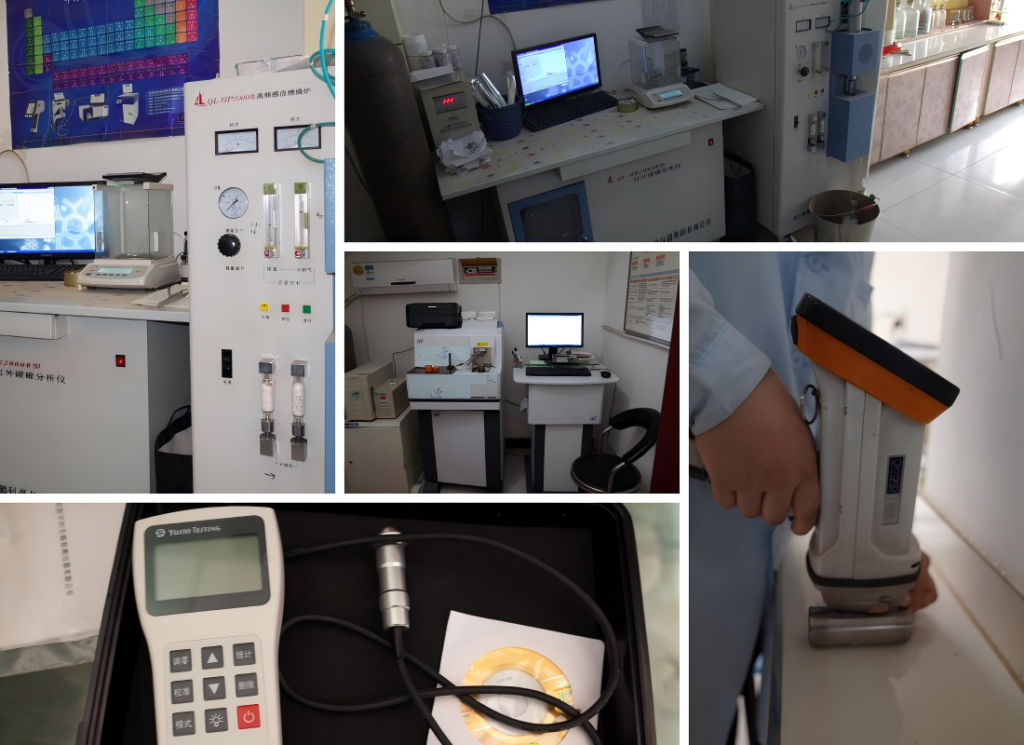
At JS FITTINGS, we believe a pipe is only as good as its test report. Our LSAW quality control protocol includes:
- UT (Ultrasonic Testing): 100% scanning of the weld seam.
- RT (Radiographic Testing): X-ray inspection for critical wall sections.
- Hydrostatic Testing: Every pipe is pressurized to ensure leak-proof performance.
- MTC (Mill Test Certificate): Full traceability of chemical composition and mechanical properties (Yield, Tensile, Elongation).
How to Choose a Reliable LSAW Steel Pipe Supplier?
Sourcing from China can be complex. To find a partner rather than just a vendor, look for:
- Technical Expertise: Can they explain the difference between JCOE and UOE? Do they understand API 5L PSL2 requirements?
- Integration: Suppliers like JS FITTINGS provide a “One-Stop” solution. We don’t just supply the pipe; we provide the matching elbows, tees, and flanges, ensuring 100% compatibility across your piping system.
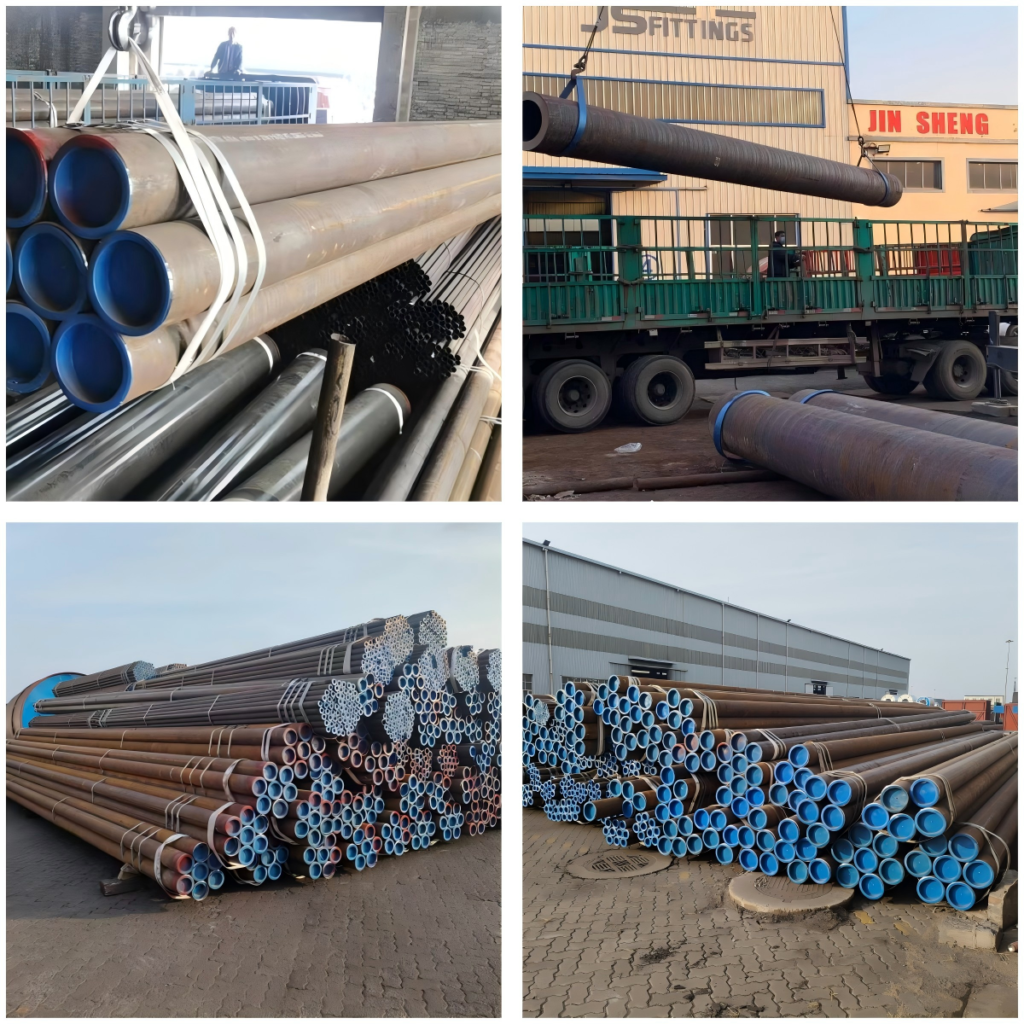
- Logistics Capability: Shipping 12-meter LSAW pipes requires specialized break-bulk or container loading expertise to prevent damage to pipe ends.
LSAW Steel Pipe FAQ
Q: Can LSAW pipes be coated?
A: Yes. We commonly provide 3LPE, FBE (Fusion Bonded Epoxy), and Liquid Epoxy coatings to prevent corrosion in underground or subsea applications.
Q: What is the typical lead time?
A: Depending on the tonnage and specification, LSAW production usually ranges from 20 to 45 days.
Q: Is LSAW more expensive than ERW?
A: Generally, yes. The manufacturing process is more intensive, and the raw material (steel plate) is more expensive than the steel coils used for ERW.
Conclusion
When your project involves critical infrastructure, there is no room for compromise. JS FITTINGS combines decades of manufacturing excellence with a deep understanding of the global supply chain. We provide not only high-quality LSAW pipes but the technical consultation required to make your project a success.
Looking for a competitive quote on LSAW Steel Pipes?
Contact JS FITTINGS today to speak with our engineering sales team and receive a comprehensive proposal for your next project.