In the world of industrial piping, Seamless Steel Pipe (SMLS) stands as the gold standard for durability and high-pressure performance. Unlike welded pipes, which are formed from plates or coils, seamless pipes are manufactured without a single weld seam, making them the preferred choice for critical applications in oil and gas, chemical processing, and power generation.
At JSFITTINGS, we understand that choosing the right pipe is a balance of safety, cost, and technical specifications. In this guide, we will break down the manufacturing process, key standards, and why SMLS pipe is indispensable for your next project.
1. What is Seamless Steel Pipe?
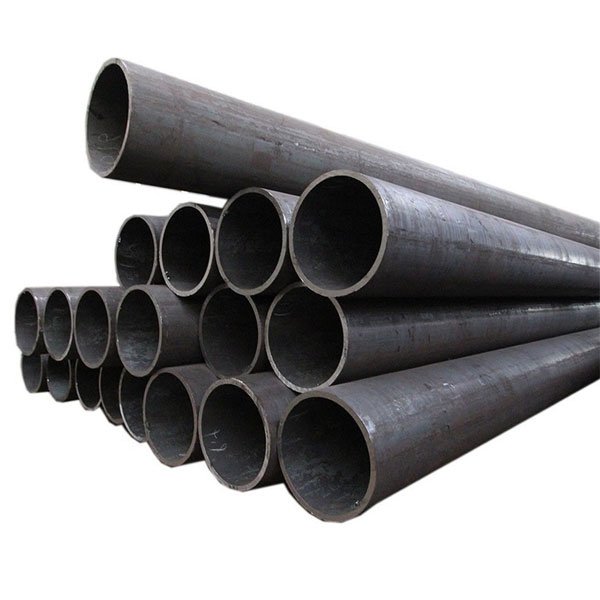
As the name suggests, a seamless steel pipe is a pipe without a longitudinal or circumferential weld seam. It is produced from a solid round steel “billet” which is heated and pushed or pulled over a piercing rod until the steel is shaped into a hollow tube.
Why go seamless?
The absence of a weld seam provides a uniform structure, which translates to:
- Higher Pressure Ratings: SMLS pipes can withstand significantly higher internal pressure than welded pipes of the same material and size.
- Superior Reliability: No weld means no risk of “seam failure”—the most common point of weakness in pipelines.
- Precision and Shape: SMLS offers excellent roundness and wall thickness consistency in heavy-wall applications.
2. How is Seamless Steel Pipe Manufactured?
The manufacturing process is what gives SMLS its strength. There are two primary methods used at JSFITTINGS:
Hot Rolling (The Most Common)
- Heating: The steel billet is heated to a high temperature.
- Piercing: A piercing mandrel creates a hole through the center of the hot billet.
- Elongation: The hollow billet is rolled and stretched to achieve the desired diameter and wall thickness.
- Cooling & Straightening: The pipe is cooled, straightened, and cut to length.
Cold Drawing (For Precision)
For smaller diameters or thinner walls requiring high precision, the pipe undergoes Cold Drawing. This involves pulling the pipe through a die at room temperature, which improves surface finish and dimensional tolerances.
3. SMLS vs. Welded Pipe: Which One Do You Need?
| Feature | Seamless Pipe (SMLS) | Welded Pipe (ERW/LSAW) |
| Weld Seam | None | Longitudinal or Spiral seam |
| Pressure Capacity | High / Extreme | Moderate |
| Wall Thickness | Available in very thick walls | Limited by plate thickness |
| Cost | Higher (Complex process) | Lower (More economical) |
| Best For | High-pressure, critical fluid transport | Low/Medium pressure, structural use |
4. Key Standards and Grades
When sourcing SMLS pipes, you must adhere to international standards to ensure project safety. At JSFITTINGS, we specialize in:
- ASTM A106 (Grade B & C): The standard for high-temperature service in refineries and power plants.
- ASTM A53: Suitable for mechanical and pressure applications, and also for ordinary uses in steam, water, gas, and air lines.
- API 5L (Grades B through X80): The definitive standard for the oil and gas industry, available in PSL1 and PSL2.
- ASTM A333: Specifically designed for low-temperature service.
5. Typical Applications of SMLS Pipes
Due to their strength, SMLS pipes are found in the most demanding environments:
- Upstream Oil & Gas: Drill pipes, casing, and tubing (OCTG).
- Downstream Processing: High-pressure refinery piping.
- Nuclear & Power Plants: Steam boilers and high-temperature transport.
- Hydraulic Systems: High-pressure cylinders and lines.
6. Quality Assurance: The JSFITTINGS Difference
Quality is non-negotiable for SMLS pipes. Every pipe we ship undergoes rigorous testing:
- Hydrostatic Testing: Ensuring the pipe can handle its rated pressure without leaking.
- Ultrasonic Testing (UT): Detecting internal flaws or thickness variations.
- Chemical Analysis: Verifying the steel “heat” matches the required grade.
- Dimensional Inspection: Ensuring precise OD (Outer Diameter) and WT (Wall Thickness).
Conclusion: Partner with an Expert
Choosing Seamless Steel Pipe is an investment in the safety and longevity of your infrastructure. Whether you are an engineer designing a high-pressure line or a stockist looking for reliable bulk supply, JSFITTINGS is here to help.
Ready to discuss your project?
Our team of experts, led by Lisa Wang, is ready to provide you with technical consultations and competitive quotes.
- View our SMLS Product Catalog
- Request a Quote: info@jssteelpipes.com
- WhatsApp Us: +8618003119682