Carbon steel pipe, often shortened to carbon pipe, is one of the most widely used steel piping products for transporting oil, gas, water, steam and other industrial fluids. The right pipe is not selected by diameter alone. Grade, manufacturing method, wall thickness, applicable standard, pressure and temperature, end connection, corrosion protection and inspection requirements all affect whether a pipe is suitable for a project.
For buyers sourcing carbon steel pipes for stock, construction projects or oil & gas applications, this guide explains the key grades, standards, sizes, manufacturing processes and purchasing points before you place an order.
What Is Carbon Steel Pipe?
Carbon steel pipe is a steel pipe in which carbon is the principal alloying element, while other elements such as manganese, silicon, phosphorus and sulfur are controlled according to the applicable material standard.
Carbon content influences hardness, strength, ductility and weldability. In general, increasing carbon can increase strength and hardness but can also reduce ductility and make welding more demanding.
However, buyers should not select a pipe simply by looking at its carbon percentage. The applicable pipe standard and grade are more important because they define the required chemical composition, mechanical properties, manufacturing requirements, testing and dimensional tolerances.
For example, ASTM A106 Gr.B is a common seamless carbon steel pipe grade for high-temperature service. ASTM A53 is commonly specified for general-purpose mechanical and pressure piping, while API 5L grades are designed for line pipe applications.
For a broader introduction, see our guide to [what carbon steel pipes are and their common uses].
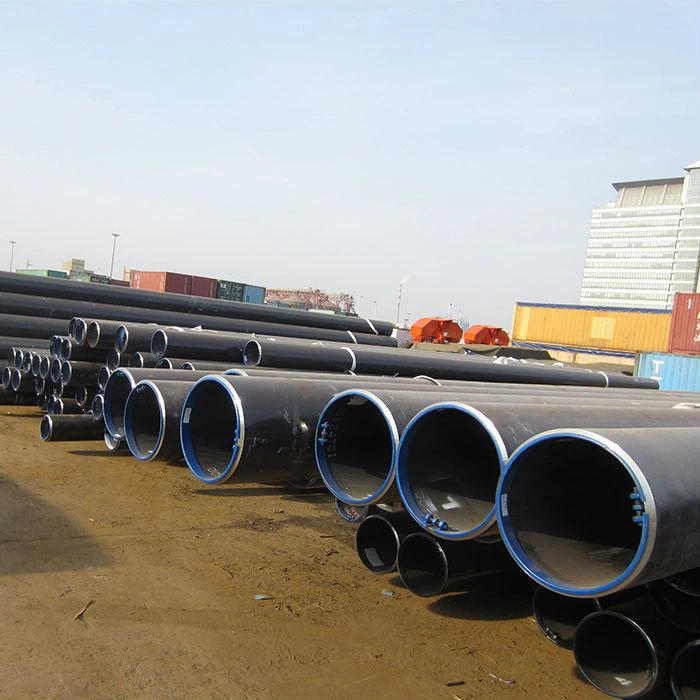
Carbon Steel Pipe Classification by Carbon Content
Carbon steel is often discussed in three broad metallurgical groups:
| Classification | Approx. Carbon Content | General Characteristics | Typical Use |
|---|---|---|---|
| Low-carbon steel | Below about 0.25% | Good weldability, ductility and formability | Water, structural and general industrial piping |
| Medium-carbon steel | About 0.25–0.60% | Higher strength and hardness, lower weldability | Mechanical and higher-strength applications |
| High-carbon steel | Above about 0.60% | High hardness and strength, lower ductility | Specialized wear-resistant and mechanical applications |
These ranges are useful for understanding steel metallurgy, but they should not be used as a substitute for a pipe standard or grade designation.
ASTM A106 Grade A, B and C
ASTM A106 is one of the most frequently specified standards for seamless carbon steel pipe used in high-temperature service.
Its three grades have different chemical limits:
| Chemical Element | ASTM A106 Gr.A | ASTM A106 Gr.B | ASTM A106 Gr.C |
|---|---|---|---|
| Carbon, max. | 0.25% | 0.30% | 0.35% |
| Manganese | 0.27–0.93% | 0.29–1.06% | 0.29–1.06% |
| Phosphorus, max. | 0.035% | 0.035% | 0.035% |
| Sulfur, max. | 0.035% | 0.035% | 0.035% |
| Silicon, min. | 0.10% | 0.10% | 0.10% |
The ASTM specification also controls residual and alloying elements such as chromium, copper, molybdenum, nickel and vanadium.
For most international industrial purchasing inquiries, ASTM A106 Gr.B is the grade buyers are most likely to encounter. The correct grade, however, should always be determined from the project specification rather than assumed from the application.
How Should Buyers Choose Between A106 Grades?
A practical approach is:
- A106 Gr.A: suitable where the project specification calls for Grade A and the required mechanical properties can be met.
- A106 Gr.B: widely used for industrial process piping and high-temperature service.
- A106 Gr.C: selected where the project specifically requires its higher specified strength level.
Do not request “A106 carbon steel pipe” without identifying the grade. A quotation should normally specify A106 Gr.B, for example, rather than leaving the grade open.
Carbon Steel Pipe Grades Commonly Used in Industry
Different standards serve different purposes.
| Standard | Common Grades | Pipe Type | Typical Application |
|---|---|---|---|
| ASTM A53 | Gr.A / Gr.B | Seamless & welded | General pressure, mechanical and utility piping |
| ASTM A106 | Gr.A / Gr.B / Gr.C | Seamless | High-temperature service |
| API 5L | Gr.B, X42, X52, X60, etc. | Seamless & welded | Oil & gas transmission and gathering |
| ASTM A333 | Gr.6 and others | Seamless & welded | Low-temperature service |
| EN 10216 | P195GH, P235GH, P265GH and others | Seamless | Pressure and elevated-temperature service |
| EN 10217 | Various grades | Welded | Pressure service |
| JIS G3454 | STPG grades | Seamless & welded | Pressure service |
| JIS G3455 | STS grades | Seamless | High-pressure service |
| JIS G3456 | STPT grades | Seamless | High-temperature service |
The important point is that grade names are not interchangeable simply because their chemical composition looks similar. When replacing one standard with another, the purchaser should check chemical composition, yield and tensile strength, impact requirements, dimensions, testing and project approval requirements.
Common Carbon Steel Pipe Sizes & Specifications
Carbon steel pipe is normally ordered using several dimensions and designations:
- Nominal Pipe Size (NPS)
- Outside Diameter (OD)
- Wall Thickness
- Schedule
- Pipe Length
- Steel Grade
- Manufacturing Type
- Applicable Standard
- End Finish
For ASME-based piping, NPS and Schedule are commonly used.
Common NPS and Outside Diameters
| Nominal Size | NPS | Approx. Outside Diameter |
|---|---|---|
| 1/2″ | DN15 | 21.3 mm |
| 3/4″ | DN20 | 26.7 mm |
| 1″ | DN25 | 33.4 mm |
| 1-1/2″ | DN40 | 48.3 mm |
| 2″ | DN50 | 60.3 mm |
| 3″ | DN80 | 88.9 mm |
| 4″ | DN100 | 114.3 mm |
| 6″ | DN150 | 168.3 mm |
| 8″ | DN200 | 219.1 mm |
| 10″ | DN250 | 273.1 mm |
| 12″ | DN300 | 323.9 mm |
| 14″ | DN350 | 355.6 mm |
| 16″ | DN400 | 406.4 mm |
| 20″ | DN500 | 508.0 mm |
| 24″ | DN600 | 610.0 mm |
The outside diameter remains associated with the nominal pipe size, while the wall thickness changes according to the selected Schedule or applicable dimensional standard.
Common Pipe Schedules
For industrial carbon steel pipe, buyers frequently encounter:
Schedule 10, Schedule 20, Schedule 30, Schedule 40, Schedule 60, Schedule 80, Schedule 100, Schedule 120, Schedule 140 and Schedule 160, as well as heavier wall designations such as XXS for certain sizes.
SCH 40 vs SCH 80 vs SCH 160 Steel Pipe
The same NPS can therefore have significantly different wall thicknesses.
For stockists and distributors, the purchase list should normally include NPS + Schedule + Grade + Standard + Length + Quantity.
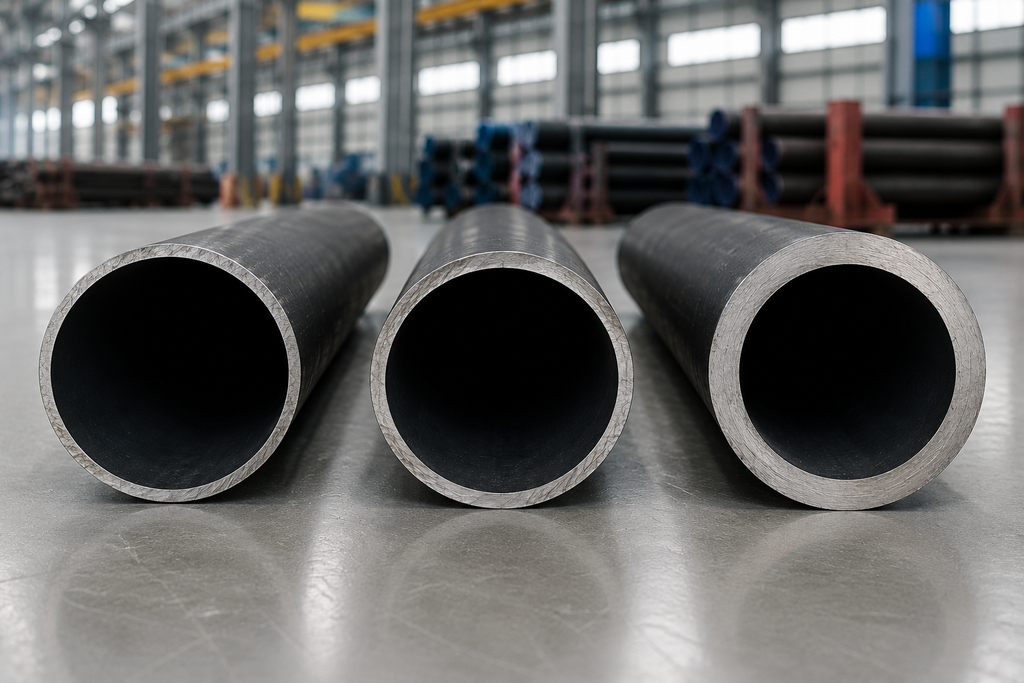
Seamless vs Welded Carbon Steel Pipe
Carbon steel pipe is generally supplied as seamless or welded pipe.
Seamless Carbon Steel Pipe
Seamless pipe starts from a solid steel billet. The billet is heated and pierced to create a hollow shell, which is then rolled, sized and processed to achieve the required dimensions and properties.
A typical seamless manufacturing route includes:
- Steel billet preparation
- Billet heating
- Rotary piercing
- Elongation and rolling
- Sizing or reducing
- Heat treatment where required
- Straightening
- Surface inspection
- Dimensional inspection
- Non-destructive testing and mechanical testing according to the applicable standard
- Marking and packing
Because there is no longitudinal weld seam, seamless pipe is widely selected for applications where the specified standard, pressure, temperature and service conditions call for seamless construction.
Common examples include:
- ASTM A106 Gr.B process piping
- Boiler and heat-transfer systems
- Petrochemical piping
- High-temperature industrial service
- Certain oil & gas applications
Welded Carbon Steel Pipe
Welded pipe is produced from steel strip, plate or coil that is formed into a cylindrical shape and joined along a longitudinal or spiral seam.
Common welded pipe manufacturing methods include:
ERW Pipe
Electric Resistance Welding (ERW) pipe is formed from steel strip and welded along the longitudinal seam using electrical resistance.
ERW pipe is commonly used for:
- Water pipelines
- Structural applications
- General industrial piping
- Oil & gas gathering systems
- Utility pipelines
LSAW Pipe
Longitudinal Submerged Arc Welding (LSAW) pipe is formed from steel plate and welded longitudinally using submerged arc welding.
It is often used for larger-diameter and heavier-wall pipe applications, including:
- Oil and gas transmission
- Natural gas plants
- Water transmission
- Large industrial pipelines
- Infrastructure projects
SSAW Pipe
Spiral Submerged Arc Welding (SSAW) pipe is manufactured by forming steel coil into a spiral tube and welding the spiral seam.
It is commonly considered for:
- Large-diameter water pipelines
- Piling
- Low-to-medium pressure applications
- Certain oil & gas pipeline projects
Seamless vs Welded pipes: Which Should You Buy?
There is no universal rule that seamless is always better.
The correct choice depends on:
- Required standard
- Pressure and temperature
- Pipe diameter
- Wall thickness
- Steel grade
- Service medium
- Project specification
- Inspection requirements
- Budget and availability
For a high-temperature ASTM A106 Gr.B process line, seamless pipe may be specified. For a large-diameter water transmission pipeline, welded pipe may be a more practical solution.
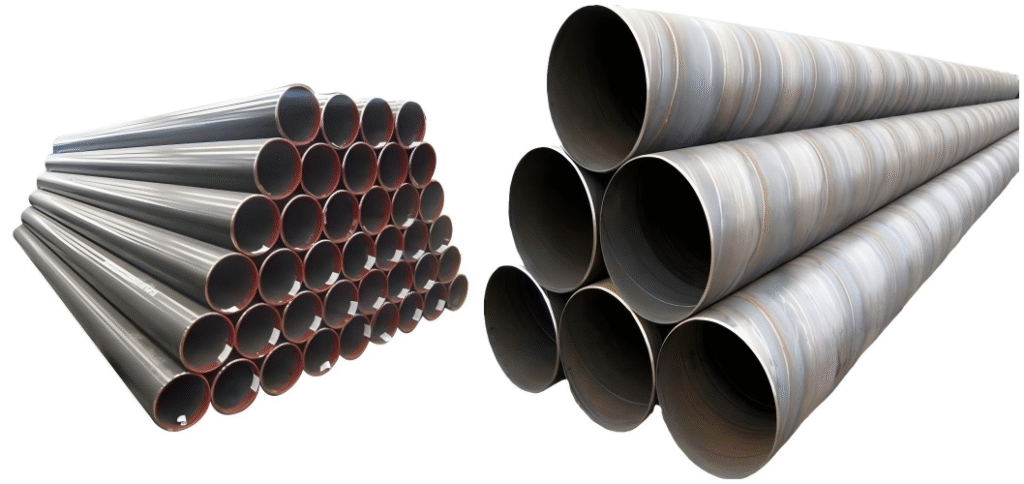
International Standards for Carbon Steel Pipes
ASTM and API
ASTM A53
ASTM A53 covers seamless and welded steel pipe for mechanical and pressure applications, as well as ordinary steam, water, gas and air lines.
ASTM A106
ASTM A106 covers seamless carbon steel pipe for high-temperature service. It is commonly specified in industrial plants, refineries and process piping.
API 5L
API 5L is widely associated with line pipe used in pipeline transportation systems for petroleum and natural gas industries.
Common grades include:
- Grade B
- X42
- X52
- X60
- X65
- X70
The exact product specification may also involve PSL1 or PSL2 requirements, depending on the project.
DIN, EN and JIS Carbon Steel Pipe Standards
European and Asian buyers may use different designations even when the application is similar.
| Standard System | Example Standard | Product Type | Typical Use |
|---|---|---|---|
| EN | EN 10216-1 | Seamless tubes | Pressure service at room/low temperature requirements |
| EN | EN 10216-2 | Seamless tubes | Pressure service with specified elevated-temperature properties |
| EN | EN 10217 | Welded tubes | Pressure service |
| DIN | DIN 1629 | Seamless circular tubes | Special quality requirements |
| JIS | JIS G3454 | Carbon steel pipes | Pressure service |
| JIS | JIS G3455 | Carbon steel pipes | High-pressure service |
| JIS | JIS G3456 | Carbon steel pipes | High-temperature service |
EN 10216-2 covers seamless steel tubes for pressure purposes with specified elevated-temperature properties, while the EN 10217 series covers welded steel tubes for pressure purposes.
When a European project specifies an EN grade, do not automatically replace it with ASTM A106 simply because both products are carbon steel. The project engineer or purchaser should confirm that the alternative is acceptable.
Carbon Steel Pipe for Different Industries
1. Oil & Gas
Oil and gas projects use carbon steel pipes for gathering, transportation, process piping and plant construction.
Typical requirements may include:
- API 5L line pipe
- ASTM A106 seamless pipe
- ASTM A53 pipe
- Large-diameter LSAW or SSAW pipe
- ERW pipe for specific applications
- External coating such as 3PE or FBE where specified
Example: Natural Gas Project
In a 2026 export project, a Nigerian steel pipe supplier purchased a large quantity of API 5L LSAW steel line pipe for a natural gas plant and gas transportation application.
The order covered six full containers. The buyer first contacted us in March 2026, followed by technical discussions and a factory inspection. Before shipment, the factory inspected the product, and the pipe was shipped in July.
For a project like this, the important purchasing information is not simply “carbon steel pipe.” The buyer needs to specify:
API 5L + grade + PSL + OD + wall thickness + length + pipe manufacturing method + inspection requirements + coating if applicable.
2. Water Treatment & Water Transmission
Carbon steel pipe can be used in industrial water systems, raw-water transmission, water treatment plants and infrastructure projects.
Typical requirements may include:
- Large diameter welded steel pipe
- Internal/external coating
- Specific wall thickness
- Flanged or beveled ends
- Hydrostatic testing
- Dimensional and visual inspection
For large water transmission projects, LSAW or SSAW pipe may be considered depending on the design and project specification.
For smaller industrial water lines, ERW or seamless pipe may be selected depending on pressure, diameter and applicable standard.
3. Construction & Structural Applications
Carbon steel pipe is also used in:
- Structural supports
- Columns
- Piling
- Temporary structures
- Equipment supports
- Mechanical systems
The appropriate specification depends on whether the pipe is being used as a pressure-carrying product or primarily as a structural component.
This distinction matters because structural steel standards and pressure-pipe standards are not automatically interchangeable.
A Real Procurement Example: ASTM A106 Seamless Pipe
A 2026 project involved a Chilean steel pipe stock distributor looking for approximately 2,500 tons of ASTM A106 carbon steel seamless pipe.
The buyer was purchasing for stock and initially compared the quotation with lower-priced suppliers.
Instead of competing only on price, the purchasing process focused on:
- Material and grade confirmation
- Production capability
- Inspection requirements
- Factory verification
- Third-party inspection
- Shipment planning
- Delivery schedule
The buyer also carried out a video factory inspection before proceeding.
The order was eventually shipped in September 2026 and became the customer’s first cooperation with the supplier.
For a distributor purchasing thousands of tons, this type of order shows why the buying decision often involves more than the lowest initial quotation. Material traceability, inspection, production capacity, delivery reliability and the supplier’s ability to handle a large batch can directly affect the purchasing decision.
How to Choose the Right Carbon Steel Pipe
For B2B buyers, the easiest way to avoid quotation problems is to provide a complete technical specification before asking suppliers for prices.
1. Confirm the Application
Tell the supplier what the pipe will carry and where it will be used.
For example:
- Natural gas
- Crude oil
- Water
- Steam
- Compressed air
- Chemical fluid
- Structural service
The service conditions help determine the applicable material standard.
2. Select the Standard
Examples include:
- ASTM A53
- ASTM A106
- API 5L
- ASTM A333
- EN 10216
- EN 10217
- JIS G3454
- JIS G3455
- JIS G3456
Do not choose a grade first and standard later. The standard normally defines the grade and technical requirements.
3. Select the Manufacturing Method
Choose between:
- Seamless
- ERW
- LSAW
- SSAW
The correct method depends on size, wall thickness, application and project specification.
4. Confirm Size and Wall Thickness
Provide:
NPS or OD + wall thickness or Schedule
For example:
8″ × Sch 40
5. Confirm Length
Common requirements include:
- 5.8 m
- 6 m
- 11.8 m
- 12 m
- Fixed length
- Random length
For container shipments, length can also affect loading efficiency and transportation cost.
6. Confirm Inspection Requirements
Depending on the project, buyers may request:
- Hydrostatic testing
- Tensile testing
- Chemical analysis
- Hardness testing
- Ultrasonic testing
- Eddy-current testing
- Visual inspection
- Dimensional inspection
- Third-party inspection
- Mill Test Certificate
If the project requires a specific inspection agency, mention it before quotation.
7. Confirm Surface Treatment
Carbon steel pipe may be supplied:
- Bare
- Black coated
- Painted
- Galvanized
- 3PE coated
- FBE coated
- Epoxy coated
The coating specification should be clearly defined because surface treatment can significantly affect the final price and delivery schedule.
What Information Should Be Included in a Carbon Steel Pipe RFQ?
A professional RFQ should ideally look like this:
Product: Seamless Carbon Steel Pipe Standard: ASTM A106 Grade: Gr.B Size: 8″ Wall Thickness: Sch 40 Length: 12 m Quantity: 500 pcs Ends: Beveled Testing: Hydrostatic + standard inspection MTC: EN 10204 3.1 Packing: Bundles Destination: Dubai, UAE
This gives the supplier enough information to prepare a meaningful quotation.
For distributors and stockists, it is also useful to provide a complete size list rather than asking for a general “carbon pipe price.”
Carbon Steel Pipe vs Mild Steel Pipe
Is Carbon Steel Pipe the Same as MS Pipe?
Not exactly.
“Mild steel” generally refers to low-carbon steel, while “carbon steel” is a broader category.
Therefore, mild steel can be considered a type of carbon steel, but the terms should not automatically be treated as identical in purchasing documents.
For example, a buyer asking for MS pipe may have a different expectation from a project specification requiring ASTM A106 Gr.B seamless carbon steel pipe.
The applicable standard, grade and dimensions should always control the purchase.
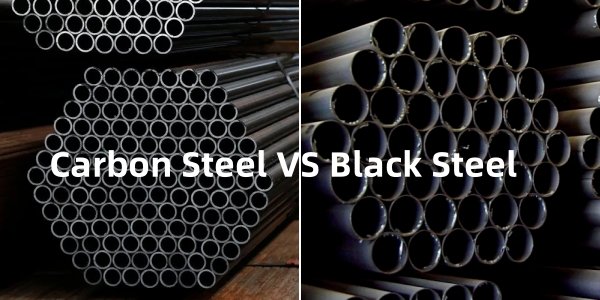
Carbon Steel Pipe vs Black Steel Pipe
“Black steel pipe” usually refers to steel pipe supplied with a dark mill-scale surface rather than a galvanized or otherwise finished surface.
“Carbon steel pipe” describes the material category rather than simply the surface appearance.
Therefore:
Carbon steel pipe ≠ automatically black steel pipe.
A carbon steel pipe can be supplied bare, painted, coated or galvanized depending on the product and specification.
Likewise, the term “black pipe” alone is not enough for a technical RFQ. Buyers should still specify the applicable standard, grade, dimensions and testing requirements.
Carbon Steel Pipe Weight Calculation
For procurement and logistics, approximate pipe weight can be estimated from the outside diameter and wall thickness.
A commonly used theoretical formula is:
Weight (kg/m) ≈ 0.02466 × WT × (OD − WT)
The theoretical unit weight can be estimated from the formula above.
However, for a commercial order, the applicable dimensional standard and the manufacturer’s certified theoretical weight should be used for final purchasing and shipping calculations.
For large orders, buyers should also check:
- Total theoretical weight
- Actual weight tolerance
- Number of bundles
- Bundle weight
- Container loading plan
- Total gross weight
- Port restrictions
Carbon Steel Pipe Inspection Before Shipment
For international B2B purchases, inspection should be considered part of the purchasing process rather than an afterthought.
A typical inspection may include:
Chemical Composition
The heat analysis is checked against the requirements of the specified standard and grade.
Mechanical Properties
Depending on the standard, this can include:
- Yield strength
- Tensile strength
- Elongation
- Impact testing where required
Dimensions
Inspectors may check:
- Outside diameter
- Wall thickness
- Length
- Straightness
- End preparation
Surface Condition
The pipe surface is visually examined for unacceptable defects, damage or manufacturing issues.
Nondestructive Testing
The applicable standard and purchase specification may require UT, ET or other NDT methods.
Hydrostatic Testing
Where required by the standard or purchase order, hydrostatic testing is used to verify pressure integrity.
Documentation
Typical documents may include:
- Mill Test Certificate
- Inspection report
- Packing list
- Commercial invoice
- Certificate of origin
- Third-party inspection report
The exact documentation should be agreed before production.
How Much Does Carbon Steel Pipe Cost?
There is no single carbon steel pipe price.
The quotation depends on:
- Steel grade
- Standard
- Seamless or welded construction
- Diameter
- Wall thickness
- Quantity
- Length
- Surface treatment
- Testing
- Third-party inspection
- Packaging
- Port
- Freight
- Market steel price
Carbon Steel Pipe for Stockists and Distributors
For stockists, purchasing decisions are slightly different from those for a single engineering project.
A distributor may care more about:
- Frequently requested sizes
- Standard grades
- Warehouse turnover
- MOQ
- Container utilization
- Lead time
- Consistent dimensions
- Mill certificates
- Packaging
- Repeat-order stability
- Supplier responsiveness
A stock order can also combine several sizes and schedules in one shipment.
Why Work With a Pipe, Fittings and Flanges Supplier?
For projects requiring a complete piping system, buying pipes, fittings and flanges from coordinated production sources can simplify procurement.
JSFITTINGS supplies carbon steel pipe products together with industrial pipe fittings and flanges.
This can help buyers coordinate:
- Pipe grades
- Fitting grades
- Flange materials
- Dimensions
- Standards
- Inspection
- Packing
- Container loading
For example, a project may require:
ASTM A106 Gr.B pipe + ASTM A234 WPB butt weld fittings + ASTM A105 flanges.
When these products are purchased for the same project, keeping the technical requirements aligned is important.
Frequently Asked Questions
What is carbon pipe?
Carbon pipe is a common shortened term for carbon steel pipe. It is generally used to describe steel pipe made primarily from iron and carbon, with controlled quantities of other elements according to the applicable standard.
Is ASTM A106 a carbon steel pipe?
Yes. ASTM A106 covers seamless carbon steel pipe for high-temperature service. Grades A, B and C are specified within the standard.
What is the most common ASTM A106 grade?
ASTM A106 Gr.B is widely specified for industrial carbon steel piping, but the correct grade should always be based on the engineering specification.
What is the difference between A106 and A53?
ASTM A106 is specifically associated with seamless carbon steel pipe for high-temperature service, while ASTM A53 covers seamless and welded steel pipe for mechanical and pressure applications and related general services.
What is the difference between carbon steel pipe and MS pipe?
Mild steel is generally a low-carbon category within carbon steels. “Carbon steel pipe” is a broader term, so an MS pipe and an ASTM A106 Gr.B pipe should not automatically be treated as equivalent.
What is the difference between carbon steel pipe and black steel pipe?
Carbon steel describes the material category. Black steel pipe generally describes an uncoated pipe with a dark mill-scale surface. A carbon steel pipe can have different surface treatments.
Is seamless pipe stronger than welded pipe?
Not necessarily in every application. Seamless and welded pipes are manufactured differently and may meet different standards and requirements. The appropriate product depends on the application, grade, dimensions, pressure, temperature and project specification.
What information should I provide when requesting a carbon steel pipe quotation?
At minimum, provide the standard, grade, pipe type, OD or NPS, wall thickness or Schedule, length, quantity, end finish, testing requirements and destination.
Carbon Steel Pipe Products from JS FITTINGS
JS FITTINGS supplies industrial carbon steel pipe products for distributors, stockists, contractors and project buyers.
Available product categories include:
- Seamless Carbon Steel Pipe
- ERW Steel Pipe
- LSAW Steel Pipe
- SSAW Steel Pipe
- Coated Steel Pipe
The exact standard, grade, size, wall thickness, length and testing requirements can be confirmed according to your project or stock list.
If you already have a pipe specification or RFQ, send the standard + grade + size + wall thickness/Schedule + quantity + destination for a more accurate quotation.
Email: info@jssteelpipes.com WhatsApp: +8618003119682
If you are comparing suppliers, do not compare prices based only on “carbon steel pipe.” Compare the complete specification, testing, documentation, quantity, delivery terms and actual material requirements.
That is the safest way to make sure the pipe you receive is the pipe your project actually needs.