The steel industry relies heavily on standardized specifications to ensure the quality, performance, and safety of its products. Two such specifications that are commonly used in various applications are ASTM A333 GR.6 and ASTM A106 GR B. While both are carbon and alloy steel pipe standards, they differ in their intended service conditions, chemical composition, and mechanical properties. Understanding these differences is crucial in selecting the appropriate material for specific applications.
ASTM A333 Steel Pipes
ASTM A333 steel pipe is a low-temperature carbon steel pipe that is typically used in applications where the pipe will be exposed to temperatures below -45°C. Because of its superior notch toughness, it performs well in cryogenic conditions and has demonstrated durability at temperatures as low as -452°F. This makes it the perfect candidate for applications where the pipe will be subject to cold temperatures throughout construction and/or operation.
A333 Seamless Pipe (ASME S/A-333) comes in nominal pipe sizes 1/4″ to 24″ O.D.
A333 welded Pipe dimensions range from 1/2″ to 24″ O.D.
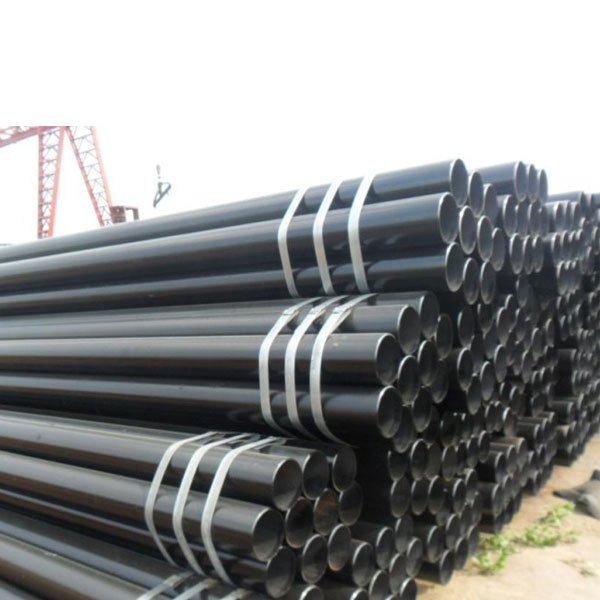
ASTM A106 Steel pipes:
ASTM A106, on the other hand, is a specification for seamless carbon steel pipes intended for high-temperature service. This standard is widely used in applications such as boilers, pressure vessels, and process piping systems where the pipes are subjected to high temperatures and pressures. The primary characteristics of ASTM A106 steel pipes include high-temperature strength, creep resistance, and the ability to withstand thermal stresses.
The difference between ASTM A333 steel pipe and ASTM A106 steel pipe is that ASTM A333 is a low-temperature carbon steel pipe that can be used as a structural pipe, while ASTM A106 is a non-structural carbon pipe that is used in high-temperature applications.

Application Areas and Industries
The differences in specifications between ASTM A333 steel pipe and ASTM A106 pipes make them suitable for different application areas and industries.
ASTM A333 steel pipes are commonly used in cryogenic, refrigeration, and low-temperature piping systems, such as those found in the petrochemical, liquefied natural gas (LNG), and industrial gas industries.
ASTM A106 steel pipes are widely used in high-temperature applications, including power generation, oil and gas processing, and various industrial manufacturing processes.
Temperature and Pressure Considerations
ASTM A333 pipes are designed to operate at low temperatures, typically ranging from cryogenic conditions to around -46°C (-50°F), and can withstand moderate pressures.
ASTM A106 pipes, on the other hand, are suitable for high-temperature applications, with a maximum operating temperature of around 400°C (750°F), and can handle higher-pressure environments.
Corrosion Resistance
ASTM A333 pipes generally have higher corrosion resistance due to the addition of alloying elements, such as chromium and nickel, which can enhance the material’s resistance to corrosion in various environments.
ASTM A106 pipes, while suitable for high-temperature applications, may have lower corrosion resistance compared to ASTM A333 GR.6 pipes, depending on the specific composition and surface treatments applied.
Manufacturing Process
ASTM A333 pipes can be produced using both seamless and welded methods, with the welded process allowing for larger diameter and thicker-walled pipes.
ASTM A106 pipes, on the other hand, are primarily manufactured using the seamless process, which results in a more homogeneous microstructure and superior mechanical properties.
Chemical Composition and Mechanical Properties
ASTM A333 pipes typically has a lower carbon content compared to ASTM A106 pipes.
ASTM A333 pipes are designed to have higher impact toughness, which is achieved through a combination of alloying elements and specialized heat treatment processes. This allows the pipes to withstand the stresses and impacts associated with low-temperature applications.
In contrast, ASTM A106 pipes are optimized for high-temperature strength and creep resistance, making them more suitable for applications where the pipes are subjected to elevated temperatures and pressures.
Conclusion
In summary, the key differences between ASTM A333 and ASTM A106 steel pipes lie in their intended service conditions, chemical composition, mechanical properties, and manufacturing processes. ASTM A333 pipe is designed for low-temperature applications, such as cryogenic and refrigeration systems, while ASTM A106 pipe is optimized for high-temperature service, including boilers, pressure vessels, and process piping.
Understanding these distinctions is essential in selecting the appropriate material for specific applications, ensuring the safety, reliability, and performance of the final product.
JSFITTINGS specialises in the sale industry steel pipes, including but not limited to groundworks, road construction, hydraulic engineering and Petrochemical, Desalination, Power Generation & Defence, Mining & Minerals, and Construction.
Situated in Yanshan, Cangzhou, China, we are known across industries as a dependable industry carbon steel pipe supplier, consistently serving domestic and global markets.
JSFITTINGS aims to work in collaboration with you to find the best solution for your project.
Email: info@jssteelpipes.com
WhatsApp: +8618003119682
More blogs:
ASTM A53 B vs ASTM A106 B Steel Pipe