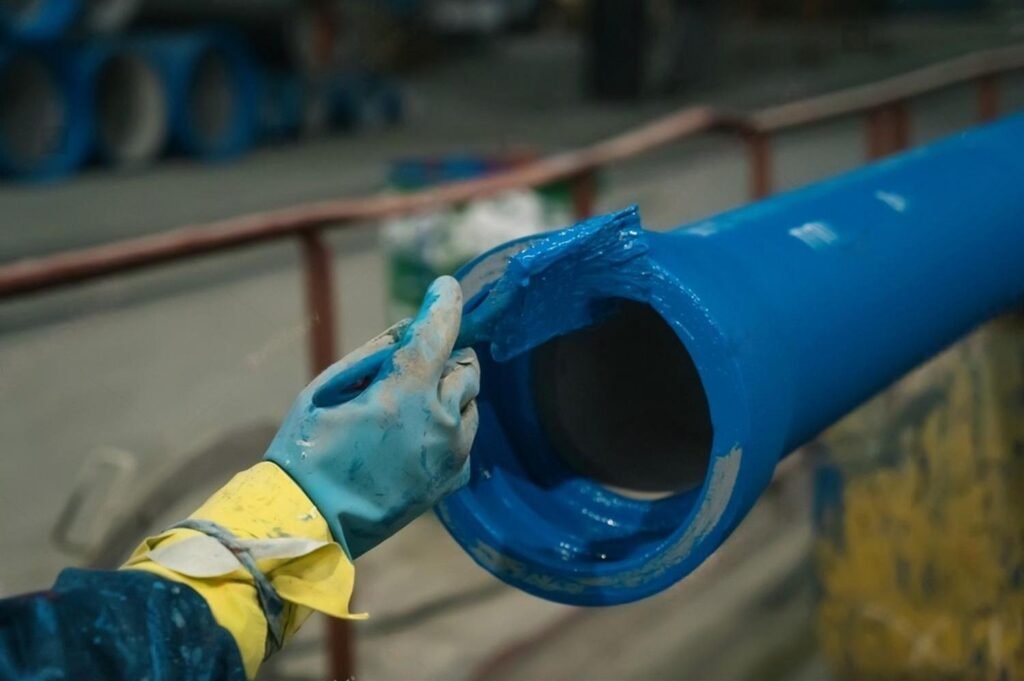
In the world of industrial piping, the steel pipe itself is only half the story. The longevity and safety of a pipeline—especially in oil, gas, and water transmission—depend heavily on its anti-corrosion coating. For procurement managers and EPC contractors, choosing the wrong coating can lead to premature failure and astronomical maintenance costs.
At JS FITTINGS, we provide high-performance coated pipes that meet rigorous international standards. This guide explores the most effective coating technologies used in the industry today.
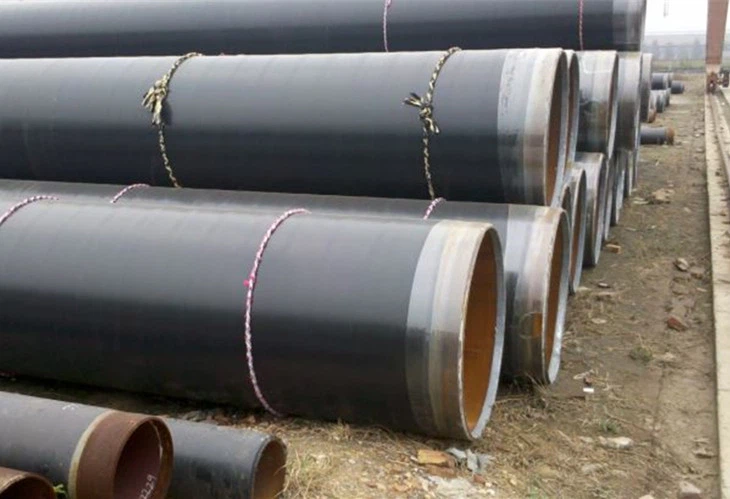
1. 3LPE Coating (Three-Layer Polyethylene)
3LPE is currently the gold standard for buried pipelines. It combines the excellent chemical resistance of epoxy with the mechanical protection of polyethylene.
- The Three Layers:
- A high-performance Fusion Bonded Epoxy (FBE) primer.
- A copolymer adhesive layer.
- An outer layer of high-density polyethylene (HDPE).
- Best For: Long-distance oil and gas pipelines, particularly in harsh soil conditions with high moisture.
- Standard Compliance: ISO 21809-1, DIN 30670.
2. FBE Coating (Fusion Bonded Epoxy)
FBE is a thermosetting polymer coating that provides a smooth, hard finish with exceptional adhesion to the steel surface.
- Key Advantage: Excellent resistance to cathodic disbondment and high operating temperatures.
- Best For: Moderate soil conditions and as a primer for multi-layer systems. It is also widely used for fittings and valves.
- Standard Compliance: AWWA C213, API RP 5L7.
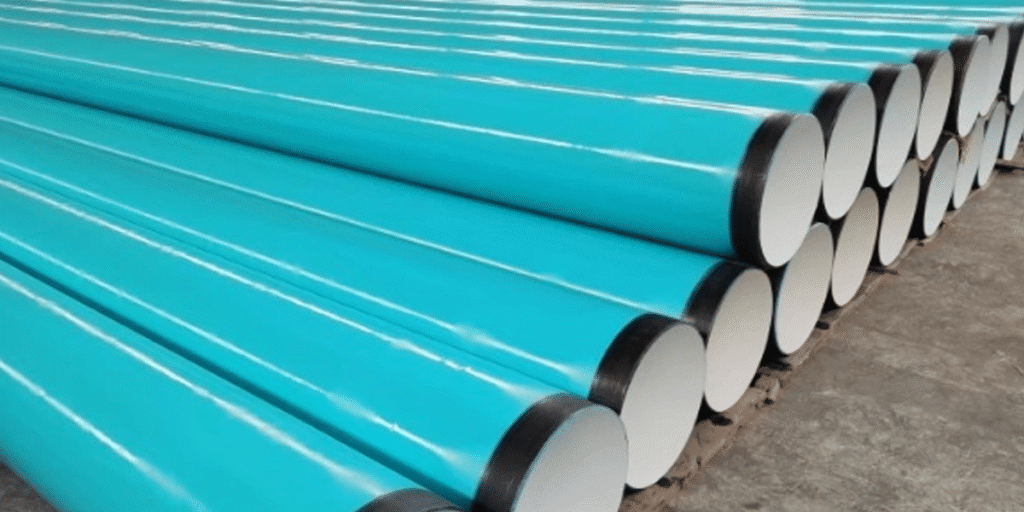
3. Internal Epoxy Lining
While external coatings protect against the environment, internal linings protect against the fluid being transported.
- Function: Reduces friction (improving flow efficiency) and prevents internal pitting corrosion.
- Applications: Potable water transmission (using food-grade epoxy) and gas lines to reduce “drag.”
- Standard Compliance: AWWA C210.
4. Hot-Dip Galvanizing (HDG)
For smaller diameter pipes or structural steel pipes used in atmospheric conditions, galvanizing remains the most cost-effective solution.
- Process: Dipping the pipe into molten zinc to create a metallurgical bond.
- Best For: Fire protection systems, HVAC, and outdoor structural scaffolding.
- Standard Compliance: ASTM A123, EN ISO 1461.
Comparison Table: Choosing the Right Protection
| Coating Type | Durability | Temperature Resistance | Impact Resistance | Primary Application |
| 3LPE | Very High | Moderate (-40°C to 80°C) | Excellent | Buried Oil/Gas Lines |
| FBE | High | High (Up to 110°C) | Good | High-Temp/Moderate Soil |
| Coal Tar Epoxy | Moderate | Low | Moderate | Sewage/Water Waste |
| Galvanizing | Moderate | Moderate | High | External Structures/Water |
How JS FITTINGS Ensures Coating Integrity During Transit
The best coating in the world is useless if it is chipped during sea freight. We implement a strict “Zero-Damage” logistics protocol:
- Soft Slings Only: We never use steel wire ropes for loading coated pipes.
- Separator Strips: Using rubber or timber spacers between pipe layers to prevent friction.
- End Protection: Heavy-duty reinforced caps to protect both the pipe bevel and the coating edge.
Selecting the right coating is a balance between project budget, environmental chemistry, and required service life. Whether you need the rugged protection of 3LPE for a desert pipeline or HDG for a structural project, JS FITTINGS offers fully certified solutions.
Contact our technical team today for a coating compatibility consultation or a bulk quote.
Email: info@jssteelpipes.com
Whats App: 008618003119682