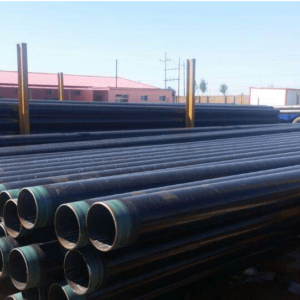
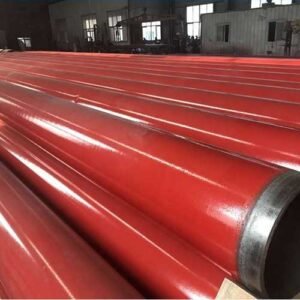
In the demanding world of offshore energy, the integrity of a submarine pipeline is non-negotiable. As exploration moves into deeper waters with higher concentrations of CO2 and H2S, traditional carbon steel pipes often reach their technical limits. To combat severe corrosion and ensure a 25+ year service life, Corrosion-Resistant Alloy (CRA) solutions have become the industry standard.
For project engineers and procurement managers, the challenge lies in balancing extreme durability with project CAPEX. Understanding the nuances between Solid CRA, Clad, and Mechanically Lined Pipes (MLP) is critical for optimizing your subsea infrastructure.
Why CRA is Vital for Subsea Environments?
Submarine pipelines face a “triple threat”: high internal pressure, extreme external hydrostatic pressure, and highly corrosive fluids. When hydrogen sulfide and carbon dioxide are present at elevated temperatures, standard steel suffers from rapid pitting and stress corrosion cracking.
CRA materials—ranging from Stainless Steel 316L to Duplex and High-Nickel Alloys—provide the necessary chemical resistance. However, because these alloys are costly, the industry has developed specialized “composite” pipe structures to provide the best of both worlds: the strength of carbon steel and the protection of CRA.
1. CRA Clad Pipes: The Metallurgical Powerhouse
CRA Clad Pipe (often manufactured to API 5LD standards) features a thin layer of alloy that is metallurgically bonded to the carbon steel backing (the “host pipe”).
Manufacturing Process: Usually produced via hot rolling, explosive bonding, or weld overlay. The atomic bond between the two materials ensures they behave as a single unit.
Key Advantage: Because the bond is metallurgical, the pipe can withstand extreme plastic deformation, making it ideal for high-stress installation methods like reel-lay.
Application: Best for critical high-pressure sections of submarine pipelines where delamination is a zero-tolerance risk.
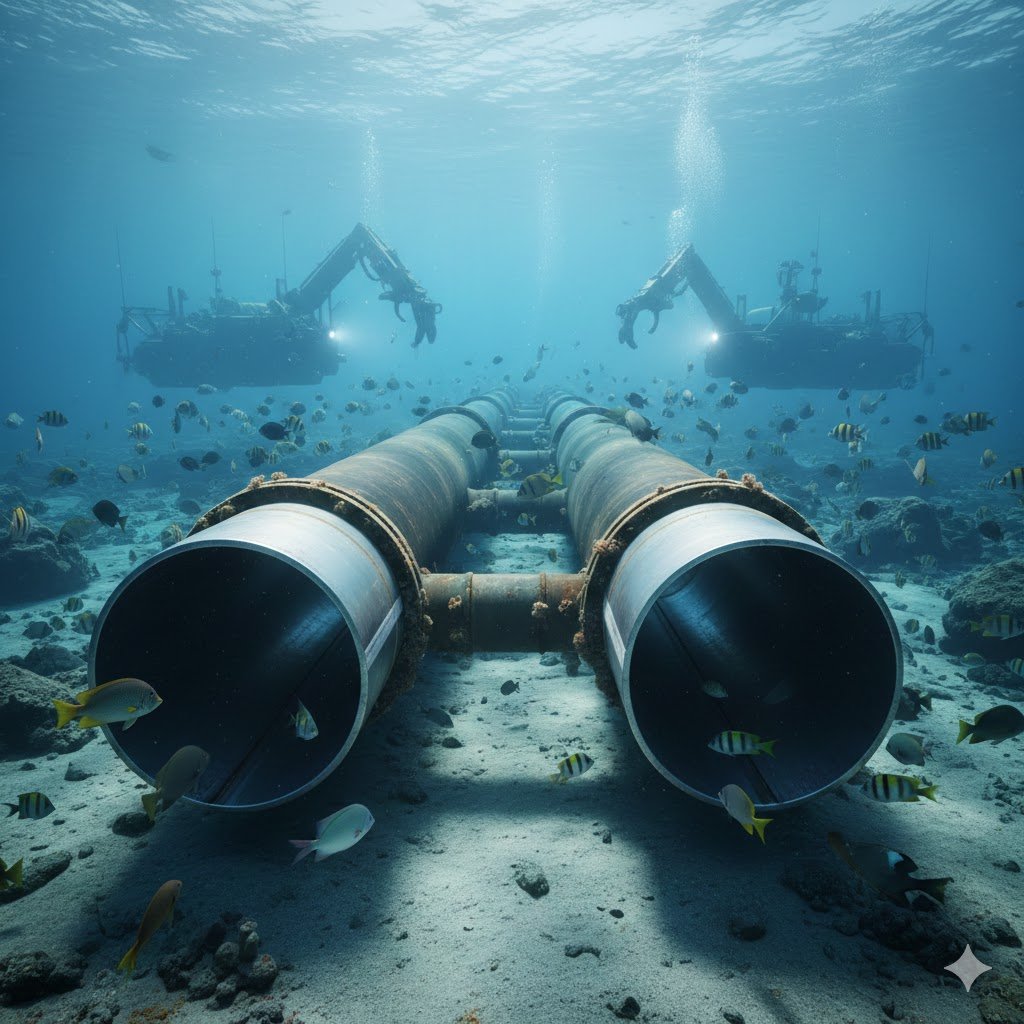
2. Mechanically Lined Pipes (MLP): The Cost-Effective Workhorse
For many subsea projects in the Middle East and Southeast Asia, Mechanically Lined Pipe (MLP) offers the most attractive ROI. Unlike clad pipe, MLP uses a mechanical fit to hold the liner in place.
The “Snug-Fit” Technology: We manufacture MLPs by inserting a CRA liner into a carbon steel outer pipe and then applying hydraulic or mechanical expansion. This creates a tight mechanical bond through residual compressive stress.
The Economic Edge: MLP is significantly more affordable than both solid CRA and clad pipes because the manufacturing process is less energy-intensive and allows for faster production cycles.
Proven Reliability: With over 40 years of track record in the oil and gas sector, MLPs are a field-proven solution for transporting corrosive hydrocarbons in long-distance submarine water and gas lines.
3. Solid CRA Pipes: Maximum Protection at Premium Cost
Solid CRA pipes are homogeneous, typically produced through seamless or longitudinal welding. While they offer the highest level of uniform corrosion resistance, their price tag often limits them to short-distance, ultra-critical manifold components or specific chemical injection lines rather than long-distance submarine pipelines.
Technical Comparison: Making the Right Choice for Your Project
| Feature | Solid CRA Pipe | CRA Clad Pipe | Mechanically Lined (MLP) |
| Bonding Type | N/A (Homogeneous) | Metallurgical | Mechanical |
| Corrosion Resistance | Excellent (Full Wall) | Excellent (Internal) | Excellent (Internal) |
| Cost Efficiency | Low (Most Expensive) | Moderate | High (Most Competitive) |
| Standard Compliance | API 5LC | API 5LD | API 5LD / DNV-ST-F101 |
| Best Subsea Use | Manifolds/Short Runs | High-Stress/Reel-Lay | Long-Distance Pipelines |
Why Source Your Submarine Pipeline Steel Pipes from Our Factory?
As a specialized manufacturer serving the global energy sector, we understand that a submarine pipeline is only as strong as its weakest weld.
Precision Engineering: Our MLP expansion process ensures zero “liner wrinkling,” even under bending conditions typical of offshore installation.
Stringent Quality Control: Every joint undergoes non-destructive testing (NDT), including ultrasonic and X-ray inspection of the weld seams, plus rigorous hydrostatic testing.
Project-Specific Customization: We offer a wide range of backing grades (up to X70) and liner materials (316L, 825, 625, Duplex) to match your specific fluid chemistry.
Strategic Logistics: Our experience in shipping to major hubs in the Middle East (Jebel Ali, Dammam) and Southeast Asia (Singapore, Jakarta) ensures your project stays on schedule.
Engineering Your Subsea Success
Choosing between CRA Clad and Mechanically Lined Pipe depends on your installation method, pressure requirements, and budget. For most long-distance submarine pipeline steel pipe applications, the Mechanically Lined Pipe (MLP) provides the most balanced solution—delivering elite corrosion protection at a fraction of the cost of solid alloys.
Contact our technical sales team today for a comprehensive quote or a technical consultation on your next CRA piping project.
Email: info@jssteelpipes.com
WhatsApp: +8618003119682
WeChat: JSFITTINGSCHINA