In the petrochemical industry, oil pipeline steel pipes play a crucial role in transporting crude oil, gas, and chemicals from extraction wells to refineries, as well as for product distribution and storage. Key criteria for these products include superior durability, resistance to corrosion in marine and chemical environments, high-pressure tolerance, and extended longevity, all of which contribute to optimizing operational costs and enhancing safety.
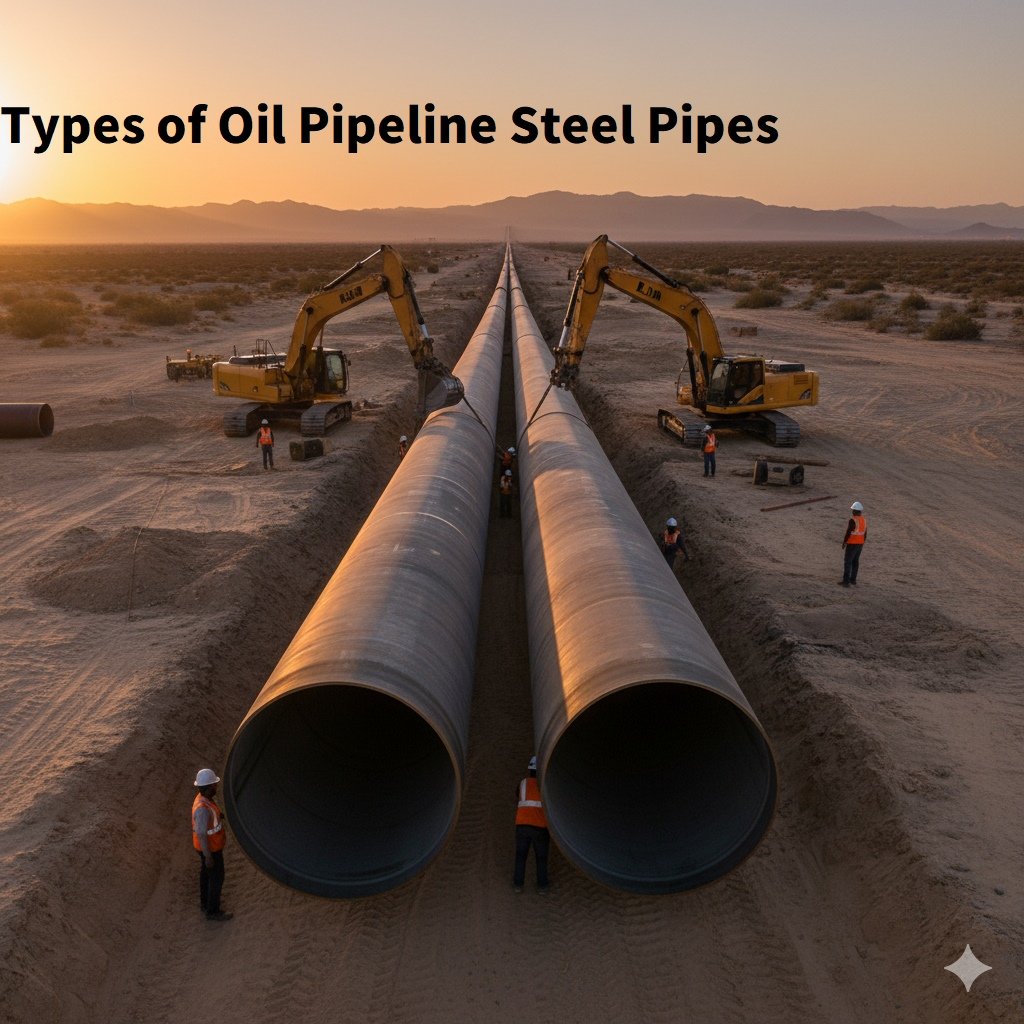
Common Types of Oil Pipeline Steel Pipes in the Petrochemical Industry
The selection of common oil pipeline steel pipes in the petrochemical industry today is based on manufacturing materials, production technology, and international technical standards.
Carbon steel, alloy steel, and stainless steel are the three primary material groups that meet the demands of demanding operational environments, such as offshore extraction, petrochemical processing, and high-pressure fuel transport.
Carbon Steel Pipe
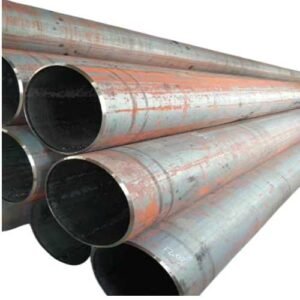
- Advantages: Carbon steel pipe are known for their strength and durability. They’re ideal for high-pressure environments and are commonly used in refineries and transportation pipelines.
- Applications: Transporting crude oil, natural gas, and water in upstream, midstream, and downstream operations.
Stainless Steel Pipe
- Advantages: Stainless steel offers excellent resistance to corrosion, making it a popular choice in environments with high moisture or chemical exposure.
- Applications: Ideal for offshore drilling platforms and areas prone to corrosive substances.
Alloy Steel Pipe
- Advantages: Alloy steel contains added elements like chromium and molybdenum, enhancing its heat resistance and durability.
- Applications: High-temperature environments such as those found in power plants and processing facilities.
The two most common product lines are welded steel pipe and seamless steel pipe.
Welded steel pipes are suitable for large-scale pipeline systems at a reasonable cost, while seamless steel pipes offer superior durability, leak resistance, and excellent pressure resistance.
Additionally, galvanized steel pipes provide enhanced chemical corrosion resistance, extending their service life when installed in outdoor projects, offshore pipelines, or saline environments.
International standards such as API 5L (for oil and gas pipelines), ASTM, and quality management certifications like ISO 9001 and ISO 3834-2, along with AISC regulations, are mandatory benchmarks in the production and operation of oil pipeline steel pipe systems.
API 5L steel pipes are carbon steel pipes used for oil and gas transmission. They include pipes manufactured in seamless and welded (ERW, SAW). The grades include API 5L Grade B, X42, X46, X52, X56, X60, X65, X70, X80 PSL1 & PSL2 onshore, offshore and sour services.
Our Supply Range for API 5L Pipe
Grades: API 5L Grade B, X42, X52, X56, X60, X65, X70, X80
Product Specification Level: PSL1, PSL2, onshore and offshore sour services
Outer Diameter Range: 1/2” to 2”, 3”, 4”, 6”, 8”, 10”, 12”, 16 inches, 18 inches, 20 inches, 24 inches up to 40 inches.
Thickness Schedule: SCH 10. SCH 20, SCH 40, SCH STD, SCH 80, SCH XS, to SCH 160
Manufacturing Types: Seamless (Hot Rolled and Cold Rolled), Welded ERW (Electric resistance welded), SAW (Submerged Arc Welded) in LSAW, DSAW, SSAW, HSAW
Ends Type: Beveled ends, Plain ends
Length Range: SRL (Single Random Length), DRL (Double Random Length), 20 FT (6 meters), 40FT (12 meters) or, customized
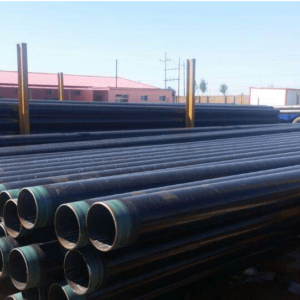
Surface Treatment: Natural, Varnished, Black Painting, FBE, 3PE (3LPE), 3PP, CWC (Concrete Weight Coated) CRA Clad or Lined
Welded Type: ERW, SAW, DSAW, LSAW, SSAW, HSAW Pipe
The API 5L welded pipe common types are as follows:
ERW: Electric Resistance Welded, for pipe diameter normally under 24 inches.
DSAW/SAW: Double Submerged Arc Welding / Submerged Arc Welding, a substitute welding method of ERW for larger diameter pipes.
LSAW: Longitudinal SAW, for diameter up to 48 inches. Also called the JCOE manufacturing process.
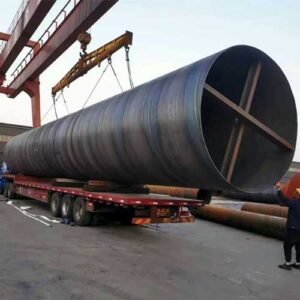
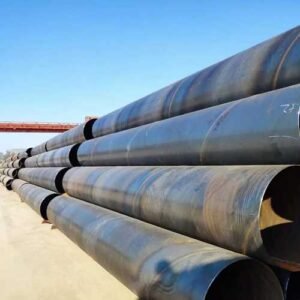
SSAW/HSAW: Spiral Submerged Arc Welded / Helical SAW, pipe diameters up to 100 inches.
The Role and Capabilities of JSFITTINGS Pipeline in the Oil Pipeline Steel Pipe Sector
SFITTINGS Pipeline serves as a leading factory supplier and exporter in China, specializing in supplying steel pipes, buttweld steel fittings and flanges for numerous petrochemical, energy, and heavy industry projects.
We have capability to manufacture ultra-heavy components, such as large-bore oil pipes that meet international standards, while exporting to over 60 countries.
JSFITTINGS has not only become a guarantee of quality and production capacity for oil pipeline steel pipes in the domestic petrochemical industry but has also significantly expanded its international presence. Its integrated solutions, high standards, and end-to-end value chain (from design, production, and inspection to construction and maintenance) enable JSFITTINGS to meet the growing demands of the energy, petrochemical, and oil & gas industries, while elevating China products and personnel in the global market.
Email: info@jssteelpipes.com
WhatsApp: +8618003119682
WeChat: JSFITTINGSCHINA