What is galvanized carbon steel pipe?
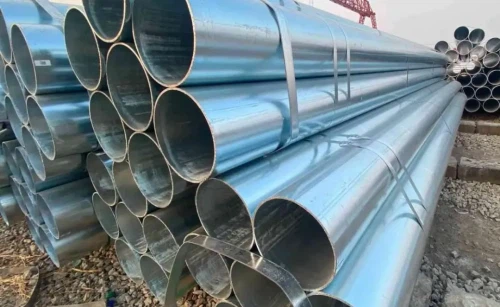
Galvanized carbon steel pipe is standard carbon steel coated with a protective layer of zinc. This zinc coating stops rust and corrosion, making the pipe a strong, low-cost choice for water supply, plumbing, and outdoor structures.
Key Features
- Zinc Coating: Acts as a shield so the inner steel does not rust.
- Strength: Keeps the heavy-duty strength of raw carbon steel.
- Affordability: Costs less than stainless steel for fresh water use.
- Common Uses: Water Lines: Moving fresh water in older or industrial plumbing.
- Outdoor Frames: Fences, guardrails, and signposts exposed to rain.
- Gas and Air: Carrying air or gas lines in buildings.
This guide breaks down the technical standards, selection criteria, and installation best practices for industrial-grade galvanized pipes.
1. Why choose Hot-Dip Galvanized Carbon Steel Pipes?
Unlike standard carbon steel, Hot-Dip Galvanized (HDG) pipes undergo a molten zinc bath process. This creates a metallurgical bond between the zinc and the steel, providing a sacrificial anode that protects the pipe from oxidation in humid or corrosive environments.
- Standard: The industrial galvanized carbon steel pipe manufacturing standard is ASTM A53, Other key standards include ASTM A123 for the galvanizing coating itself, and international equivalents like ISO 65 or EN 10210
- Production Process: Electric Resistance Welded (ERW) or Seamless
- Zinc Coating: High-purity zinc, conforming to ASTM A123/A153
ASTM A53 / A53M: Governs seamless and welded, black and hot-dipped galvanized carbon steel pipe in Grades A and B for pressure and general
ASTM A106: Specifies seamless carbon steel pipe for high-temperature service, which can also be zinc-coated post-production depending on project needs.
Galvanizing Coating Standards
ASTM A123 / A123M: Standard specification for hot-dip galvanized coatings on fabricated iron and steel products.
ASTM A153 / A153M: Specification for zinc coating (hot-dip) on iron and steel hardware/fittings attached to the pipe system.
ISO 65 / BS 1387: International and British standards specifying steel tubes suitable for screwing and traditional industrial fluid transport
2. Industrial Galvanized Carbon Steel Pipe Specifications & Dimension
Below is the standard reference data for ASTM A53 / Schedule 40 Galvanized pipes. This is the baseline for most commercial and industrial applications.
| Nominal Size (NPS) | Actual O.D. (Inches) | Actual O.D. (mm) | Wall Thickness (Inches) | Weight (lbs/ft) |
| 1/2″ | 0.840 | 21.3 | 0.109 | 0.85 |
| 3/4″ | 1.050 | 26.7 | 0.113 | 1.13 |
| 1″ | 1.315 | 33.4 | 0.133 | 1.68 |
| 1-1/4″ | 1.660 | 42.2 | 0.140 | 2.27 |
| 1-1/2″ | 1.900 | 48.3 | 0.145 | 2.72 |
| 2″ | 2.375 | 60.3 | 0.154 | 3.65 |
| 2-1/2″ | 2.875 | 73.0 | 0.203 | 5.79 |
| 3″ | 3.500 | 88.9 | 0.216 | 7.58 |
| 4″ | 4.500 | 114.3 | 0.237 | 10.79 |
| 6″ | 6.625 | 168.3 | 0.280 | 18.97 |
| 8″ | 8.625 | 219.1 | 0.322 | 28.55 |
Note: For detailed specs on large-diameter pipes or custom wall thicknesses, we can provide specific submittal sheets.
3. How to Select the Right Specification for Your Industry
Choosing the correct pipe schedule is essential for both safety and cost optimization.
- Water Treatment & Irrigation: Standard SCH 40 is generally sufficient for moderate pressure systems. The hot-dip coating ensures long-term resistance against water oxidation.
- Oil & Gas / Chemical Processing: We recommend SCH 80 or higher. High-pressure environments require thicker walls to withstand systemic stress. Our products, backed by PETROBRAS, ADNOC, and NIOC standards, meet the rigorous safety protocols required in these sectors.
- Mining Infrastructure: Requires high mechanical strength and resistance to external impacts. Seamless pipes are often preferred here to ensure no weld-line failure under vibration.
4. Factory Production & Quality Control
At Jinsheng Pipe Fitting, we don’t just manufacture; we engineer for endurance.
- Raw Material Inspection: Every batch of steel coils is chemically analyzed to ensure C, Mn, S, and P levels are within ASTM limits.
- Precision Welding: Our ERW lines utilize high-frequency induction welding, followed by in-line ultrasonic testing to ensure the weld seam is as strong as the base metal.
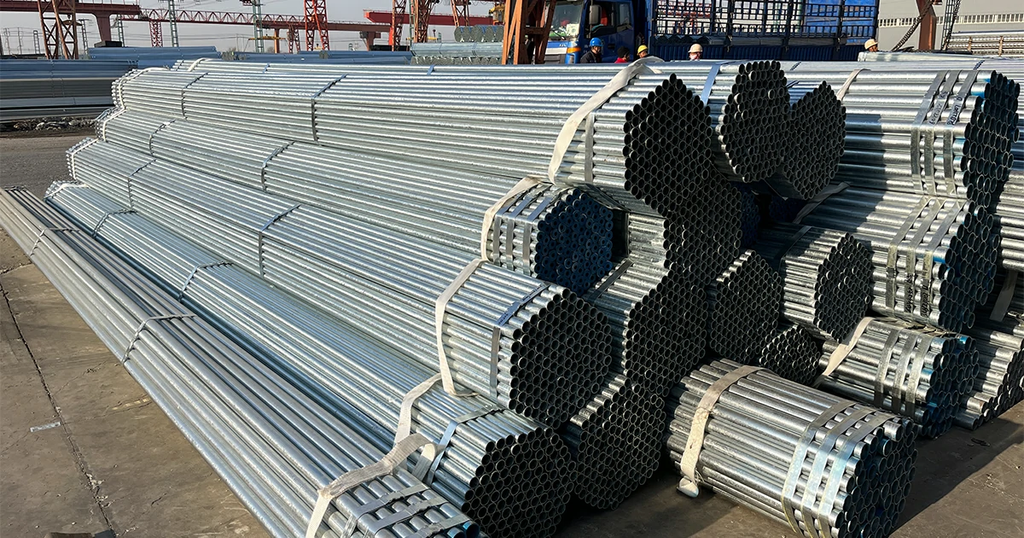
- Hot-Dip Process: We utilize a continuous galvanizing line that ensures uniform coating thickness (average > 500g/m²), essential for longevity in harsh environments.
5. Professional Installation Tips (The “Jinsheng” Insight)
Many failures in piping systems occur during installation. To maximize the lifespan of your galvanized carbon steel pipes:
- Field Cutting & Cold Galvanizing: If you must cut the pipe on-site, the exposed steel will rust immediately. Always apply a high-zinc content cold galvanizing spray to the cut ends.
- Welding Caution: Welding galvanized pipe releases toxic zinc fumes. We recommend threaded or grooved joints for galvanized pipes wherever possible. If welding is required, grind off the zinc coating in the weld zone and use proper ventilation.
- Threaded Joints: Use high-quality PTFE tape or pipe sealant to prevent leakage at the threads, where the zinc layer is thinnest.
6. Why Global Partners Choose Hebei Jinsheng
With a 35,000 sqm production base and an annual output of $30M, we serve three primary types of clients:
- Stock Distributors: We provide stable, high-volume supply to keep your warehouse inventory consistent.
- Trading Companies: We act as your production extension, providing fast turnaround (15-30 days per container) and professional documentation.
- Engineering Contractors: From water treatment to oil & gas, we offer technical support that ensures your materials arrive on-site, on-spec, and on-time.
Our Commitment:
- Response: 2-hour quote turnaround.
- Reliability: 98% on-time delivery; <0.5% complaint rate.
- Certifications: ISO, CE, GOST-R, PETROBRAS, ADNOC, NIOC.
Ready to start your next project?
Contact our sales team today for a technical proposal or a factory audit report.
Email: info@jssteelpipes.com
WhatsApp: +8618003119682