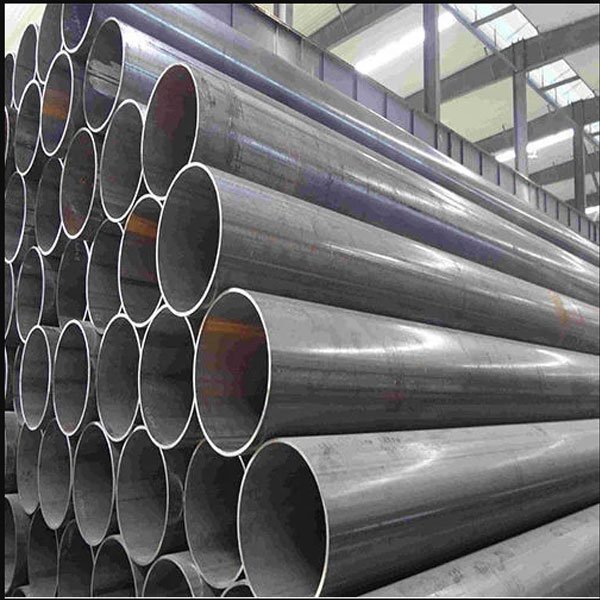
When sourcing steel pipes for industrial projects, you’re likely to encounter Schedule 40 steel pipe most often. It is the undisputed workhorse of the piping industry. Whether you are transporting high-pressure fluids, building structural frameworks, or piping a chemical plant, Schedule 40 (often abbreviated as Sch 40) is the global standard.
But what exactly does “Schedule 40” mean? How does wall thickness change with pipe size?
In this guide, we will break down schedule 40 pipe dimensions, wall thickness, and its practical applications to help procurement managers and engineers make the right buying decisions.
What is Schedule 40 Pipe?
To understand what schedule 40 pipe is, we first need to define the term “Schedule” (Sch).
Introduced by the American Standards Association (now ANSI/ASME B36.10M), the pipe schedule is a dimensionless number that describes the wall thickness of a pipe. Historically, pipes were classified as Standard (STD), Extra Strong (XS), and Double Extra Strong (XXS). As industrial demands grew, the “Schedule” system was introduced to provide more precise measurements for different pressure requirements.
Today, Sch 40 steel pipe is the most popular thickness worldwide because it offers the perfect balance between structural strength, pressure resistance, and cost-efficiency.
Understanding Schedule 40 Pipe Dimensions and Wall Thickness
A common point of confusion for buyers is that the wall thickness of schedule 40 pipe is not a fixed measurement. It varies depending on the Nominal Pipe Size (NPS).
For example, a 1-inch Sch 40 pipe does not have a 1-inch wall thickness, nor does it have the same wall thickness as a 4-inch Sch 40 pipe.
The Pipe Dimension Formula:
To determine the actual size of a pipe, you need three measurements:
- Nominal Pipe Size (NPS): The standard commercial name of the pipe (e.g., 2-inch pipe).
- Outside Diameter (OD): The physical measurement of the outside of the pipe.
- Wall Thickness (WT): The thickness of the steel itself.
As the NPS increases, the outside diameter and the wall thickness both increase to maintain structural integrity.
Let’s look at a practical comparison:
- NPS 1 inch (Sch 40):
- OD: 1.315 inches (33.4 mm)
- Wall Thickness: 0.133 inches (3.38 mm)
- NPS 4 inches (Sch 40):
- OD: 4.500 inches (114.3 mm)
- Wall Thickness: 0.237 inches (6.02 mm)
- NPS 8 inches (Sch 40):
- OD: 8.625 inches (219.1 mm)
- Wall Thickness: 0.322 inches (8.18 mm)
As you can see, as the pipe size gets larger, the schedule 40 pipe thickness increases to handle the increased weight and pressure.
(Pro Tip: Up to NPS 10 inches, Schedule 40 and “Standard Weight (STD)” share the exact same wall thickness. However, at NPS 12 inches and above, Schedule 40 wall thicknesses continue to increase, while Standard Weight stops at 0.375 inches.)
Material Grades for Sch 40 Steel Pipes
While “Schedule 40” tells you the dimensions, it does not tell you what the pipe is made of. At JS Steel Pipes, we supply Sch 40 pipes in several mechanical grades, depending on your project environment:
1. Carbon Steel (ASTM A53, A106, API 5L)
This is the most common material for Sch 40.
- ASTM A53: Ideal for low-to-medium pressure applications like plumbing, steam, and air lines.
- ASTM A106: Designed for high-temperature service (refineries, power plants).
- API 5L: Used for oil and gas transmission lines.
2. Stainless Steel (ASTM A312 TP304/316)
For highly corrosive environments (offshore, food processing, chemical plants), stainless steel Sch 40 pipe is the go-to. It is denoted as Sch 40S (the ‘S’ stands for Stainless).
Why is Sch 40 the Go-To Choice for Industrial Projects?
Why do engineers specify Schedule 40 steel pipe more than Schedule 80 or Schedule 160?
- Versatility: It is strong enough for heavy-duty industrial fluid transport, yet light enough to be used in structural construction (bollards, scaffolding, handrails).
- Cost-Effective: It uses less steel than thicker pipes (like Sch 80), reducing material and shipping costs.
- Standardization: Fabrication shops, welders, and fittings manufacturers (elbows, flanges, valves) all stock Sch 40 as their primary inventory. This means faster lead times and easier repairs.
Click here to get know:Understanding Pipe Schedule 40 vs. 80
Common Applications of Schedule 40 Steel Pipe
Because of its adaptability, you will find Sch 40 pipes in almost every major industry:
- Water Treatment and Distribution: Municipal water lines and irrigation systems.
- Oil, Gas, and Petrochemical: Refining oil and transporting gases (often combined with seamless carbon steel).
- Structural Engineering: Used in building columns, bridge supports, and protective barriers.
- Fire Protection Systems: Sprinkler lines in commercial buildings rely on Sch 40 because it meets rigorous pressure safety ratings.
How to Choose the Right Pipe for Your Project?
Choosing between Schedule 40 and other thicknesses boils down to pressure vs. weight constraints. If your system runs at extremely high pressures or temperatures, you might need to upgrade to Schedule 80. If your system runs at standard ambient pressures, Sch 40 is almost always the most economical and safe choice.
Are you working on an upcoming project that requires precise piping specifications?
At JS Steel Pipes, we are a specialized manufacturer and exporter of industrial steel pipes. We supply certified, high-quality carbon and stainless steel Schedule 40 pipes worldwide.
[Contact our engineering team today] for accurate MTCs (Mill Test Certificates), custom lengths, or competitive quotes for your bulk pipe procurement needs.